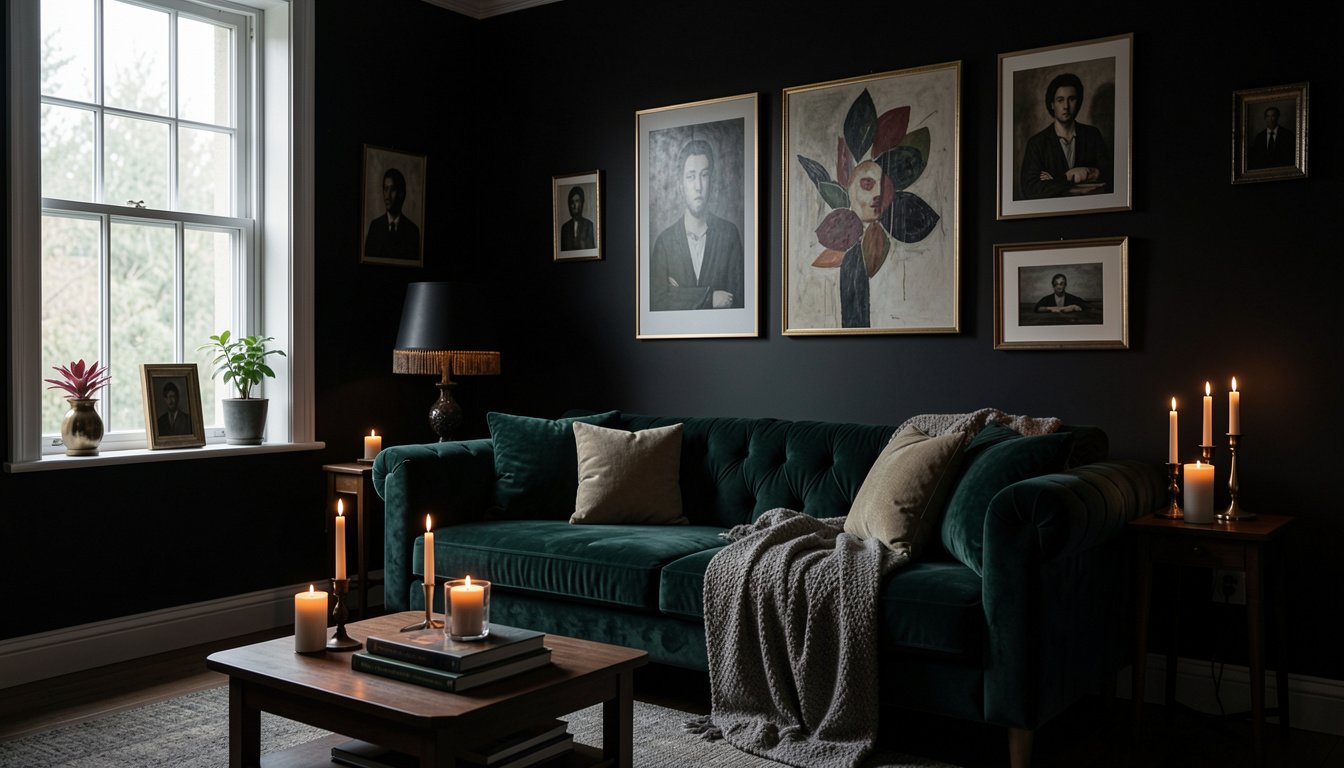
Okay bestie, I fell hard for the dark home decor aesthetic because it makes every room feel like a secret you want to live inside, and I can finally relax in spaces that feel curated and calm. I started experimenting with deep paint shades, layered textures, and warm metallic accents to give my apartment personality without feeling gloomy.
I wrote this because so many of you DM me asking how to get that curated moody look without it feeling like a cave – I’ve tried the trial and error so you don’t have to. After moving twice and painting a million swatches on my walls I finally landed on combos that feel grown-up and cozy at once.
Read on for ten ideas that are easy to replicate, playful to tweak, and actually feel like home when you live in them.

These 10 Dark Home Decor Aesthetic Ideas Will Change Your Space
Wood Stove Living Room
Dark walls around a wood burning stove turn ordinary evenings into ritual, and this layout proves how contrast between firelight and deep paint feels cinematic and lived-in. I remember the first night I lit our little stove after painting the wall a charcoal shade and the whole room felt like a hug, which made me realize color does emotional work. If you want that curated warmth, balance heavy tones with natural textures like reclaimed wood and a neutral rug so the space breathes.
Layered Furniture Layouts
Piling vintage chairs, a low coffee table, and art-clad walls creates a comfortable clutter that reads luxe rather than messy when you stick to a tight, moody palette. You can layer mixed metals, soft linens, and sculptural ceramics to keep each piece interesting without adding color noise, and I often rearrange to see how light hits different surfaces at golden hour. Try grouping similar tones and letting one piece, like a brass lamp or a patterned pillow, be the accent that ties everything together.
Layered Bookish Shelving
Bookshelves full of spines, dark-stained wood, and curated figurines are basically personality in three dimensions and they anchor a room without overpowering it. I inherited a chaotic book collection from my grandmother and learned to arrange by color, height, and subject so it looks intentional instead of like I was hoarding – that small ritual made my living room feel finished. Don’t be afraid to mix in metallics, candles, and a few plants to keep the shelf from feeling too static.
Stained Glass Lounge
Stained glass windows with low seating in front create a chapel-like calm where deep colors glow in daylight and become jewel tones at dusk – it’s one of my favorite dramatic tricks. You can replicate that feeling with smaller stained panes or even colored film on a window, and then ground the look with low-profile sofas and rugs that have subtle pattern. When I tried a DIY stained panel in my apartment it made an ordinary corner feel reverent and perfect for slow Sunday mornings.
Curated Gallery Living Room
A heavily curated gallery wall looks intentional when you limit your palette to dark frames, muted prints, and a few statement pieces, and the effect is layered visual storytelling without chaos. You might start with one large piece and build around it, using consistent matting or frame finish to keep things cohesive, and I find that changing one small print seasonally keeps the wall feeling fresh. Pair that with low lighting and a plush throw and you’ll have a spot guests linger in.
Candlelit Cozy Corners
Stacks of candles in varying heights and dark holders become sculptural and add real warmth, and they’re perfect when you want a mood that feels intimate without flipping every switch off. I once hosted a dinner and lit dozens of candles; the glow softened even the boldest colors and made everyone feel instantly relaxed, which turned the night into one of my favorite small-party memories. Just remember to mix in unscented options if you plan to cook or host so the room smells like food not a candle shop.
Window Candle Display
A row of candles on a deep windowsill creates a modern shrine to evening light and pairs surprisingly well with heavy drapery and dark paint because it softens the silhouette. You can vary holders and heights and even use battery-operated candles for safety while still getting that warm, flickering effect, and you’ll love how the shadows move across textured walls. If you live on a busy street, the glow gives you privacy without the need for blackout curtains all the time.
Collected Eclectic Room
Mixing old with new, dark upholstery with bright brass hardware, and layered rugs lets you build personality while staying within a moody aesthetic – the trick is restraint and cohesion. I like to pick a dominant color family and then let smaller pieces play with texture so the room reads as intentional, and it helps to photograph the space on your phone to spot visual clutter you don’t notice in real time. Once you find that rhythm, adding one bold antique or a modern sculpture becomes exciting rather than random.
Rug, Plants, Dark Textures
A large rug with layered smaller rugs, a cluster of plants, and textured throws breaks up dark floors and walls while making the room feel tactile and approachable. You want plants that tolerate low light if your moody room doesn’t get sun, and I keep a few hardy varieties like snake plants and philodendrons because they survive my inconsistent watering habits. Rugs also help zone multiuse rooms, so consider a dark patterned runner for high traffic to hide wear beautifully.
Emerald Marble Bathroom
Green marble in a bathroom reads opulent and moody in the best way, and pairing it with matte black hardware and warm brass accents keeps the look grounded rather than museum-like. You can introduce a lush towel in a deep hue or a simple woven stool to add softness, and I found that a single large plant in the corner made my shower feel like a mini-spa with almost zero effort. If marble is out of budget, consider high-quality tiles or effective wallpaper that mimics the veins for a similar impact.
How to Actually Make This Work For You
Start small by testing paint on a single wall and living with it for a week, then layer in textiles, lighting, and art that speak to your taste so changes feel cumulative rather than overwhelming; this helps you avoid buyer’s remorse and creates a sense of discovery. Keep a consistent color anchor across the room – whether that is black trim, dark wood, or a green marble tile – and let accessories be the flexible, playful part so you can adapt seasonally without repainting. Finally, mix textures and scales so the room reads as intentional and cozy rather than flat, and remember lighting is everything: dimmers, layered lamps, and candlelight will transform the palette after sunset.

How can I keep a dark room from feeling too small?
Answer – Use layered lighting, reflective accents, and a few light textiles to break up heavy colors, and consider one lighter piece like a rug or a throw to open the space visually. Mirrors can help, and painting trim a shade lighter than walls gives the illusion of depth.
Is dark paint hard to maintain?
Answer – Dark walls can show dust and fingerprints more than lighter colors, but durable, washable finishes reduce this noticeably, and a quick wipe down every few weeks keeps things looking fresh. I learned to embrace texture so marks are less obvious on matte or low-sheen surfaces.
Will dark decor make my home feel cold?
Answer – Not if you balance it with warm woods, layered textiles, and warm lighting; these elements add warmth and tactile comfort that counteract any chill from darker color choices. Rugs, throws, and candles are simple, effective ways to cozi-fy the space immediately.
Can I mix dark styles without it looking chaotic?
Answer – Yes, by choosing a unifying color or material like black metal or deep wood to repeat through the room and limiting accent colors you can mix vintage, modern, and boho pieces and still achieve a cohesive moody look. Consistent scale and considered negative space help a lot too.