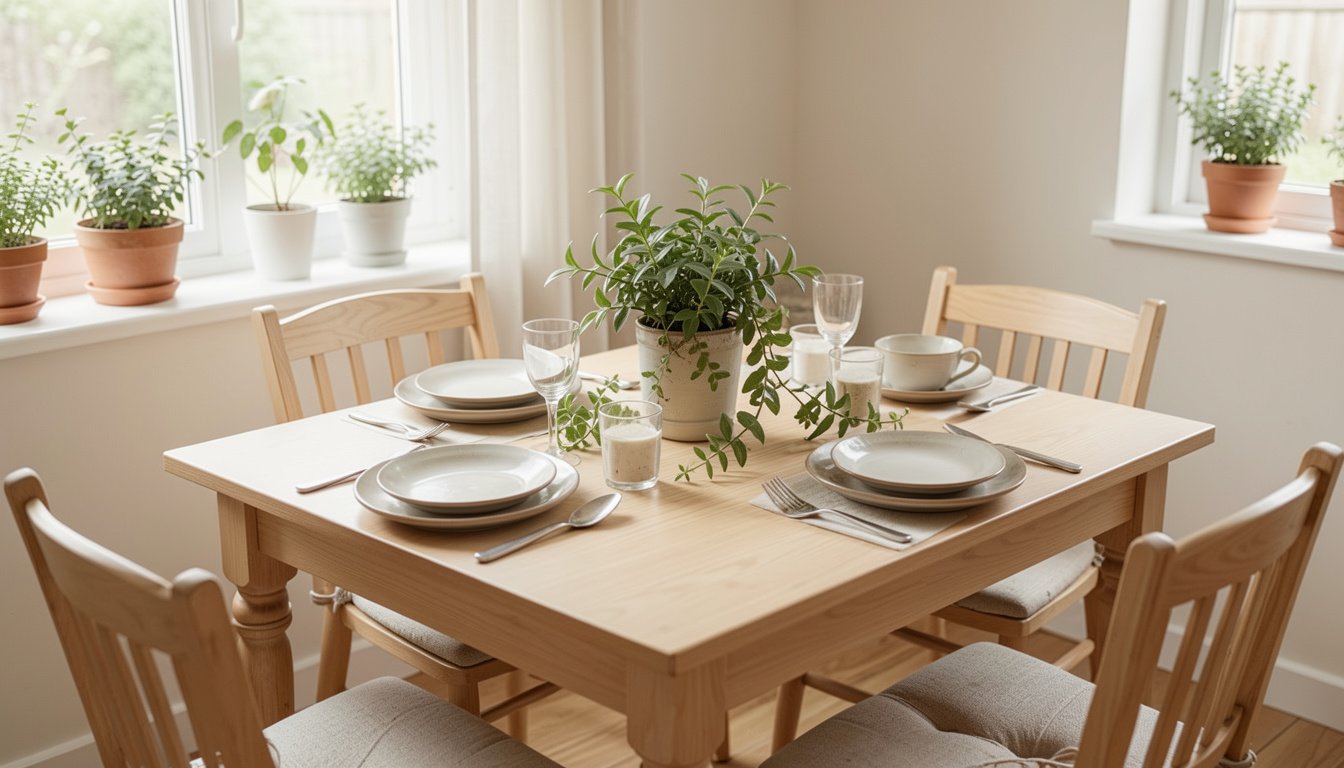
Okay bestie, tiny dining spaces are my comfort zone now – small dining room decor can actually feel luxe and lived-in with a few smart choices. I used to cram a giant table into my first apartment and learned the hard way that scale and light matter more than matches and trends.
I’m writing this because I love helping people make their little nooks practical and beautiful – I’ve tried more arrangements than I can count and kept the ones that made mornings feel calm. These ideas are the kind I’d text you pictures of at 7am with a big coffee emoji.
Stick with me and you’ll get ten mood-boosting ideas, styling tips you can copy, and practical notes so your small dining room actually works every day.
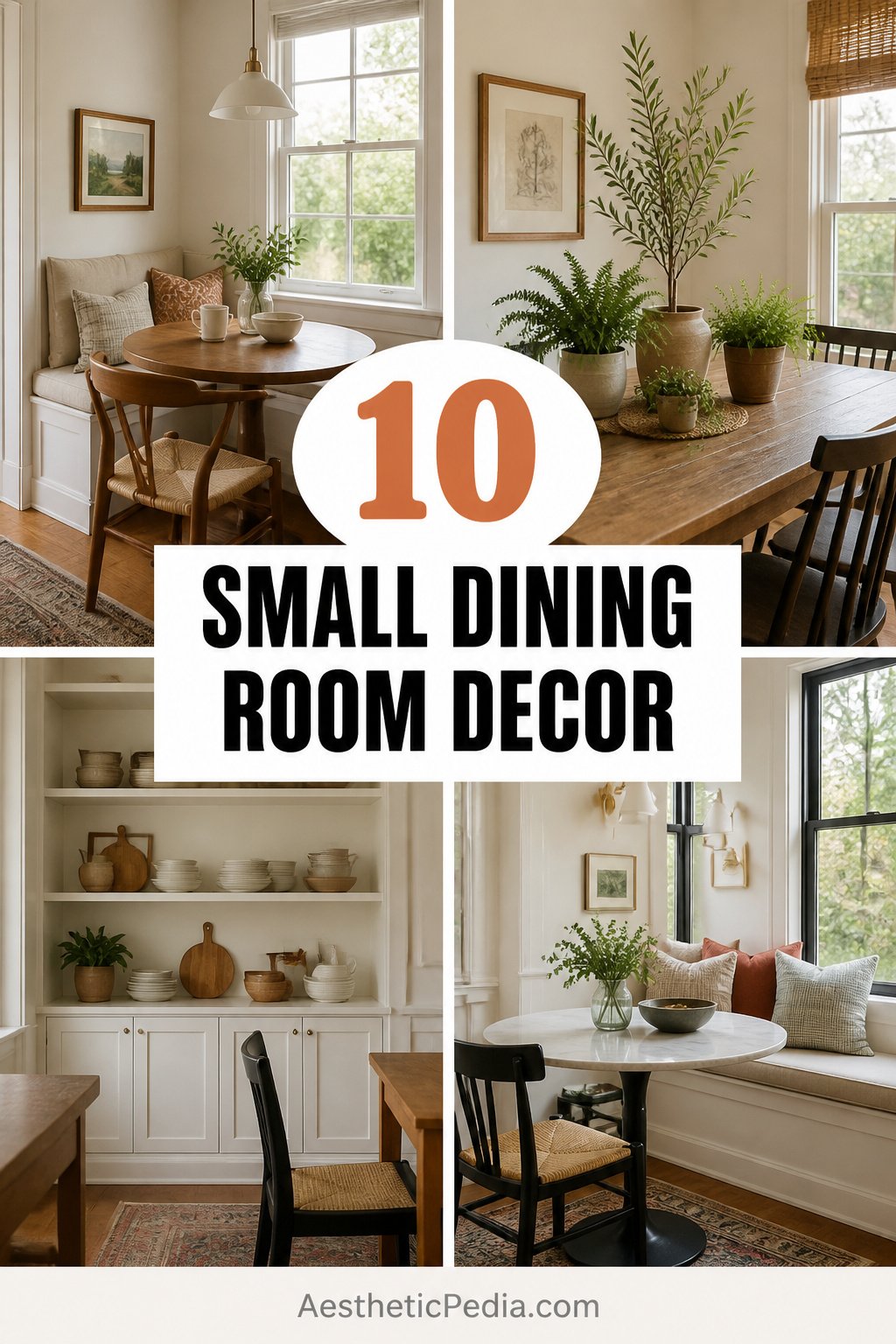
These 10 Small Dining Room Decor Ideas Will Make You Rethink Your Space
Go Lightweight with Seating
Choose chairs that look airy instead of bulky to keep sightlines open and the room feeling larger. I swapped out a heavy armchair for a slim wooden design and the whole nook felt instantly more spacious. You can mix two chairs and a bench if you like variety and extra seating for guests. This trick works especially well if you want to use the same area as a workspace sometimes.
Bring in Natural Greenery
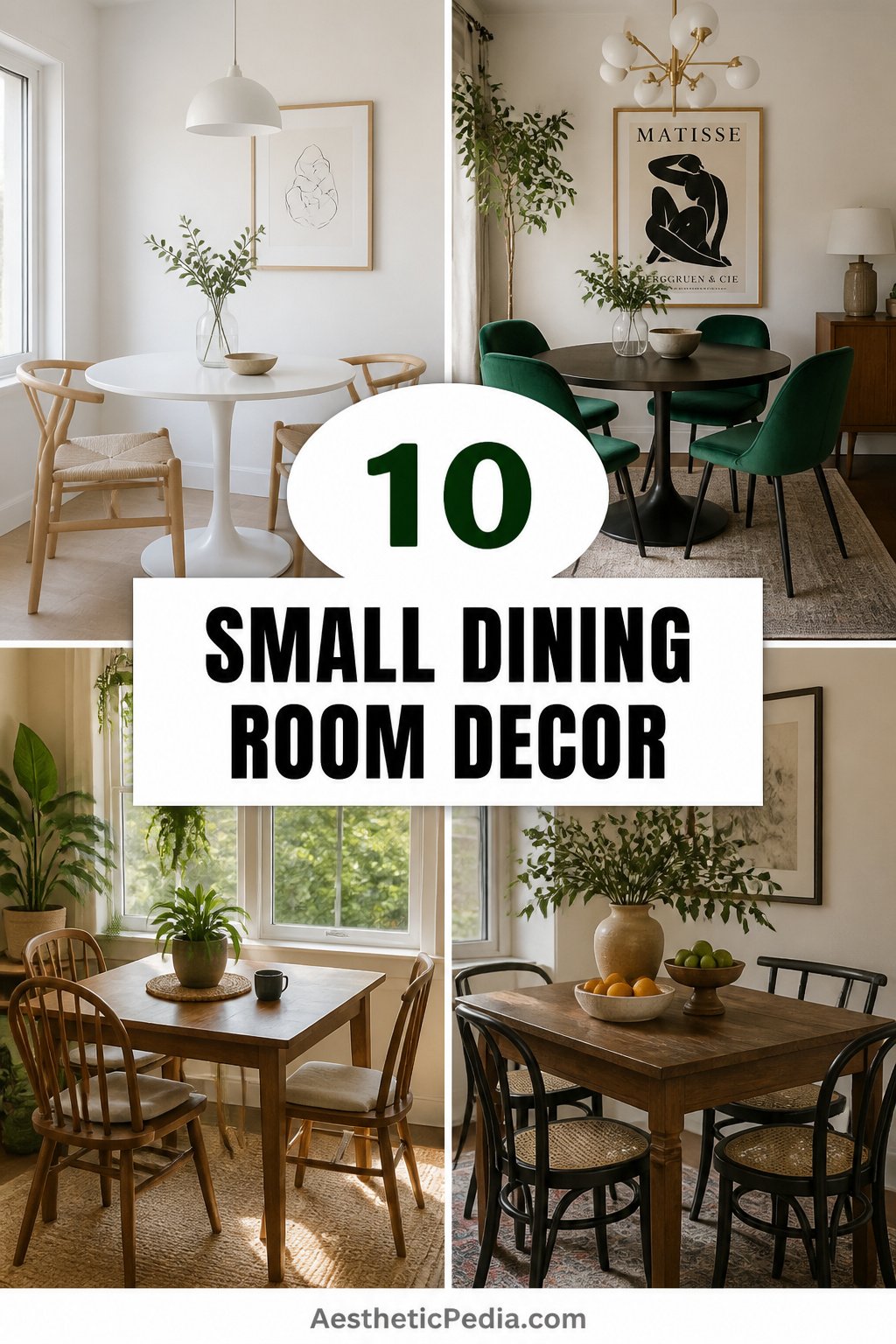
Plants add life and soften hard lines without taking up visual space, so pick trailing or tall skinny varieties. Place a potted plant on the table or tuck one beside the seating to create a relaxed, lived-in vibe. I love how green chairs paired with plants give a cottage-meets-modern feel that brightens meals. If watering is a struggle, choose low-maintenance options like pothos or a snake plant.
Use a Slim Bench Instead
A bench tucks neatly under a table and can fit more people during gatherings, which is great if you host. It also provides a cleaner silhouette than multiple chairs and helps you save floor space. One of my favorite tiny-dining hacks was painting a thrifted bench white – it instantly modernized the corner. Don’t forget cushions for comfort and a pop of pattern.
Curate Open Shelving
Open shelving turns wall space into useful display without the heaviness of cabinets, and it makes dishes part of the decor. Arrange plates and bowls in stacks, add a few plants, and keep things tidy so the shelf reads intentional rather than cluttered. You can rotate seasonal pieces to keep the look fresh and personal. If you’re nervous, start with one shelf and build out from there.
Anchor with a Small Rug
A well-sized rug can define the dining area and add texture without overwhelming the room. Pick a rug that allows chairs to sit comfortably on it when pulled out, but avoid oversized options that swallow the space. I used a low-pile woven rug in my studio and it changed the whole corner’s feeling from temporary to intentional. Keep colors light to reflect more light into the room.
Choose Light, Reflective Palettes
Soft whites, warm beiges, and muted pastels help walls recede so your room feels larger. Mirrors or glass tabletops add reflection which tricks the eye into seeing more depth. You’ll find that a single contrast piece, like a dark frame or a bold plant, makes the rest of the palette sing. When I repainted a wall pale gray, the space instantly felt brighter and more cohesive.
Keep Tableware Minimal
Choose a simple set of plates and streamlined glassware that can be stacked or stored neatly to reduce visual clutter. A small tray for salt, pepper, and napkins keeps the tabletop tidy and intentional. Try limiting centerpiece items to one vase or bowl to keep the focal point clean. This is a tiny change with a surprisingly big impact on how calm a space feels.
Mix Scale with Artwork
Don’t be afraid to hang art at eye level – a medium piece or a tidy gallery row adds personality without crowding the room. Keep frames light and use mats to give pieces breathing room so they don’t compete with furniture. I once hung a simple botanical print above my tiny table and it made the corner feel polished like a café. Art helps make small spaces feel intentional instead of leftover.
Maximize Natural Light
Position your table near a window if possible and use sheer curtains to let sunlight in while keeping privacy. Light-weight window treatments brighten the whole room and make colors pop. When I moved my table closer to the window, weekend breakfasts suddenly felt like a ritual instead of rushed bites. Reflective surfaces and light paint will double down on the effect.
Style with Functional Decor
Think hooks for aprons, a small tray for keys, or a compact bar cart that doubles as extra storage and styling space. These additions keep clutter off the table and make the room more purposeful. One time I added a tiny shelf for cookbooks and it became my favorite styling spot – practical and pretty. Layering function and decor keeps a small dining area useful and inviting for every day.
How to Actually Make This Work For You
Start by measuring your space and sketching a simple plan so every piece you bring in earns its place; keep functionality first and aesthetics second so your daily life improves, not just the photos; finally, pick one change and live with it for a month before swapping more pieces so you learn what truly matters for your routine.
How do I choose the right table size?
Measure your floor space and leave at least 30 inches around the table for chairs and traffic. Round tables often fit better in tight corners and can be more flexible for seating arrangements.
Can I mix styles in a small dining room?
Yes – mixing a modern table with vintage chairs or woven accents can feel curated instead of chaotic if you repeat a color or material to tie everything together. Keep scale consistent to avoid visual clutter.
What lighting works best for small dining areas?
Choose a pendant or slim chandelier that hangs low enough to create intimacy but high enough not to block sightlines; layered lighting with floor or table lamps helps for multiuse rooms. Warm bulbs make the area feel cozy and inviting.
How do I keep a small dining room tidy daily?
Create a routine of clearing the table after each meal and use attractive storage like baskets or a small cabinet to hide items you don’t use every day. A single habit like wiping the table nightly makes mornings feel more peaceful.