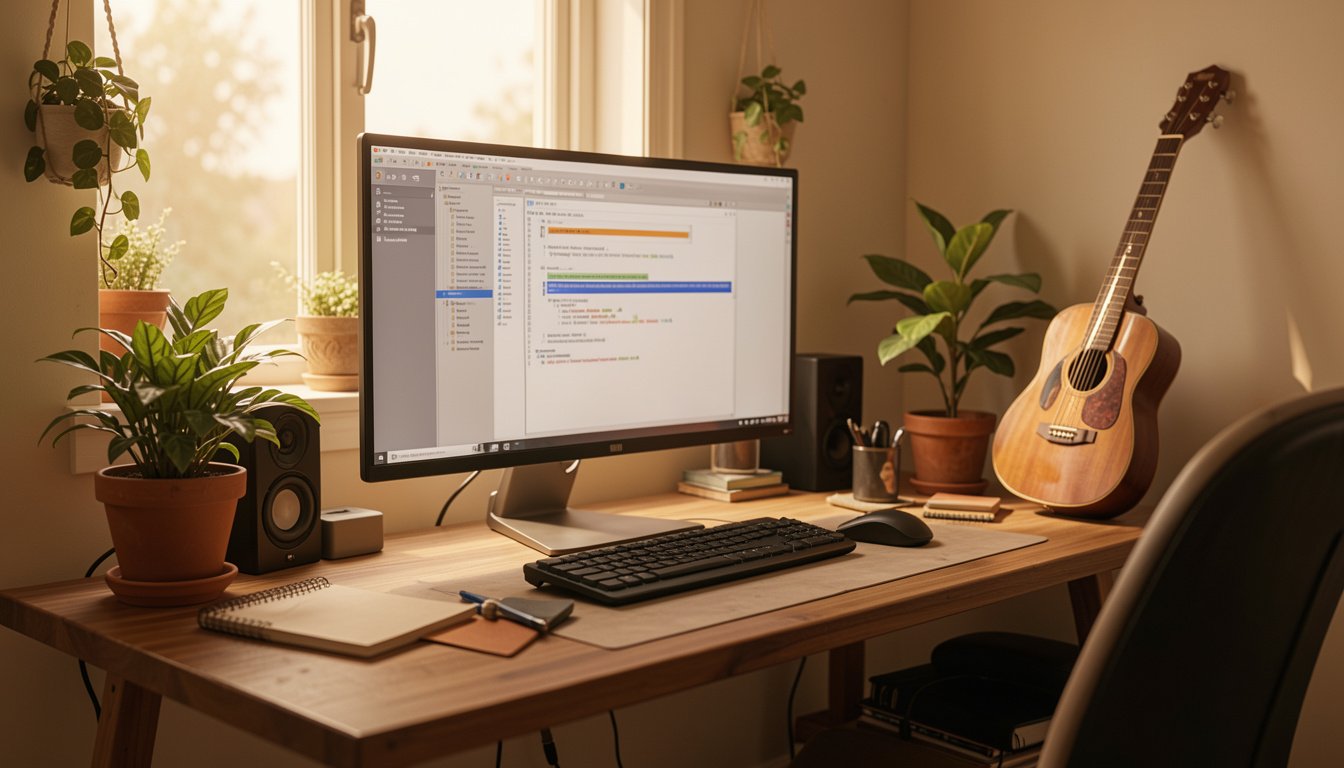
Okay, imagine walking into a tiny sunlit room and finding your favorite songs nested between a keyboard and a stack of vinyl – that exact vibe is what “home studio music aesthetic” is all about, and it instantly pulls me in.
I built my first mixing corner in a one-bedroom apartment and spent nights rearranging cables and plants until it felt like home, which is why this article exists – to share ideas that actually make your space sing.
Read on and you’ll get practical styling tips, real-life tweaks I swear by, and ten inspiring setups drawn from Pinterest that feel both creative and cozy.

These 10 Home Studio Music Aesthetic Ideas Will Inspire You
Sunlit Desk With Guitar
This setup feels lived-in because the guitar leans casually against the desk and the laptop is mid-session, which gives a raw, honest energy to the room. The warm wood tones and simple desk layout make it easy to grab an instrument and start recording right away, and I love that kind of effortless accessibility. If you add a small plant and a soft rug the whole space becomes more inviting without trying too hard.
Minimal Monitor Pairing
There is something so satisfying about a clean desk with two matched speakers flanking a single computer – it reads very intentional and calm. You can bring in personality through texture, like a woven lamp or a sheet of cork behind the monitors, and you’ll keep the workflow clear. I once reorganized my own setup to mimic this and found my mixing decisions got quicker because nothing was fighting for attention.
Double Screens For Flow
Two monitors and a tidy keyboard give a productive, studio-grade feel without needing a large room, and the wooden desk adds warmth that softens the tech. When you run your DAW on one screen and notes or reference tracks on the other it feels professional but still cozy, which is a sweet balance. Try angling the screens slightly inward to create a wraparound effect that keeps you focused and comfortable for long sessions.
Instrument-Rich Creative Room
This photo is a dream for anyone who loves gear – guitars, synths, amps and cables all in one layered space make the room visually rich. You can play with hanging your instruments or leaning them on stands to create vertical interest, and adding warm lamps helps them feel like art. I tend to keep my favorite instrument in view so inspiration is always a glance away.
Cozy Corner With Guitar
A simple desk, a lamp with soft light, and a guitar propped nearby gives you a dedicated nook for songwriting without needing a full studio. Small touches like textured cushions or a low shelf of records make it feel both functional and intimate, perfect for late-night lyric sessions. I remember writing half an EP in a corner like this – the constraints actually helped me focus creatively.
Plant-Filled Workstation
Adding plants to a tech-heavy desk creates a gorgeous contrast; the green tones warm up the black boxes and cables in a way that feels natural. You can use trailing plants on shelves to frame your monitors, which softens the whole aesthetic and improves air quality too. When I’m stressed during a mix, a quick glance at a plant calms me down and helps me hear more clearly.
Overhead Living Room Scene
An overhead view like this shows how a living room can double as a creative space when you embrace cables and speakers as part of the decor. Layered rugs, a couch for listening, and a laptop station on the floor can all coexist if arranged thoughtfully, and you might be surprised how much personality it adds. Remember that positioning speakers at ear height when seated will dramatically improve what you hear.
Green Corner Studio Vibes
This setup blends plants with gear in a way that feels intentional rather than cluttered – the plants sit on the desk and shelves like small sculptures. You should let greenery breathe; avoid crowding monitors and speakers to keep sound staging clean. I find the visual calm of plants helps my ears stay fresh during long editing sessions, which probably sounds silly but it works.
Airy Desk With Natural Touches
A bright desk facing a window, with a computer and a few carefully chosen objects, creates a minimalist aesthetic that still feels warm thanks to natural light. Consider using a light wood desk and neutral fabrics to keep the focus on sound and creativity, and add a single statement lamp for mood at night. When setting this up, I always test different curtain levels to find the perfect daylight balance that doesn’t glare on screens.
Eclectic Living Space Studio
This living room-meets-studio approach embraces furniture and plants alongside monitors and a desk, which makes the creative area feel like a natural part of your home. You can integrate storage that doubles as decor so cables are hidden but instruments stay accessible, and rugs help define the music zone. I used a similar layout during a house-share era and loved how it made collaboration easy – friends could lounge and listen without feeling like they were in a lab.
How to Actually Make This Work For You
Start by choosing one small zone and define it with a desk, a comfortable chair, and two monitors or a good pair of speakers so your ears have a reliable reference, then style around that anchor with plants, textiles, and a favorite instrument to give the space personality. Keep ergonomics in mind – your chair height, monitor angle, and a simple cable management routine will prevent fatigue and let you stay creative for longer. Lastly, experiment with one change at a time so you can hear and feel the difference each tweak makes.

How can I make a tiny room sound good?
Use soft furnishings like rugs and curtains to tame reflections and position your speakers away from walls when possible; small foam panels or bookshelves filled with records can also help control early reflections. Treating even a few key spots will dramatically improve clarity without major renovations.
Do plants affect acoustics?
Yes, plants mildly diffuse mid to high frequencies and make a room feel less harsh, but they aren’t a substitute for proper acoustic treatment; combine greenery with absorptive materials for the best result. The main win is psychological – plants help you relax, which improves your listening focus.
What’s essential for a beginner home studio?
Start with a reliable audio interface, a decent pair of monitors or headphones, and a simple DAW so you can capture ideas quickly, and add ergonomic furniture so you can work comfortably. Build your kit gradually based on the music you actually make rather than what feels impressive.
How do I keep my studio aesthetic tidy?
Adopt cable organizers, floating shelves, and a few decorative boxes to hide small gear while displaying instruments and art that inspire you, and aim for a look that feels curated rather than staged. A weekly five-minute reset can do wonders for both mood and productivity.