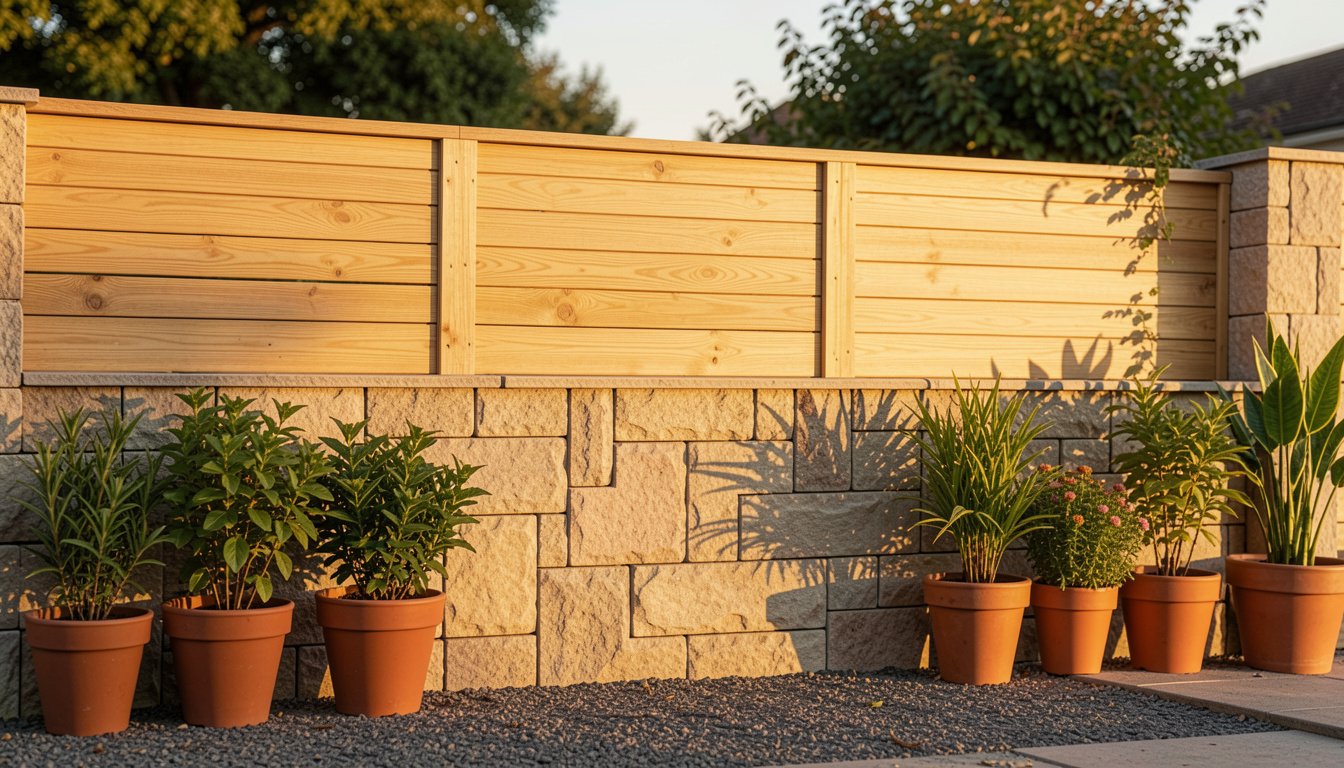
Okay friend, if you’ve been scrolling for home boundary wall design diy inspo, you’re in the right spot – I collected 25 ideas that actually feel doable. I get it, a boundary wall can be boring or awkward, but with the right materials and a little creativity it becomes the first thing guests notice.
I put this list together because I rebuilt my front edge last spring and learned so much from trial and error – some projects were cheap wins and others taught me patience. I want you to skip the mistakes I made and pick ideas that fit your yard, budget, and time.
Stick with me and you’ll find practical designs, simple DIY tweaks, and real-life tips to help you build a boundary wall you love.
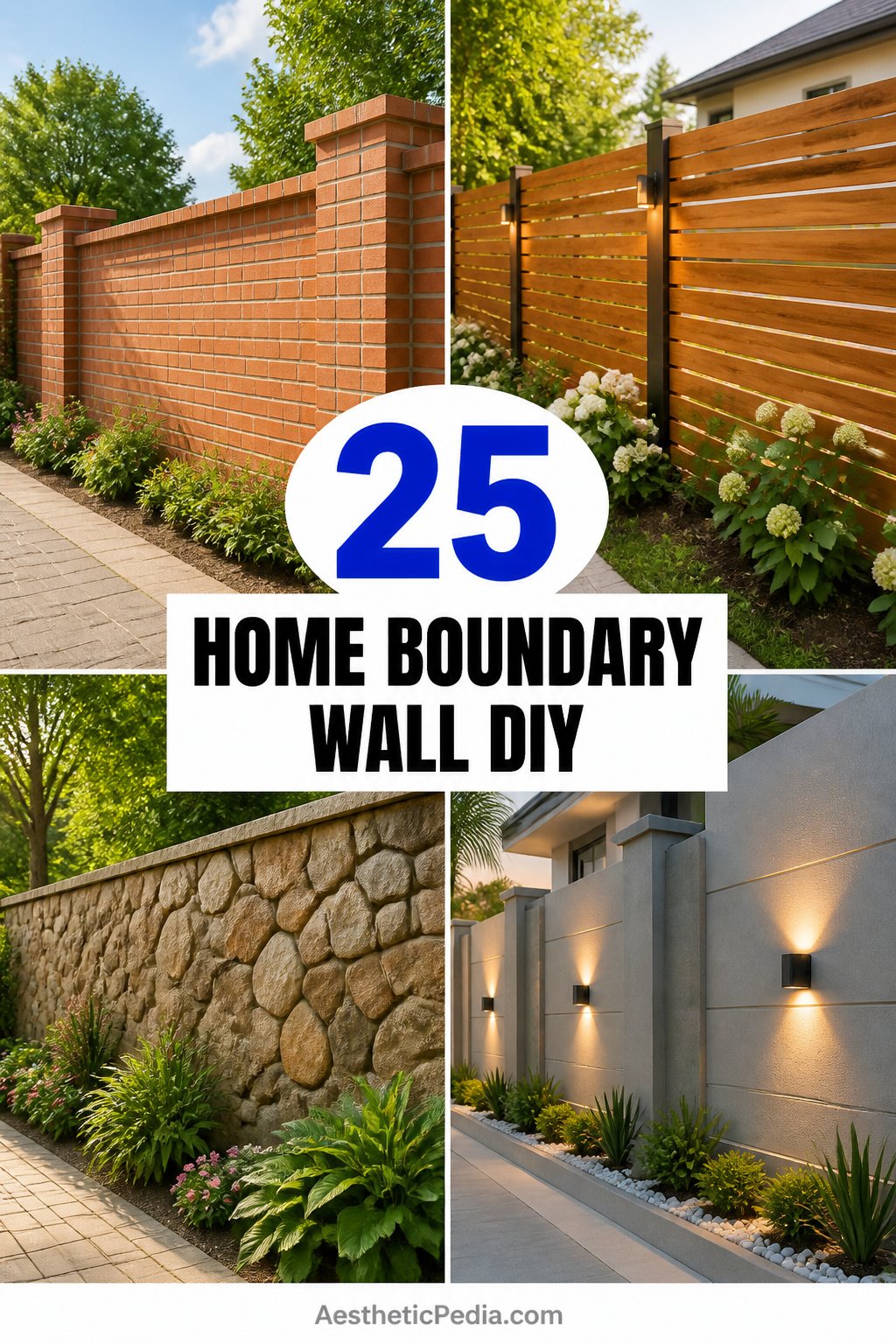
These 25 Home Boundary Wall Design DIY Ideas
Stone Row with Planters
This low stacked stone wall with integrated planters is timeless and forgiving if your leveling is a little off. You can source reclaimed stone or buy modular stone blocks to speed things up, and soil pockets let vines soften the hard edge. I built something like this for my side yard – it took patience but now the herbs spill over the top and make the curb feel friendly.
Wooden Slat Privacy
Wooden slats give you that modern, warm look and are easy to customize in spacing for privacy or airflow. Stain or oil the wood for longevity and use pressure-treated posts so you don’t have to replace them in a few years. If you’re nervous about building, start with a short section and add on once you love the look.
Brick and Cement Classic
Brick walls are a classic that add instant structure, and a simple DIY mortar technique makes them approachable for patient weekend builders. You do need a solid footing and some basic masonry tools, but the result will last decades if done right. I watched two neighbors lay a short wall together and it turned into an afternoon of coffee, chatter, and teamwork – you might enjoy that community vibe too.
Concrete Blocks with Greenery
Concrete block walls are affordable and fast, and you can paint them or add climbing plants to disguise the grey. Fill core cavities with rebar and concrete for strength where needed, especially if you have uneven ground. You can create little cutouts for succulents or herbs to make the wall feel intentional instead of utilitarian.
Low Rock Border
A simple rock border stacked by hand gives a cottagey vibe and is perfect when you want something short and natural. It’s a great weekend project because you can move stones around until the shape feels right, and it pairs well with wildflowers. If you find interesting rocks on walks, this is a lovely way to incorporate them.
Metal Pickets with Gate
Metal pickets offer a sleek look that keeps sightlines open while still marking property lines, and they can be installed in segments to make DIY easier. Powder-coated steel resists rust and looks crisp next to greenery, and you can add an easy latch gate to match. I recommended this to a friend who wanted a pet-safe front edge without feeling caged in, and she loved the transparency it gives her yard.
Timber Posts and Wire
If you want a budget-friendly boundary, timber posts with galvanized wire are practical and minimalist. They keep critters out while still allowing plants to weave through, and you can adjust wire spacing depending on the look. It’s weekend-friendly and perfect for larger properties where full walls feel excessive.
Brick Pillars and Fencing
Use brick pillars at intervals with wooden or metal infill to combine solidity and design flexibility, and it instantly elevates curb appeal. Pillars act as anchor points for gates or lighting and help hide joints between fence sections. This hybrid approach was what I used at my aunt’s home to create a structured, elegant entrance.
Textured Rendered Wall
A smooth or textured render over a block wall looks modern and clean, and you can pick any paint color to match your house. For DIY, practice on a sample panel first to get the trowel technique right and avoid patchy finishes. Add narrow ledge planting to break up long runs and keep the wall from feeling monolithic.
Lattice Top for Climbing Plants
Lattice on top of a short wall is a sweet way to add height without closing off light, and it supports climbing roses or jasmine for scent. You can buy premade lattice panels or make them with thin strips of wood for a custom size. I once trimmed jasmine all summer and the scent at sunset was like magic – highly recommend.
Gabion Baskets Filled
Gabion baskets filled with stone feel industrial and can be built in tiers for a dramatic look that doubles as seating in spots. They require less masonry skill but need heavy materials and a bit of muscle to fill. Use contrasting stone colors or recycled brick for interest and stagger the baskets for a stepped design.
Short Hedge with Bamboo Screen
A living hedge paired with a slim bamboo screen makes your boundary feel alive and soft, and it works well when you want seasonal change. Plant dense evergreens or boxwood and add a bamboo slat behind for instant privacy. It’s low-cost but does require ongoing trimming and care.
Modern Concrete Block Accent
Use concrete blocks as accents rather than a full wall to define entrances or driveway edges, and paint selected blocks for a graphic look. This approach saves money while adding sculptural rhythm to a yard. I sketched a pattern first and taped it on the ground to visualize the rhythm before building.
Decorative Capped Wall
Adding a decorative cap stone to a brick or block wall gives a finished, high-end look and protects mortar joints from weather. Caps can be natural stone, concrete, or preformed units and they make maintenance easier. For DIY, measure twice and seal the cap to prevent staining.
Reclaimed Timber Stack
Stacked reclaimed timber creates a rustic, warm barrier that blends beautifully with cottage gardens and mature trees, and sourcing reclaimed wood keeps the project eco-friendly. Make sure the wood is treated or naturally rot-resistant to extend life. I scavenged old beams for a tiny retaining wall and loved how the patina matched our terracotta pots.
Lights-Integrated Wall
Incorporating lights into your boundary wall makes your entryway cozy and usable after sunset, and LED strips or recessed fixtures work well with stone or wood. Plan electrical runs before finishing surfaces so you don’t have to retrofit later. Low-voltage landscape lighting gives great ambiance and is surprisingly affordable to run.
Curved Stone Feature
A gently curved stone wall feels organic and softens a strict rectangular yard, and building curves is easier than it looks when you lay stones in a staggered pattern. Use a string line to mark the curve and step back often to admire the shape. This was how I broke up a long driveway edge and it made the approach feel less formal.
Metal Mesh with Plants
Metal mesh panels combined with planter boxes let vines or succulents cascade and create a living fence that’s both modern and breathable. The mesh gives structure while plantings do the softening, which is ideal if you want texture without a bulky wall. It’s a lovely balance when you live somewhere with mild winters.
Painted Block Patterns
Painted graphic patterns on plain concrete blocks turn a blank boundary into a bold statement, and stencils or tape make crisp lines achievable for beginners. Choose colors that complement your home and repeat small accents across the property. I used a soft terracotta and it immediately made the block feel intentional.
Gate-Centered Masonry
Build the masonry to highlight your gate as the focal point, and add address numbers or a niche for a light to draw the eye. Symmetry can be calming, but feel free to offset details for a modern twist. A well-placed gate changes the whole feel of a facade so spend a little extra on hardware you love.
Mixed Materials Run
Mix stone, wood, and metal for a layered look that reads interesting rather than busy, and repeat a single material to keep cohesion. Small changes in texture or color break up long runs and help the eye move along the boundary. I sketched a palette and stuck to two neutrals with one accent color to keep it calm and curated.
Short Retaining Walls
If your yard slopes, short retaining wall segments both define the boundary and create planting terraces that are useful and pretty. Use interlocking blocks for DIY ease and compacted gravel for drainage behind the wall. Terraced beds can be your favorite gardening project – mine became the herb corner everyone asks about.
Vertical Garden Wall
Turn your boundary into a vertical garden with modular pockets or pallet planters for herbs and flowers, and it instantly becomes functional as well as decorative. Ensure good irrigation and pick plants suited to your light conditions to avoid a brown wall. This is a great option for small yards where every inch counts.
Simple Post-and-Rail
Post-and-rail is the most classic and budget-friendly way to mark a boundary while keeping an open, pastoral feel, and you can spice it up with plants or caps. It’s an easy beginner carpentry project, and posts set in concrete keep it sturdy. For a modern spin, paint rails a dark matte color and use natural posts.
Decorative Gate Accent
Sometimes the design is about the gate not the whole wall – choose a sculptural or detailed gate and keep the surrounding wall simple so the entrance pops. This is a good strategy when you want drama without the budget for an entire high-end wall. Add a mailbox and small light and the composition feels complete.
How to Actually Make This Work For You
Start by measuring and sketching a simple plan – include gates, utilities, and sightlines so you avoid surprises, and decide what matters most: privacy, curb appeal, or budget. Pick one material family to anchor the design and mix in accents sparingly so the whole front reads cohesive, and schedule the work in manageable chunks so it never feels overwhelming. Finally, test a small sample patch for finishes and colors before committing to the whole run so you can adjust without a giant redo.
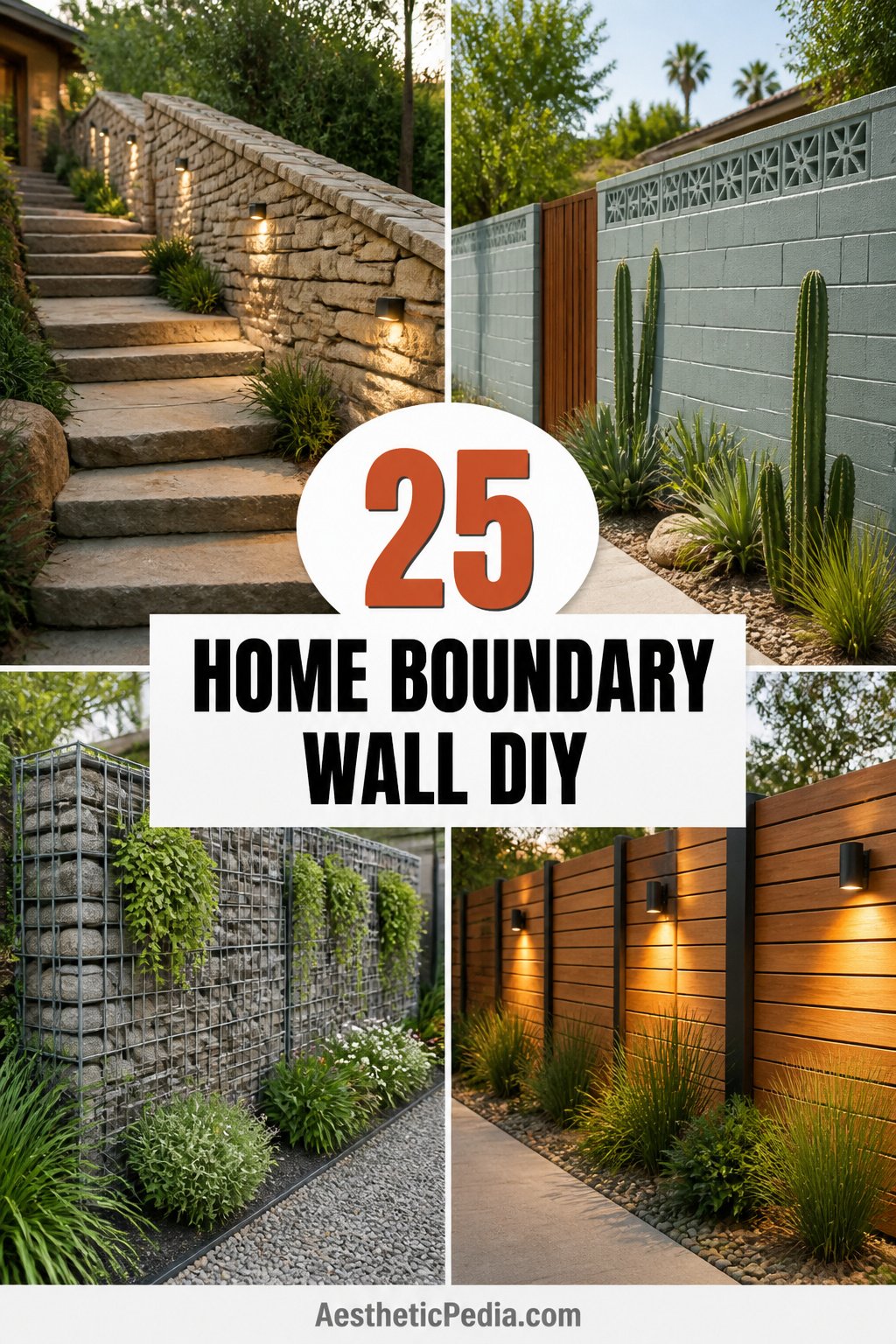
How much does a DIY boundary wall cost?
Costs vary widely depending on materials and length, but simple timber or wire options can be very affordable while stone and masonry are pricier. Get local material quotes and factor in tools or rental equipment when planning your budget.
Do I need planning permission?
Many low boundary walls or fences under certain heights don’t need permission, but rules vary by location and some areas restrict height or materials – always check local regulations before building. When in doubt, a quick call to your local planning office can save headaches later.
Can I build a durable wall alone?
Lots of projects are solo-friendly if they’re small, but heavier materials like stone or gabions benefit from an extra pair of hands and careful planning. For structural walls or anything retaining soil, consider professional advice to ensure safety.
How do I maintain my new wall?
Maintenance depends on material – wood needs periodic staining, metal benefits from rust protection, and masonry should be checked for loose mortar or cracks. Regular light upkeep can keep the wall looking fresh for years without major work.