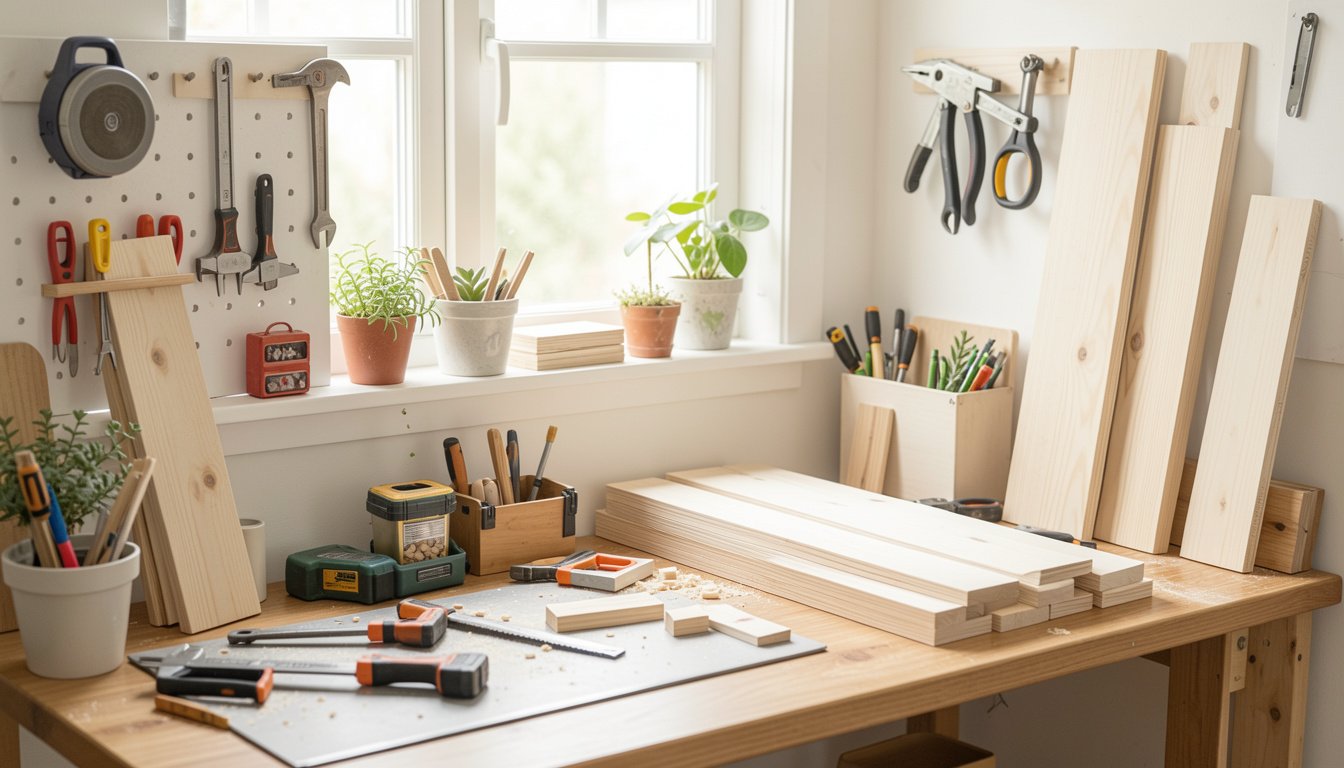
Okay, listen – I’ve been obsessed with little weekend makeovers lately and these home diy projects ideas are the kind that instantly make a space feel like you actually live in it. I always start with one tiny win so I don’t get overwhelmed and that’s how my whole apartment transformed.
I put this list together because I know how addicting it is to start something cute on a Saturday and suddenly have a whole new shelf or painted nook by Sunday night. I’ve tried most of these myself with varying levels of triumph and a couple goofy mistakes that turned out charming.
Keep reading and I’ll walk you through ten easy ideas, what worked for me, and simple tips so you can actually finish them this weekend.

These 10 Home DIY Projects Ideas You Can Start Today
Pallet Bookshelf Makeover
I turned some rescued pallets into low, cozy bookshelves and it instantly made my reading corner feel curated instead of cluttered, and the best part was how cheap it was to source the wood. If you like that slightly rustic, imperfect look you can sand a little and keep some knots for character. I learned to measure twice and cut once the hard way, but once you get the hang of it you can stack or paint them to match any room.
Clothesline Photo Display
Hanging prints and Polaroids on a simple clothesline above a bed is the quickest way to give a wall personality, and it feels delightfully casual compared to framed galleries. You can swap photos for postcards, fabric swatches, or little mementos when seasons change, which keeps things fresh without a big project. I used tiny wooden clips and a taut cotton cord and it became my favorite backdrop for lazy Sunday mornings.
Floating Plant Shelves
Installing wooden floating shelves and styling them with trailing plants and little pots brings a living, layered look to any blank wall, and it’s shockingly forgiving if your shelves are slightly uneven. Choose brackets rated for weight and put heavier pots on lower levels so nothing tips, and consider using lighter faux plants in rooms with less light. I find alternating textures – ceramic, rattan, and raw wood – makes the whole arrangement feel intentional.
Magazine Nook Shelf
A shallow wooden shelf that holds magazines, a candle, and a neat plant is such a tiny joy when you’re someone who loves flipping through pages with coffee in hand, and it doubles as a low-profile statement piece. You can repurpose an old drawer front or buy a thin plank and stain it in a warm tone to complement rugs and throws. I once used leftover stain from a larger project and it matched perfectly with my living room rug, which felt like a lucky win.
DIY Toothbrush Holders
Making your own toothbrush holders from clay, painted glass jars, or repurposed wooden blocks is functional and oddly therapeutic, and you can customize colors so your bathroom looks boutique-level without the price tag. If you’re working with clay, seal it properly so it handles moisture, and if you use jars consider adding pebble drainage or a silicone liner to keep things tidy. A friend gifted me a painted jar version once and I loved that it coordinated with our towels perfectly.
Branch Wall Art
Mimicking nature indoors by mounting a carefully chosen tree branch as a wall feature gives a space unexpected texture and a little story, and it works especially well in minimalist or Scandinavian-inspired rooms. Sand the branch lightly, treat for pests, and secure it with sturdy hardware so it’s safe over beds or couches. I tried this in a spare room and guests always ask where I bought it, which feels like the best compliment.
Glass Coffee Table Refresh
Updating a coffee table with new legs or a reversed shelf is a simple way to modernize your living room without splurging, and swapping in wooden legs adds warmth and an artisan vibe instantly. Measure the height you want before you buy legs and secure them with metal brackets for sturdiness, and consider painting the lower shelf a contrasting color for a chic two-tone look. I flipped the middle shelf of mine and it became my favorite staging surface for morning coffee photos.
Home Woodshop Basics
Learning to use a simple workbench and handsaw at a local makerspace made me fearless about small builds, and once you feel competent with a jigsaw or sander the sky is the limit for custom furniture. Start with a small kit or plan and ask someone to show you the basic safety moves so you don’t waste material or get nervous around power tools. I still remember the first time I cut a clean edge and how proud I felt to bring a plan from sketch to shelf.
Freshly Painted Accent Wall
Painting an accent wall is such an economical way to change the vibe of a room, and picking the right finish makes it feel intentional rather than rushed, so test a few swatches before you commit. Use painter’s tape, three coats if needed, and step back every 10 minutes to catch drips or uneven lines as they happen. I once painted an entire wall white and then realized a softer cream would have matched the textiles better, so sampling saved me from repainting the whole room.
Cabinet or Door Frame Build
Building a simple cabinet frame or a new door frame for a kitchen nook can elevate storage and feel like a real renovation without hiring out the job, and if you plan measurements carefully you’ll be amazed at how professional a DIY frame can look. Use straight, kiln-dried lumber and check squareness with a carpenter’s square before attaching anything permanently. My first cabinet had uneven shelves until I learned to shim properly, and after that correction it looked custom-made.
How to Actually Make This Work For You
Start small and pick one project that solves a real annoyance so you get satisfaction quickly, and schedule it into one weekend with all materials pre-bought so decision fatigue doesn’t stop you. Ask a friend to help with the heavier steps or join a local workshop for tool lessons, and keep notes on measurements and paint codes so future projects match without guesswork.

How long does a simple DIY project usually take?
Most small projects like shelves or a clothesline photo display can be finished in a few hours to one weekend depending on drying times, and painting can extend that by a day for coats to cure. If you plan, gather materials ahead, and work in focused blocks you’ll be surprised how quickly a space refresh comes together.
What tools are essential for beginners?
A cordless drill, a good measuring tape, a level, and a basic sander will cover most weekend projects and keep frustration low. Borrow or rent specialty items like jigsaws or table saws until you know you’ll use them regularly.
Where can I find cheap materials?
Look for reclaimed wood, thrift stores, online marketplaces, and clearance sections at home stores for bargains, and don’t underestimate local freecycling groups where people give away perfectly good materials. Sometimes the charm of a project is partly from repurposed pieces that carry a little history.
Is DIY cost-effective compared to buying?
Often DIY saves money for simple pieces and gives you customization that store-bought furniture lacks, but factor in tools and time when calculating value. If a project requires expensive tools you’ll rarely use, consider borrowing or trading skills with a friend to keep costs down.