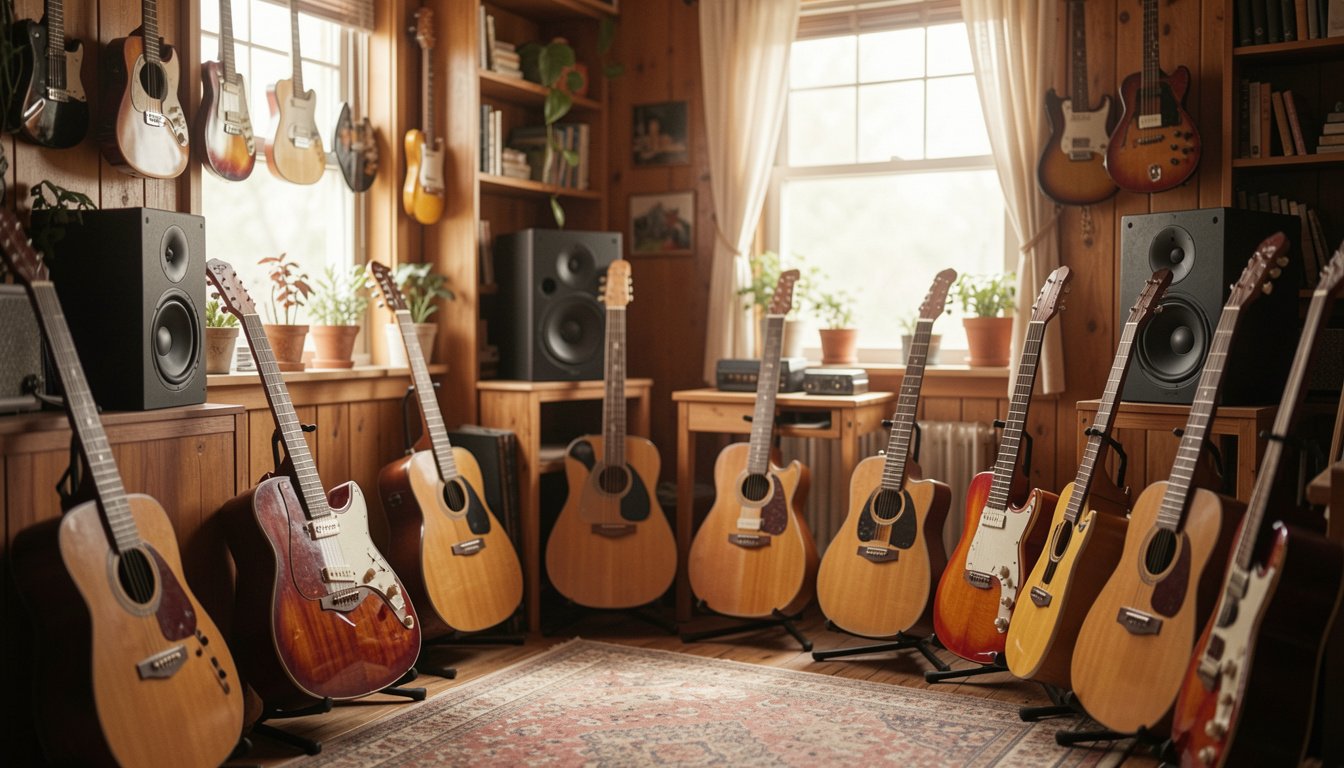
Okay friend, if you’ve been dreaming about turning a spare corner into something that actually inspires you to create, these home studio music ideas are for you. I gathered practical, pretty, and slightly indulgent setups that helped me stop procrastinating and actually record.
I wrote this because I remember staring at a blank wall and thinking a studio needed to be huge – then I learned small choices make a big difference. I speak from experience – my first “studio” was a loveseat, a laptop, and a mic on a stack of books.
Stick with me and you’ll leave with 25 real ideas you can mix and match so your space finally sounds and looks like you imagined.
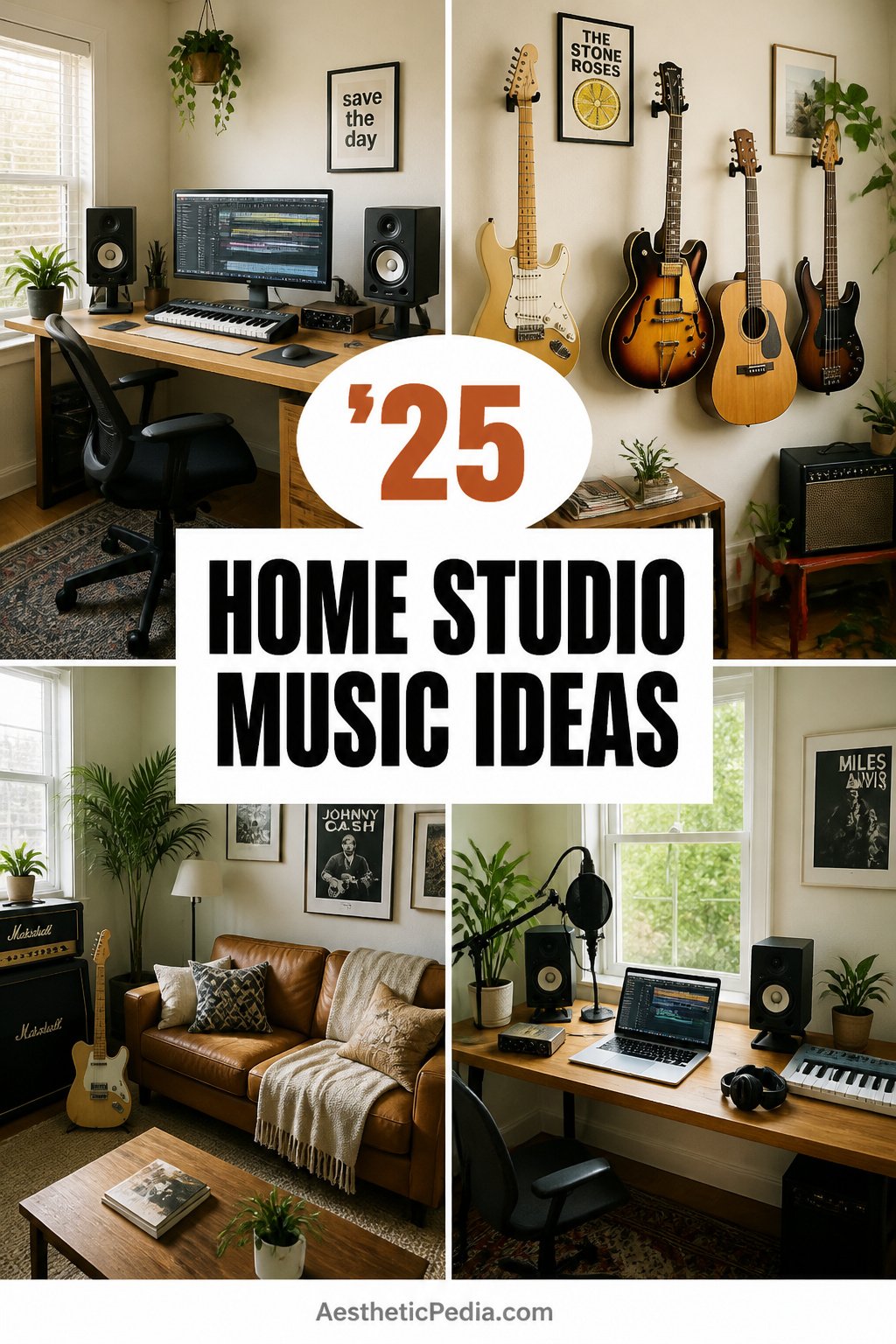
These 25 Cool Home Studio Music Ideas
Wall of Guitars
Hanging your guitars on the wall is one of the most dramatic home studio music ideas and it saves floor space while doubling as decor. I once had three cheap wall hooks and ended up rearranging the entire room to make my guitars the focal point. You can mix vintage pieces with modern axes and it still looks cohesive – the key is spacing and keeping sunlight off the necks.
Vintage Record Corner
A small record player styled on a wooden table brings warmth and personality to a studio, and it reminds me to reference analog sounds when producing. Pair records with a lamp and a stack of notebooks so it feels intentional, not cluttered. This little corner becomes a creativity trigger when I need a break from screens.
Compact Desk Command
A tidy desk with dual monitors and nearfield speakers makes tracking and mixing doable in a small room. I upgraded from a single laptop to this layout and my workflow improved overnight. Try angling speakers to form an equilateral triangle with your listening chair for a clearer stereo image.
Cozy Living Room Studio
Turning part of a living room into a studio blends comfort with creativity, which helped me avoid the cold, sterile vibe of some commercial rooms. You can tuck equipment on shelves and bring in a rug to tame reflections so sessions stay warm and intimate. Keep cables organized and you won’t have to clear the space every time guests come by.
Guitar Rack Showcase
A floor guitar rack is an easy way to display multiple axes while keeping them accessible for quick idea sessions. I learned the hard way that leaning instruments on furniture causes damage, so a rack felt like protection and a stylistic choice. It invites you to pick up an instrument between takes and keeps inspiration close.
Speaker Wall Display
Mounting different speakers on a wall can read like art while giving you quick A/B references during mixing. You should treat it more as a listening station than a permanent setup because room acoustics dominate sound. I used this trick to hear how a mix translated across small drivers and bigger cabinets without moving gear around.
Multi-Device Desk
Big windows, a clean desk, and a couple of interfaces make tracking feel professional even in a modest space. I love having natural light during the day because it keeps me focused and less tempted to stare at waveforms indefinitely. Just be mindful of glare on screens – curtains are your friend for evening mixes.
Amp and Couch Combo
A leather couch and amps clustered together make a comfortable lounge that doubles as a practice area, and it’s one of the most sociable home studio music ideas. When friends come over to listen, we always end up swapping stories and gear tips. It’s perfect for laid-back jam sessions and demos without moving heavy furniture.
Bookshelf Sound Treatment
Stacking bookshelves with mixed materials creates diffusion and absorption while adding color to the room, and I used this in my first real studio. Shelves filled with records, books, and oddities break up standing waves and make the space feel lived-in. Arrange objects of different sizes to avoid a flat-sounding room.
Minimalist Workstation
Simplicity can be powerful – a focused desk with a keyboard, interface, and a mic means fewer distractions and faster sessions. I had a week where I removed decorative clutter and finished three songs because my brain stopped wandering. Keep only what you need within arm’s reach and stash the rest.
Vintage Mic Display
Showcasing a vintage microphone on a desk or shelf tells a story and inspires better vocal takes. I often glance at mine and instantly shift into performance mode like a little ritual. If you have sentimental gear, let it be visible – it’ll remind you why you started.
Live Corner with Rugs
Layering rugs under amps and seats tames reflections and adds visual warmth, making live tracking sessions more comfortable. When I recorded acoustic demos in my apartment, rugs saved me from a brittle sound that dried out the vocals. Choose textured rugs to capture high frequencies while keeping the low end intact.
Studio Shelf Grid
A grid of wooden shelves above a workstation organizes synths, pedals, and mics while creating a cohesive backdrop for video content. I started using shelf grids when I began posting studio clips and it made my videos look intentional rather than messy. Use baskets and boxes to hide cables and small accessories.
Headphone Wall Hook
Hanging headphones on wall hooks keeps them safe and provides quick access during overdubs or mixing checks. I learned to keep a spare pair visible so guests can jump in without fumbling, which makes collaboration smoother. Label the hooks if you have multiple sets for different uses.
Amp Stack Corner
Stacking amps in a corner can create a pleasing visual and concentrate sound for electric rehearsals, but watch your room’s bass buildup. I remember testing cabinet positions for hours until a neighbor finally texted to ask about the new playlist – that was when I knew it was working. Try angling smaller amps slightly away from walls to reduce muddiness.
Record Display Wall
Showing framed album covers or vinyl on a wall gives character and celebrates influences, encouraging you to reference classic tones. I have a small shrine of albums that changed how I arrange, and it’s comforting during creative slumps. Keep it curated rather than cluttered to avoid visual noise.
DIY Acoustic Panels
Making your own acoustic panels from rock wool and fabric saves money and allows a color scheme that matches your studio. I painted the frames and swapped fabrics across seasons because it felt fun and customizable. Position panels at first reflection points and behind the speakers for immediate improvement.
Speaker Stands With Style
Investing in decent speaker stands dramatically cleans up midrange clarity and reduces desk coupling, and it’s worth the small expense. I once used stacks of books and then finally bought proper stands – the difference was like taking off headphones indoors. Keep tweeters at ear height to get a true reference.
Comfort-First Seating
A supportive chair that doesn’t kill your back encourages longer, better sessions and helps you make clearer decisions. I treated myself to an ergonomic chair after a week of muscle tension and my focus improved immediately. Try to choose seating with subtle style so it blends into your studio aesthetic.
Portable Recording Nook
Designating a small, movable nook with a laptop and interface lets you capture ideas wherever feels musical in your home. I often carry this setup into a sunroom for a different vibe and it sparks new songwriting directions. Keep a folding table and quiet mic on standby for sudden inspiration.
Decorative Cable Management
Using pretty cable channels and woven sleeves keeps things neat and adds a finished look to your studio – it’s an easy aesthetic win. After I organized cables once, I actually enjoyed setting up sessions instead of dreading the mess. Tidy wiring helps you maintain safety and prevents accidental unplugging mid-take.
Mixing Island Layout
An island-style desk where you can swivel between instruments is great for producers who like to move around while composing. I adopted this layout when I stopped working in a linear way and instead built songs in loops – it sped up my process. Make sure the island isn’t blocking speaker placement so mixes translate properly.
Live Performance Setup
Creating a small stage feel with a mic stand, pedalboard, and mood lighting makes rehearsals feel official and gets you performance-ready faster. I hosted a tiny listening party with this setup and the feedback session was invaluable. Soft lighting keeps the vibe relaxed while still looking professional on camera.
Bedroom-to-Studio Transition
If your studio shares a bedroom, use screens and rugs to divide the zones while keeping warm, personal touches intact. I split my space with a folding screen and a compact desk, then woke up excited to write because the room felt purposeful. Keep sleep and work rituals separate so you can rest properly when the lights go off.
How to Actually Make This Work For You
Start small and test what matters to your ears – a single acoustic panel, a proper chair, or better speaker placement often yields the biggest change for the least effort. Make a short list of must-haves versus nice-to-haves, then commit to a weekend of setup so the space becomes functional, not aspirational. Keep personal touches that inspire you visible, and set boundaries if your studio is part of shared living space so sessions can run uninterrupted.
How much should I budget for a decent home studio?
Answer – You can get started for a few hundred dollars with a basic interface, mic, and headphones, but expect to spend more for better monitors and acoustic treatment. Prioritize monitors and a solid interface because they affect your final sound the most.
Do I need to treat my room acoustically?
Answer – Yes, treating first reflection points and bass corners improves mixes significantly, though small fixes like rugs and bookshelves help a lot. You don’t need full treatment to notice major improvements from a couple of panels and repositioned speakers.
Can I record vocals in a small apartment without bothering neighbors?
Answer – You can if you plan sessions during reasonable hours, use dynamic mics that pick up less room, and add soft materials to dampen reflections. For loud instrument tracking, consider using DI solutions or temporary isolation like closets or blankets to reduce bleed.
Which piece of gear will change my workflow the most?
Answer – A reliable audio interface and a good pair of reference monitors or headphones will transform how you mix and track, making decisions faster and more accurate. Once those are in place, smaller upgrades like a comfortable chair or a better mic become more meaningful.