Okay friend, if you have a tiny corner and a big dream, small home studio music setups are the perfect way to make noise without needing a warehouse-sized room. I get excited just thinking about transforming cramped spaces into places where songs actually happen – and you can, too.
I started with a budget keyboard on my bedroom desk and slowly collected what mattered most to my sound. This post exists because I want to share 15 fun, realistic ideas that helped me get from clutter to creative flow.
Read on and you’ll walk away with practical inspiration, layout ideas, and little hacks to make your small home studio music space feel like yours.
These 15 Small Home Studio Music Ideas Will Make Your Space Sing
Smart Desk, Big Sound
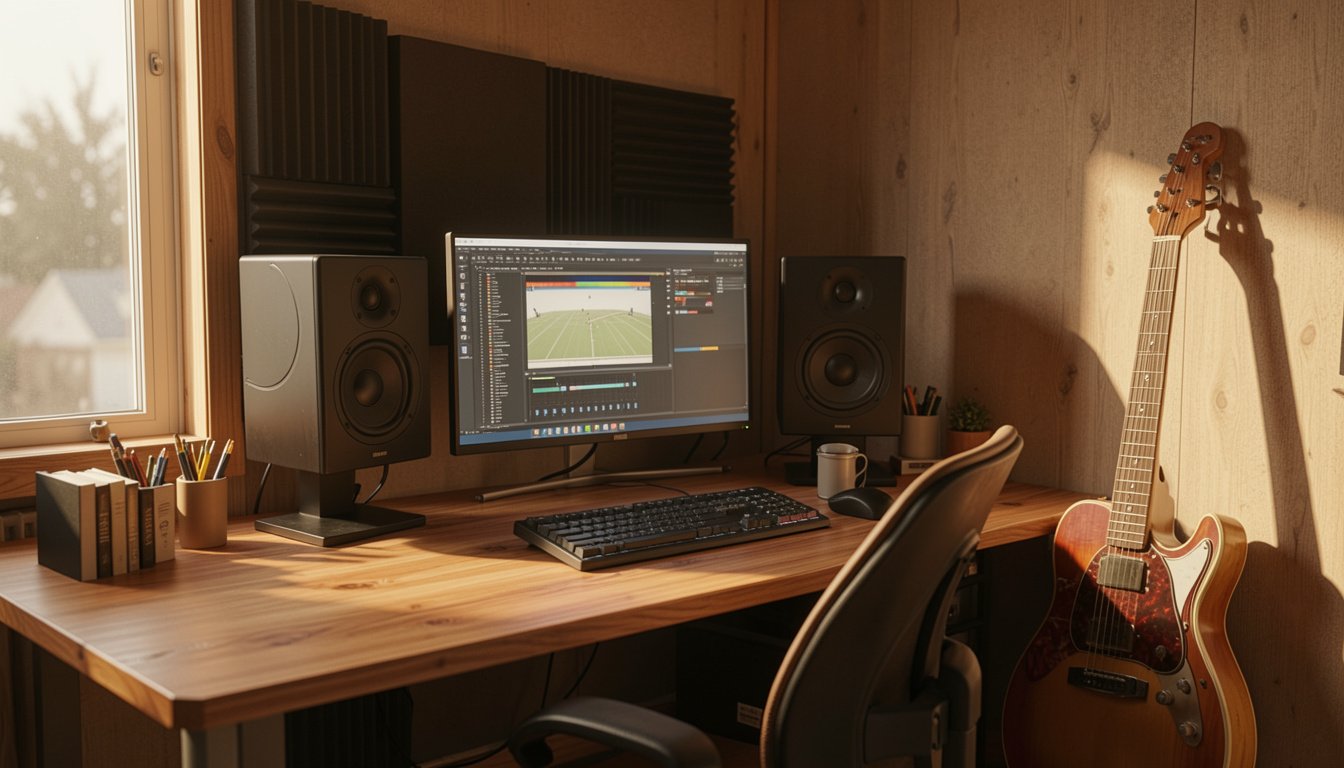
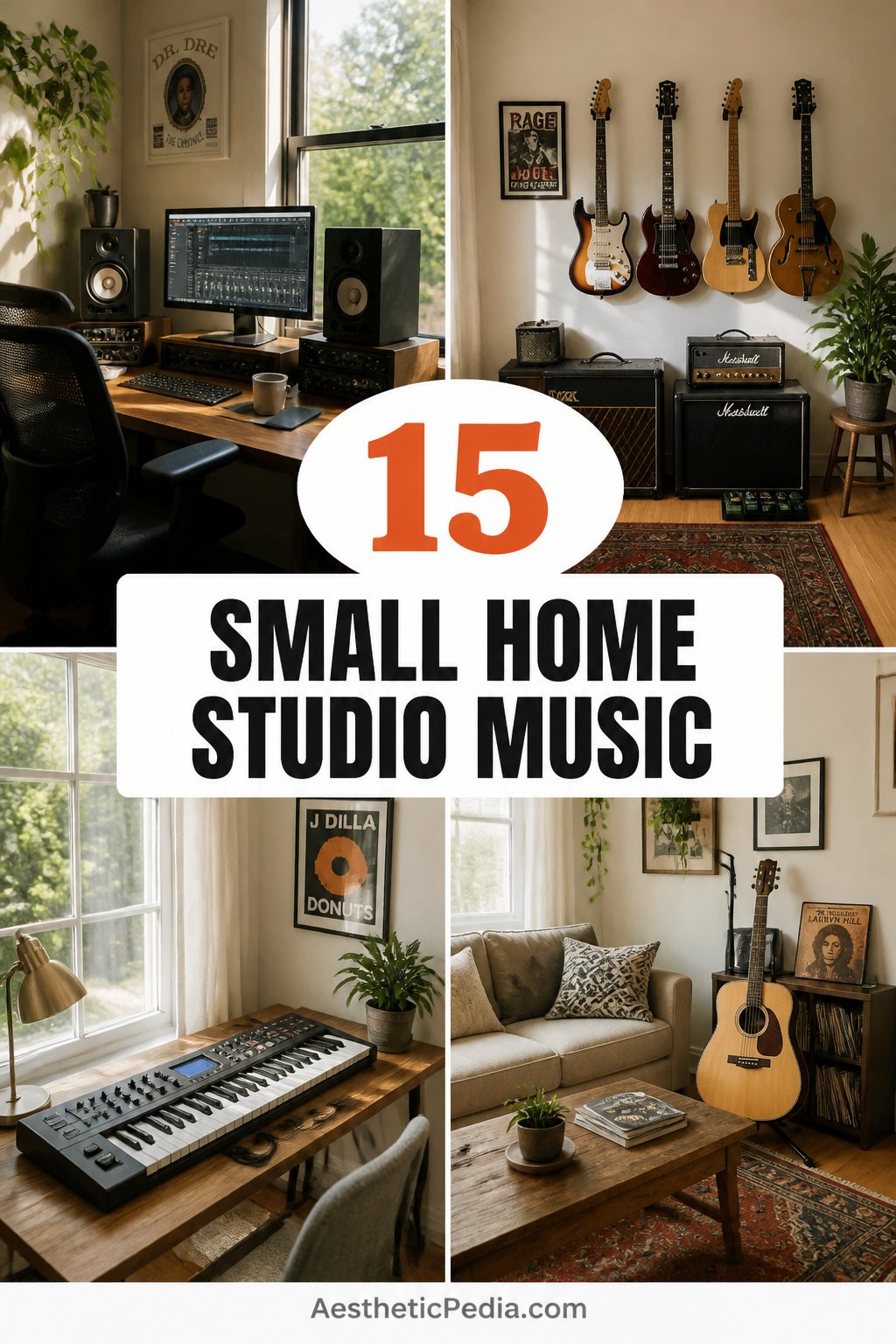
Start with a desk that fits your workflow – monitor speakers, an audio interface, and your laptop should feel like teammates rather than obstacles. I put my monitors on little foam pads and suddenly the low end stopped slamming into my laptop speakers. You don’t need a giant desk; a compact one with cable channels and a shelf for your interface will keep things tidy and encourage longer, more focused sessions.
Guitar Wall Display
Hanging guitars on the wall is both aesthetic and space-saving – it turns instruments into decor while freeing floor space for other gear. I hung my acoustic over the sofa and suddenly the room felt like a studio instead of a storage unit. It’s amazing how much design confidence that decision brings, and you’ll grab an axe more often when it’s casually on display.
Dual Monitor Focus
Two screens can transform small home studio music sessions because you can have your DAW on one and arrangement notes or plugins on the other. I moved my mixer to the left monitor and kept my piano roll up front – the shift cut my editing time in half. When you position screens at a comfortable angle and height, your neck will thank you and your workflow will feel sharper.
Living Room Setup Vibe
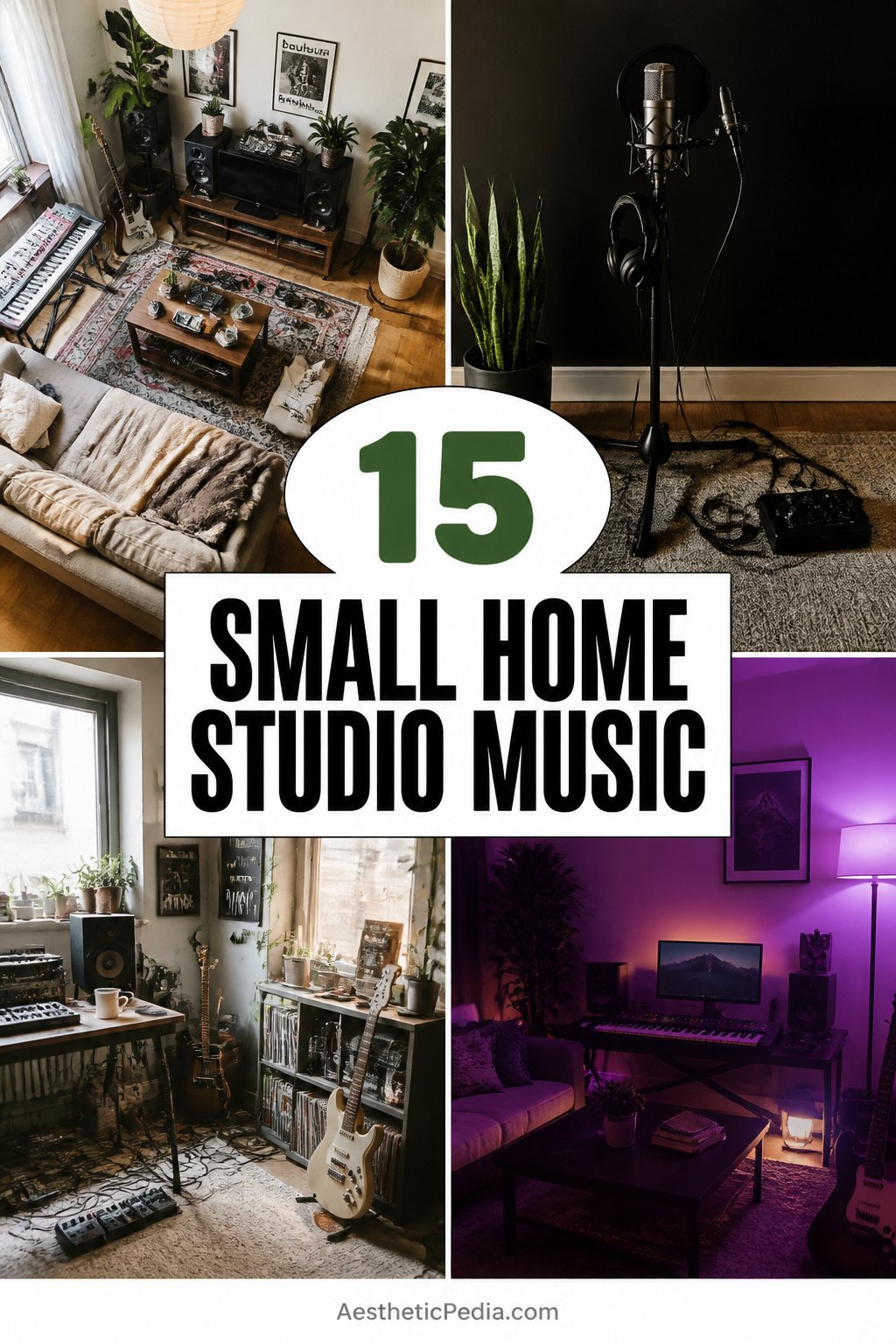
Not everyone needs a closed-off room – a living room studio can be cozy and playable if you accept a little imperfection. I once recorded a vocal on my couch with the window open and it turned out raw and honest in a way my controlled booths never did. Embrace ambient personality, use rugs and curtains to tame reflections, and don’t stress about absolute silence unless you’re mixing a classical piece.
Keyboard Corner Essentials
A slim keyboard desk under a lamp creates an inviting practice corner for synths and MIDI controllers. I keep mine angled to catch natural light in the morning which makes composition feel like less of a chore. Be sure to route your power and MIDI cables neatly to avoid tripping over them during inspiration-fueled late-night sessions.
Compact Gear Stacks
Stacking lightweight gear vertically saves floorspace and keeps everything within arm’s reach for fast workflow moments. On my tiny rack I keep a preamp, a small compressor, and a headphone amp stacked like a little engine of sound. This arrangement made it easier to do quick tracking sessions with friends without dragging gear across the apartment.
Minimal Mic Studio
A single condenser and a reflection filter can create a surprisingly good vocal booth in a small room – aim the mic away from reflective surfaces and use soft materials to absorb. I recorded a whole EP with just one mic and a blanket draped over a chair as a makeshift dampener. It’s proof that careful placement beats expensive isolation rooms most of the time.
Bookshelf Studio Magic
Bookshelves are underrated acoustic diffusers – they break up midrange reflections and keep the room sounding lively without sucking the life out of tracks. I placed my monitors so the bookshelf sat behind me and instantly the recordings had a more three-dimensional quality. Plus, books double as mood-boosting decor when inspiration feels low.
Overhead View Planning
Designing your studio from an overhead perspective helps when you’re optimizing traffic flow and furniture placement. I mapped my apartment on paper and realized swapping the couch and desk gave me a straight line from mic to monitors. Once you visualize it like that, small tweaks produce big comfort and efficiency wins.
Controlled Clutter Aesthetic
Clutter isn’t always bad – organized chaos can feel homey and creative as long as cables and safety are handled. I keep instrument stands and pedals in clearly labeled bins so my chaos looks intentional. Try keeping one active patch bay spot so you can plug and play without spending ten minutes untangling a mess.
Moody Lighting Setup
Colored or dimmable lighting is a simple trick that alters mood and focus for songwriting or mixing sessions. I use a warm lamp for daytime composing and purple LEDs for nighttime experiments; the change helps switch mental gears fast. Lighting can be a performance prop too when you’re recording videos or live streaming from your space.
Greenery and Acoustics
Plants add life and a touch of diffusion – tall leafy plants break up reflections, and hanging plants can soften harsh ceilings. I bought three easy-care plants that now sit near my monitors and they actually made the room feel calmer during long mixing marathons. Just keep them off expensive gear and away from direct humidity if you have open cases.
Wall-Mounted Workstation
A wall-mounted desk frees floor space and makes a small home studio music setup feel less cramped – use fold-down models or sturdy floating shelves. I installed a slim wall desk and suddenly the apartment had breathing room for a tiny amp and a plant. Sturdy brackets and careful weight planning are the only homework you need to worry about here.
Dual Monitor Tracking Desk
For those who track a lot, a desk built around two monitors and a center keyboard creates a natural command center. Once I consolidated my plugins and sequencer on the right screen and left the mixing console open on the left, sessions felt three times faster. Ergonomics matter here – good chair height and monitor distance seriously impact focus.
Pro-Style Editing Suite
Even small rooms can look pro-level with a neat monitor chain, rack units, and a clean workflow path from input to output. I saved up for a decent pair of monitors and a small mixer and the jump in clarity was night and day. Invest in one or two pieces that actually change your sound rather than a dozen that sit in boxes.
How to Actually Make This Work For You
Be realistic about your daily habits – if you write music at night, prioritize sound treatment and headphones over more monitors, and if you invite collaborators often keep a small seating area for guests. Think modular and portable so you can reconfigure quickly, and set a small storage habit like a nightly ten-minute tidy to keep the studio usable. Finally, choose one investment that upgrades your sound drastically and buy secondhand where it makes sense to stretch your budget.
How do I soundproof a tiny room?
Start with soft furnishings – rugs, curtains, and bookshelves help a lot, then add a reflection filter for vocals and seal door gaps. Target the primary reflection points rather than trying to treat the whole room at once.
What gear is essential for beginners?
Begin with a decent audio interface, one reliable microphone, and headphones or monitors that fit your budget – scale up later. Focus on learning your DAW and signal flow first, gear upgrades come more quickly once you know your needs.
How can I record without disturbing neighbors?
Use directional mics and close-miking techniques, record quieter instruments or use headphones for playback, and consider daytime recording when neighbors are less likely to mind. You can also double on DI signals for electric instruments and re-amp later if needed.
Is it worth investing in acoustic panels?
Yes, strategically placed panels will improve clarity and mix translation more than cosmetic purchases or extra monitors. Treat the primary reflection zones and consider bass traps in corners if your mixes feel boomy.