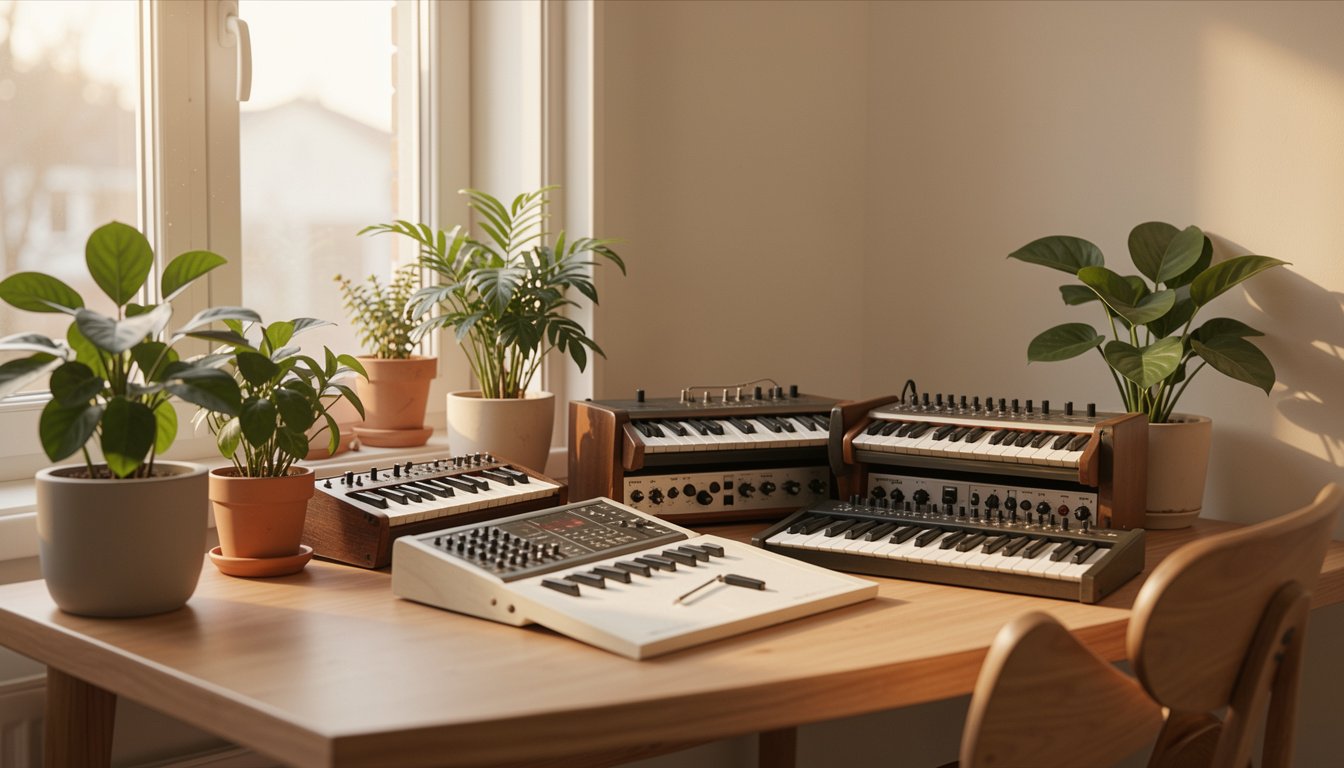
Okay, friend, picture this – your very own corner that screams “home studio setup aesthetic” and somehow makes both work and creativity feel like a warm hug. I get such a thrill thinking about cozy desks, soft light, and that perfect chair that actually lets you focus.
I wrote this because I spent months rearranging my tiny apartment to find a rhythm that felt right, and honestly it changed how I make music and take photos. I tried cluttered chaos, then sparse minimalism, and finally found a mix that fits my mood and routine.
Stick around and you’ll get 25 playful, practical, and pretty ideas to help you craft a home studio setup aesthetic that feels like you – not a showroom.
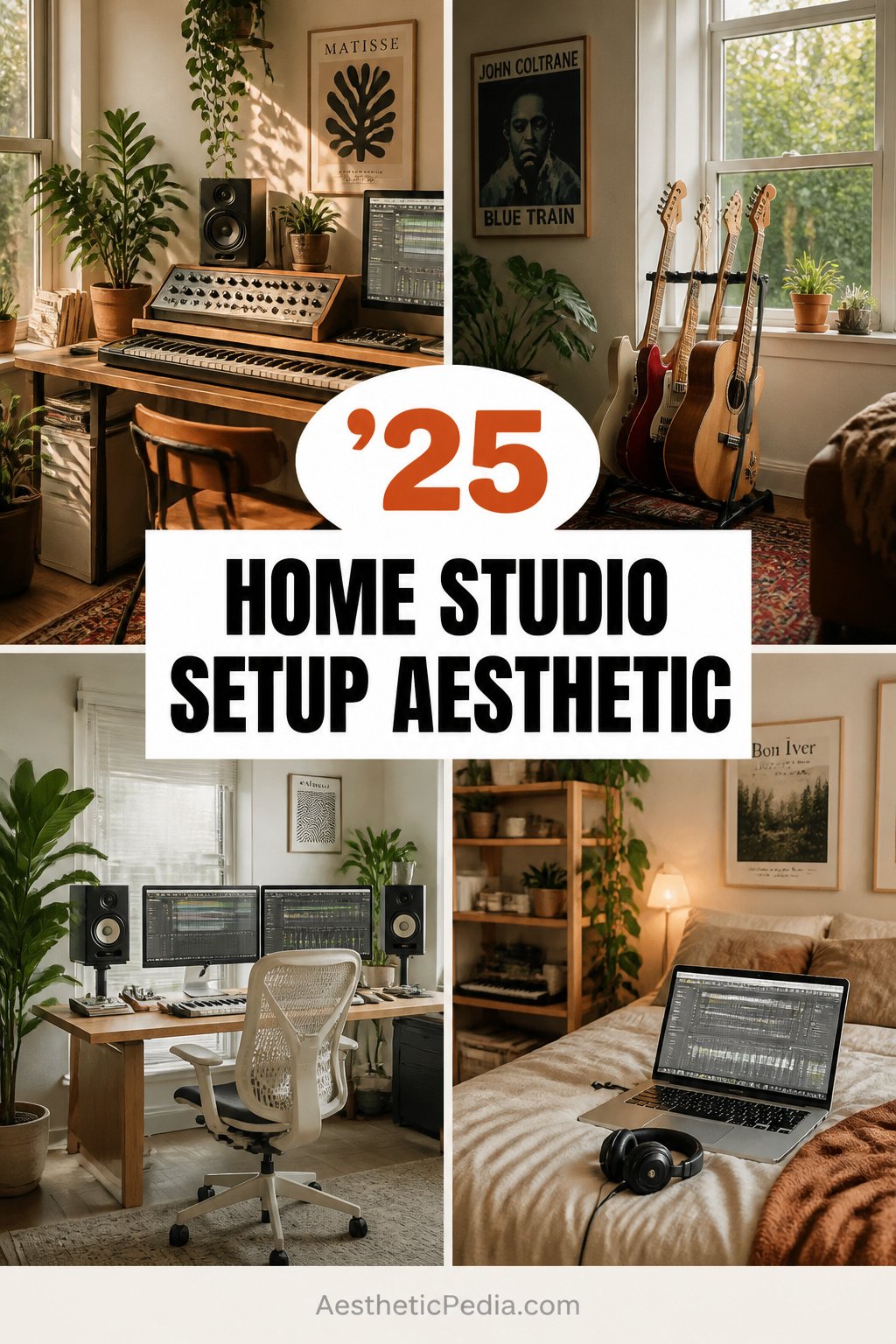
These 25 Home Studio Setup Aesthetic Ideas Will Inspire You
Warm Window-Desk Vibes
This setup with a computer, headphones, and music gear by the desk proves simple can be striking. Light from the window softens gear edges and makes cables feel intentional rather than chaotic. I once moved my desk to a window and suddenly every two-hour session felt like a mini-retreat.
Purple Ambient Living Room
Purple lighting transforms a living room into an intimate creative lounge that doubles as a home studio aesthetic dream. You can blend lamps and LED strips to set different moods for composing or editing tracks. Try dimmers so you control when the space feels electric or sleepy.
Overhead Gear Layout
An overhead view like this lets you see how furniture and gear interact across the room – great for planning flow and placement. I love mapping zones – mixing, listening, lounging – so nothing fights for space. If you rearrange often, snapshots from above are your best friend.
Camera Shelf Studio Wall
Rows of cameras and lenses on shelves give a studio wall instant personality and utility. It’s both decorative and practical when you need a new lens or want to show off your collection in videos. Keep labels or small tags to avoid digging when inspiration strikes late at night.
Green Desk Nook
Plants next to a computer bring softness and help with focus; they make your workspace breathe. I swear a single fern can improve my mood and reduce that grey-screen fatigue. Pick easy-care greens if you’re busy, and rotate them so everything looks fresh.
Sunlit Guitar Corner
Two guitars and a laptop by large windows is the kind of setup that begs for quick songwriting sessions. Natural light and instruments out in the open make creating feel effortless. Once, I wrote a whole chorus just watching shadows move on the floor.
Bed Laptop Studio
Working from a bed can be cozy when organized – keep headphones and an external drive close, and use a lap desk for ergonomics. This vibe suits those slow, late-night edits when the sofa feels too formal. Don’t forget a washable throw for messy snack nights.
Window Soundboard Setup
A sound board in front of a large window mixes utility with dreamy views; it’s a great compromise if you like daylight. Place acoustic panels nearby to avoid reflective glare in recordings. I rearranged mine once and realized the view improved my mix decisions more than I expected.
Plant-Filled Relaxed Studio
A room full of plants and comfy furniture feels less like a lab and more like a living, breathing studio. That organic element helps when you need to step away and come back with fresh ears. Rotate seating and plant height to maintain visual balance.
Guitars On Display Wall
Hanging guitars on the wall is both storage-savvy and instantly decorative – they become art. The height and spacing matter, so measure before you drill. If you rent, consider standing racks that give the same visual effect without holes.
Monitored Desk Focus
A single laptop with a monitor and keyboard keeps your workflow tight and distraction-free. Cable management under the desk is a small investment that pays days of mental clarity. Try warm-toned desk lamps to make long edits feel less harsh.
Multi-Instrument Hub
Many instruments in one room can look beautifully chaotic if you edit what’s visible and keep pathways clear. Display favorites, but store backups in cases to reduce visual noise. Invite a friend to jam sometimes – that energy is contagious and often sparks new ideas.
Personalized Desk Collage
Photos, clocks, and little trinkets above your desk make the setup feel uniquely yours and help you reset between tasks. I pin mood images and album art above mine, and they really help me get into the right mindset. Change the collage seasonally for a tiny refresh.
Dual Monitor Command Center
Two monitors feel built for productivity – one for editing and one for reference or instruments. Raise the screens to eye level to protect your neck, and use matching stands for a cohesive look. You’ll be surprised by how much easier long sessions become.
Hardwood Living Studio
Hardwood floors and spread-out gear can create a roomy, warm aesthetic that’s both functional and inviting. Add rugs to control acoustics and to anchor seating areas. When I moved from carpet to wood, my mixes sounded cleaner and my sessions longer.
Coffee-Fueled Desk Moment
A simple snapshot of someone sipping coffee at a desk reminds you that comfort matters as much as tech. Keep a dedicated coaster and a small shelf for mugs to avoid spills on gear. Rituals like this help make your studio time intentional.
Window Plant Workstation
A desk in front of a window with plants gives you daytime energy and screenside calm at night. Move lighter plants to the sill and keep larger ones on floor stands to create depth. Natural light is the best filter for mood and photos alike.
Minimalist Gear Desk
A neat desk with just the essentials proves that less is often more when crafting a home studio setup aesthetic. Focus on one or two tools and make them sing instead of collecting gear you rarely use. I pared down once and creativity bloomed because my choices had more meaning.
Cozy Living Room Studio Mix
Combining a living room’s comfort with functional gear creates a welcoming space for practice and production. Use rugs, curtains, and throw pillows to soften sound and visuals. Open layouts invite collaborators and make long days feel less isolating.
Vintage Electronics Corner
Vintage amps and electronic pieces add texture and nostalgia to your studio, giving it a signature personality. Balance them with modern elements so the space remains livable and efficient. Displaying a few classics encourages conversation and sparks stories during sessions.
Empty Room For Flex
An empty room with strategic lighting and movable seating can morph into recording, filming, or practice space on demand. Keep modular furniture and foldable acoustic panels for quick transformations. Flexibility is a superpower if you do podcasts, videos, or live streams.
Collector’s Instrument Room
A room filled with instruments can be visually overwhelming but absolutely magical when curated with care. Organize by type, color, or era to make browsing effortless. I once pulled a dusty synth from a shelf and wrote my favorite hook that week.
Bed-Desk Window Balance
A bedroom with a bed, desk, and window at center feels lived-in and cozy while remaining productive. Use soft separators like low bookshelves to define the sleep and work zones. Good lighting and a consistent routine will keep nights for rest and days for creation.
Wooden Desk Audio Setup
Wood desks paired with keyboards and speakers give a tactile, grounded feeling that helps when you edit or perform. Integrate a desk pad and a small lamp for cleaner visuals in photos and streams. Simple textures can make your studio photos feel editorial and inviting.
Compact Gear With Headphones
A laptop, keyboard, and headphones can form a perfectly efficient micro-studio if you prioritize ergonomics and sound control. Invest in a good pair of headphones – they’ll change your mixes and your mood. Keep cables tidy and you’ll enjoy every session more.
How to Actually Make This Work For You
Start by picking one tiny change – move your desk to the window, hang a guitar, or add a plant – and live with it for a week to see if it truly helps your process; small experiments beat giant overnight overhauls. Prioritize comfort and functionality together so the space supports long sessions without sacrificing personality, and finally keep a running list of what you use versus what you store, because editing your gear is as liberating as editing a song.
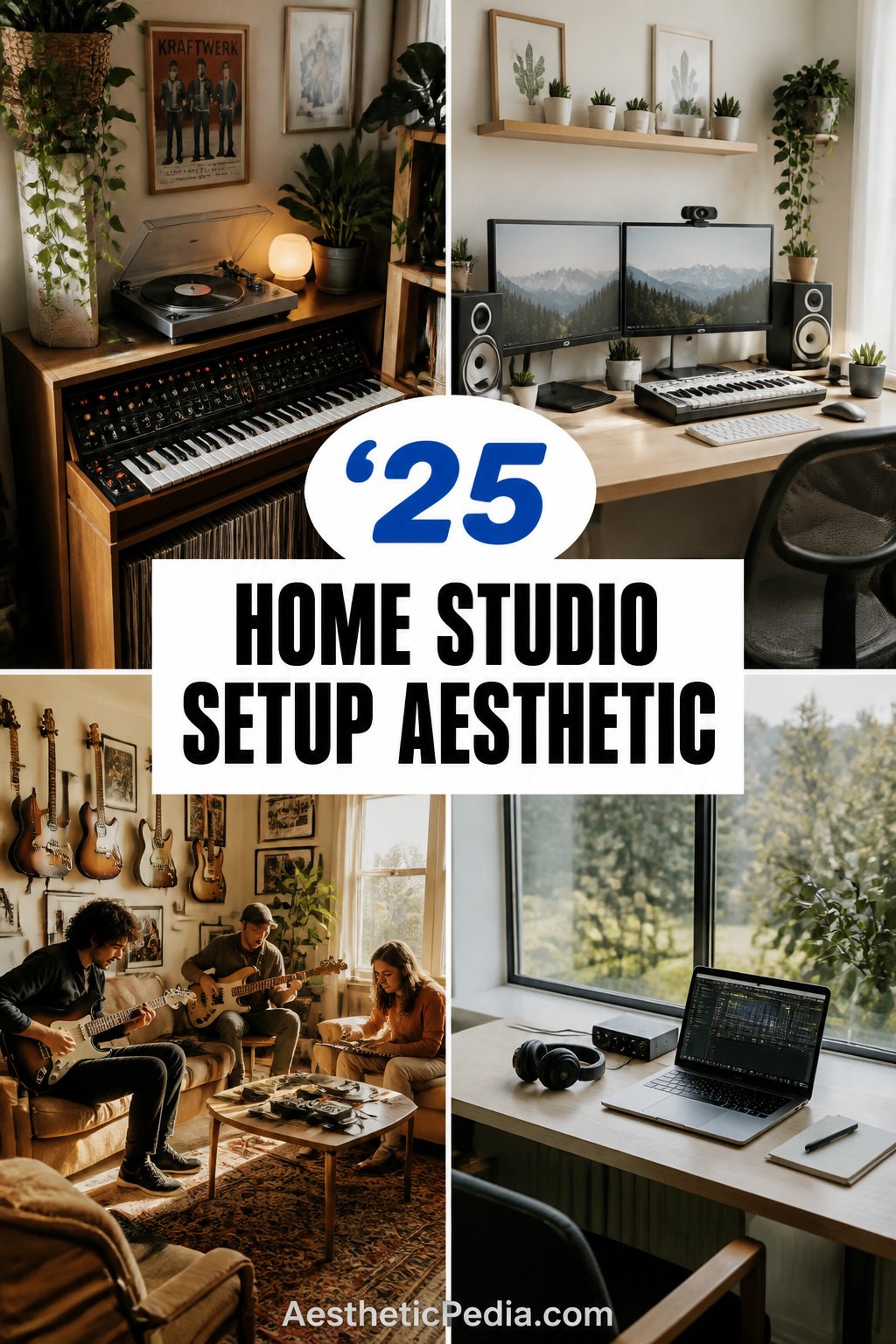
How do I choose the right lighting for my home studio?
Layer natural daylight with soft ambient lamps and task lighting so you can switch moods easily; dimmers or smart bulbs make this flexible. Avoid harsh overhead fluorescents and use warm-toned lights for comfort during long sessions.
Can a small space still feel like a real studio?
Yes – use vertical storage, wall-mounted instrument racks, and multi-purpose furniture to maximize square footage while keeping functional zones clear. Define areas visually with rugs and plants to make the space feel larger and purposeful.
What gear is essential for a beginner home studio?
Start with a reliable computer or laptop, a good pair of headphones or monitors, a small audio interface, and a microphone that fits your needs; add instruments and controllers as your process evolves. Invest in cable management and a comfy chair early to protect your back and sanity.
How do I keep my studio aesthetic without breaking the bank?
Mix thrifted furniture, DIY decor, and a few high-quality tools to balance cost and character; plants, framed prints, and clever lighting go a long way. Swap out inexpensive accents seasonally instead of buying expensive pieces, and curate rather than accumulate.