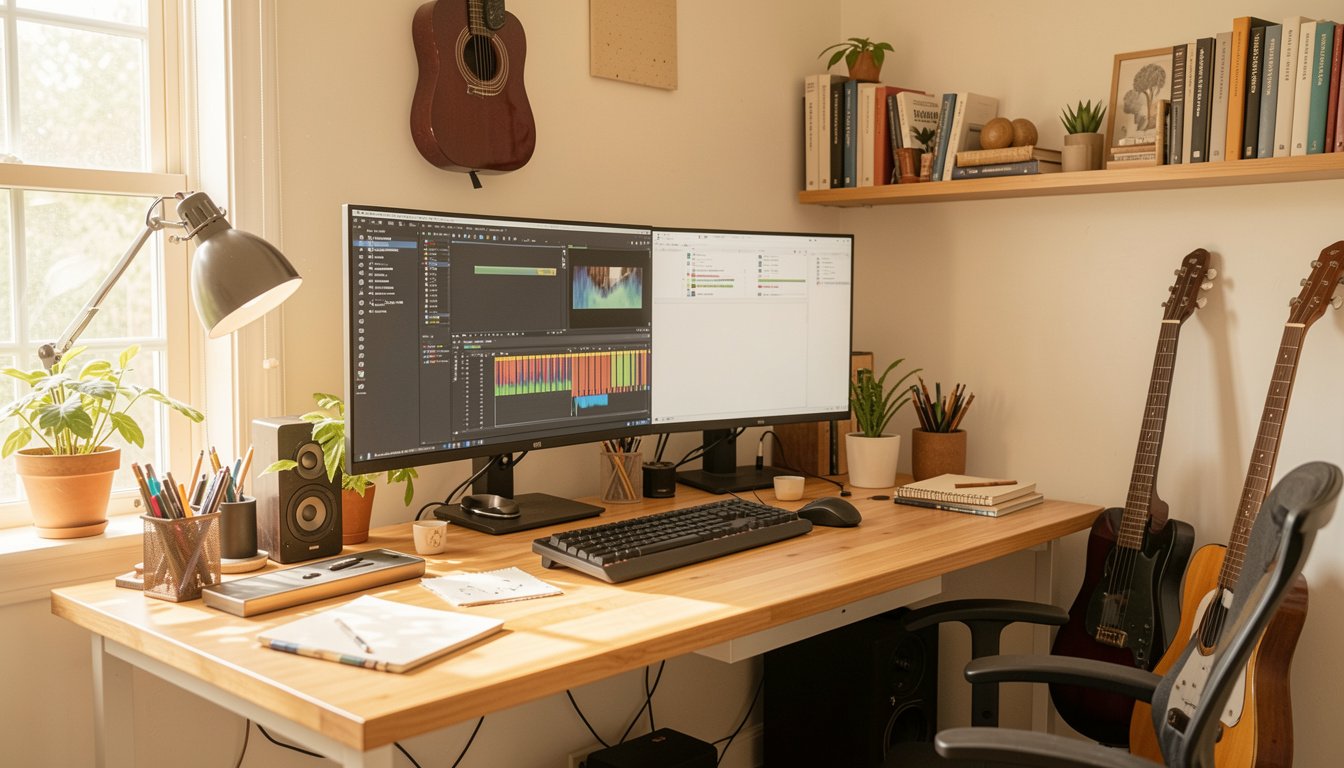
Okay, imagine waking up and stumbling into a space that actually makes you want to create – that’s the vibe I chase with home studio setup ideas. I love mixing practical gear with cozy corners so the room feels like both a workspace and a little creative nest.
I wrote this because I hunted through a million pins while setting up my own spot and found so many clever, budget-friendly solutions. I tried a few of them and learned which tricks actually save time and keep the chaos at bay.
Read on and you’ll get 20 realistic setups, quick tips for each, and the kind of small edits that make a studio feel professional and totally you.
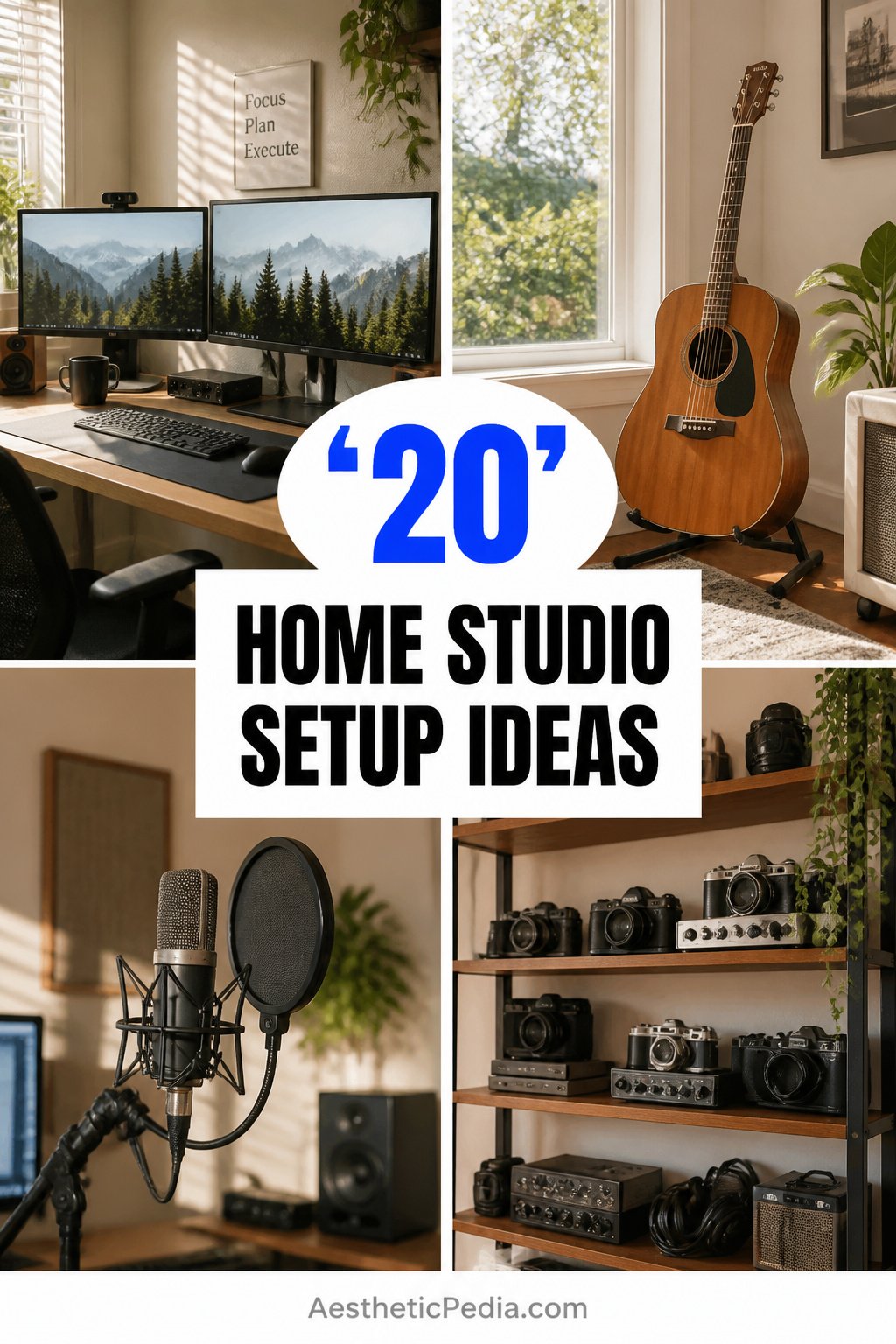
These 20 Easy Home Studio Setup Ideas
Gear Shelves That Spark Joy
Organized open shelves are practical and pretty, especially when you display cameras, lenses, and small speakers like art pieces. This look keeps everything visible so you don’t waste time digging through boxes during a session. I used a similar shelf for my podcast gear and it completely changed how quickly I could start recording.
Multimedia Music Corner
Stack a compact audio interface, midi keyboard, and guitar beside your desk to make switching instruments seamless. Layout matters – keep cables tidy and habitual items, like your capo or picks, in a small drawer for fast access. When I first set up a corner like this, I found I composed more because everything was literally within arm’s reach.
Instrument-Filled Creative Desk
Line up a few instruments near dual monitors so you can riff ideas and instantly record them. This arrangement invites experimentation, and the visual presence of instruments keeps you inspired. Try a small stand on the desk for the instrument you’re using most so it never feels like a chore to grab it.
Window-Forward Dual Monitors
Placing monitors in front of a window bathes your workspace in natural light and lifts mood during long editing sessions. Watch reflections and glare – a sheer curtain or angled monitors can help maintain clarity. I switched to this setup during a winter slump and the daylight made mixing feel less exhausting.
Minimal Dual Monitor Office
A clean desk with two monitors and a comfortable chair is deceptively effective for both music production and editing photos. Keep surfaces clutter-free by mounting speakers or using monitor stands to free desk real estate. You’ll be surprised how much faster you move between tasks when your workspace breathes.
Portable Photo Studio Setup
A portable umbrella light and a tripod with a laptop let you shoot product photos without a dedicated room. This is perfect for renters or anyone who needs flexible space – roll it out for a shoot and tuck it away after. I love how portable kits mean I can photograph props in different rooms and chase better natural light.
Living Room Studio Vibes
Transform part of your living room into a multi-use studio by placing a backdrop or temporary acoustic panel behind a comfy corner. The key is visual cohesion – pick colors and textures that flow with the rest of the room so it feels intentional. Guests think it’s cozy rather than chaotic, which is a win for shared spaces.
Cozy Reading Nook Lighting
Swap a side chair and lamp into a creative reading nook where you can sketch song ideas or storyboard shoots. The soft lamp light encourages low-pressure brainstorming and is perfect for late-night planning. I keep a small notepad on the side table and often end up jotting down lyrics mid-coffee break.
Floor Gear With Ease
Leaving frequently used instruments on the floor by your desk makes them instantly playable and keeps flow natural during sessions. Add floor protectors or a low rug to avoid scuffs and to reduce echo slightly. This setup is casual but functional, and I’ve found it encourages spontaneous playing between mixing tasks.
Moody Blue Recording Corner
Colored LED strips or smart bulbs can set the tone for different projects and help you mentally switch modes. Blue lighting often feels cinematic and calm, which is great for late-night vocals or introspective editing. I experimented with blue lights for a month and noticed my mixing sessions felt calmer and more focused.
Bright Living Room Space
Wide windows and airy furniture create a studio that doubles as a comfy hangout, ideal if you host collaborators or clients. Keep cables hidden with channels and choose multi-use furniture like ottomans that store cables and stands. When friends visit, the space still reads cozy rather than industrial, which makes collaborations feel more relaxed.
Lounge Meets Studio
Mix seating and soft textiles with gear for a room that supports both album listening and photo shoots. Rugs, pillows, and plants soften reflections and make long listens more comfortable. I once recorded a demo with a friend on a couch setup like this and the relaxed vibe made the take feel more honest.
Bedroom Desk Setup Idea
Use a compact desk against the wall under a window to maximize light while keeping your bed area separate visually. Vertical organizers and slim monitors help preserve floor space in smaller bedrooms. This sort of tiny, tidy setup works amazingly well for writers and producers needing a calm space at home.
Empty Conference Conversion
A bare room with a round table and chairs becomes a rehearsal or recording spot when you add portable acoustic panels and a mic. The circular layout helps conversation flow, which is great for roundtable podcasts or collaborative songwriting. I converted a spare meeting room once and ended up with the most productive week of sessions I’d had in months.
Compact Monitor And Speakers
Two monitors and a pair of reference speakers are the backbone of many home studios and offer great ergonomics for editing. Place the speakers at ear height and form an equilateral triangle with your listening position for better accuracy. Even a modest speaker setup can dramatically improve how your mixes translate to other systems.
Outdoor-Looking Parasol Desk
A parasol or umbrella near a laptop creates a breezy, sunlit corner that’s playful and inspiring for creative planning. It’s an unexpected prop that helps you chase different light moods for product photography. When I staged a shoot with a parasol, it felt like bringing a little outdoor studio inside, which made the images pop.
Gear Shelves For Recording
Shelves loaded with interfaces, synths, and cables look intentional when labeled and grouped by function. Use clear bins and cable ties so you can grab what you need in seconds rather than hunting through a pile. I labeled everything once and it cut my setup time in half on crazy deadline days.
Simple Desk With Speakers
Sometimes the simplest desk, with just a laptop and speakers, is all you need to start producing. Prioritize a good chair and monitor stands to keep posture and acoustics comfortable. Keeping things minimal encourages you to finish instead of endlessly reworking ideas.
Ceiling Fan Cozy Studio
Ceiling fans add ambient motion and help with ventilation during long sessions, especially in smaller rooms. Pair with soft rugs and wall hangings to dampen reflections and create a warm sound. I always leave gentle airflow on during vocal takes to keep energy up without affecting mic quality.
Guitar Duo Desk Setup
Two guitars flanking a laptop create an immediate play-ready station for songwriting and quick tracking. Keep one on a stand and the other on a low hook for variety during takes. This layout made me rediscover chord progressions I hadn’t played in ages simply because they were visible and ready.
How to Actually Make This Work For You
Start by picking one precise goal for your studio – whether that is podcasting, recording guitar, or streaming – and let that guide what you keep on your desk and shelves. Invest in a few comfort items and basic acoustic treatment to tame reflections and protect ears during long sessions, and schedule small weekly resets so clutter never spirals back in.
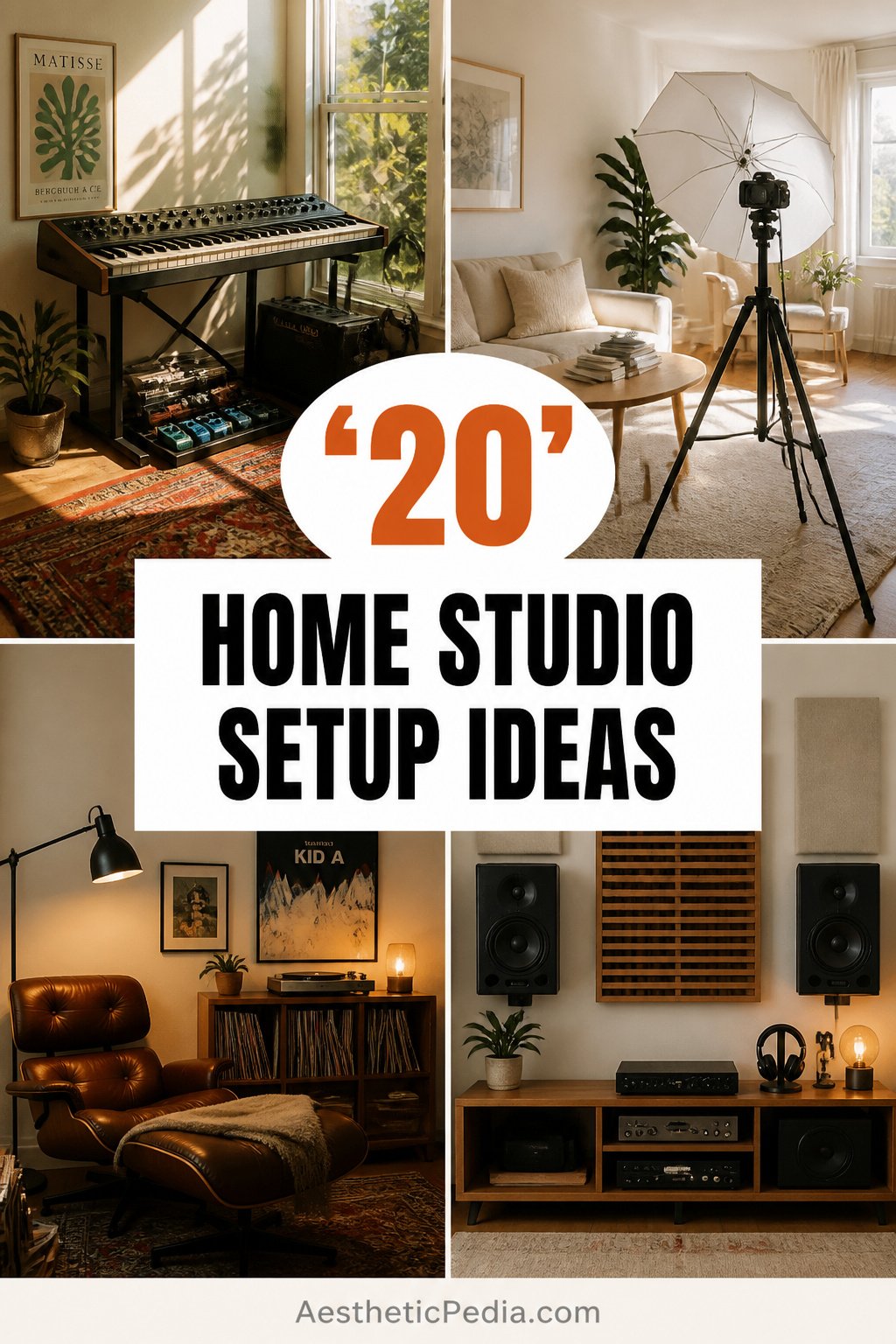
How much space do I really need?
Answer – You can start with a corner of a room or a small desk area as long as gear is arranged logically and cables stay tidy. Many productive studios fit into a single closet or corner with smart storage solutions.
Do I need acoustic treatment right away?
Answer – Basic acoustic treatment helps but you can begin with rugs, curtains, and bookshelves to reduce reflections while you test your needs. Add bass traps and panels gradually as your listening reveals problem frequencies.
What gear is essential first?
Answer – For most creators, a good pair of headphones or reference speakers, an audio interface, and a reliable mic or instrument are the best first purchases. Upgrade gradually based on the projects you actually finish.
How do I keep the studio tidy?
Answer – Build small daily habits like a five-minute desk reset and labeled storage for cables and adapters to prevent clutter from piling up. A weekly deeper reset helps keep systems efficient and your creativity flowing.