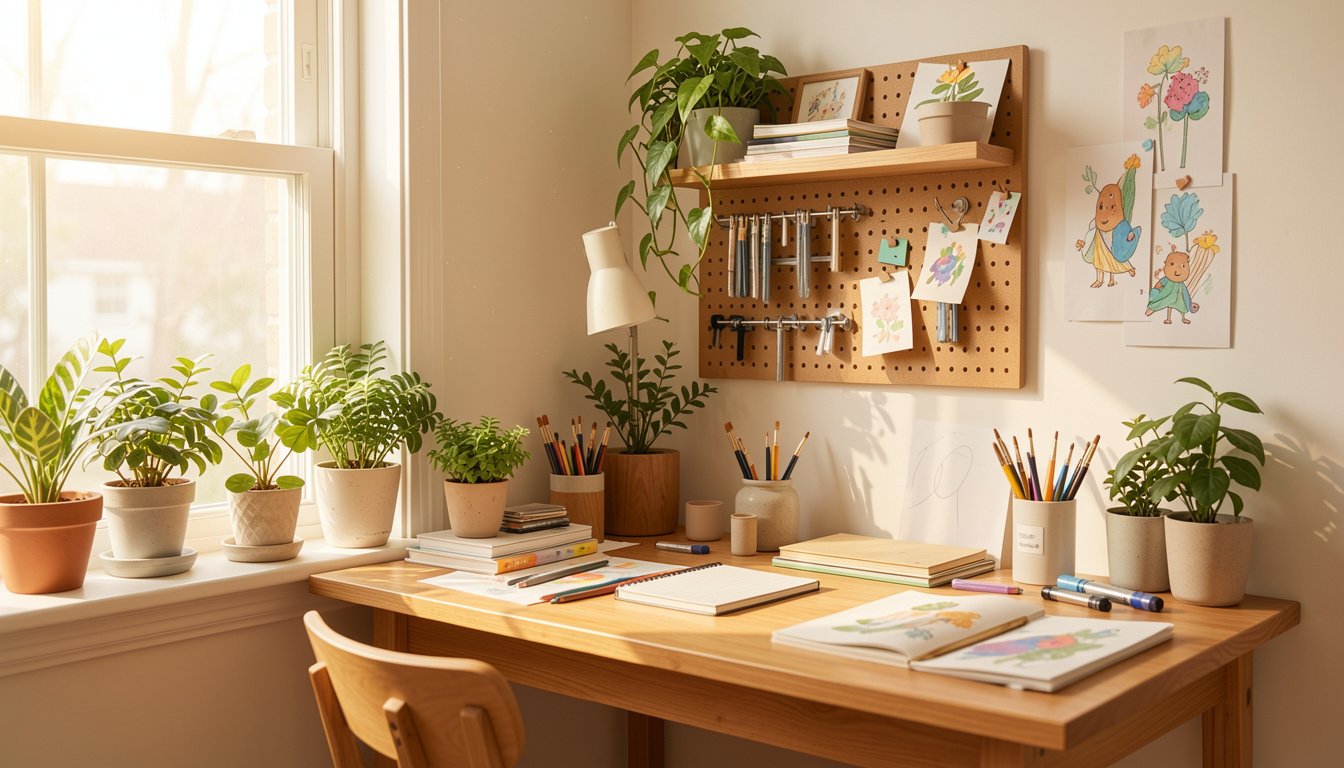
Okay bestie, if you’ve been craving low-key inspiration, these creativity spaces at home ideas are such a joy to explore – tiny corners or whole rooms that actually invite you to make stuff. I started pinning ideas the minute I moved into my own place and realized a small, thoughtful spot makes me want to create every single day.
I’m writing this because I know how confusing it feels to carve out creative room when you also need space for life – I tried using my kitchen table for months until it drove me slightly mad. These ideas are things I’ve tested, admired on other people’s feeds, or simply wish I’d had sooner.
Keep reading and you’ll get 20 realistic ways to build a creativity space at home that fits your life, your budget, and your messy, brilliant habits.
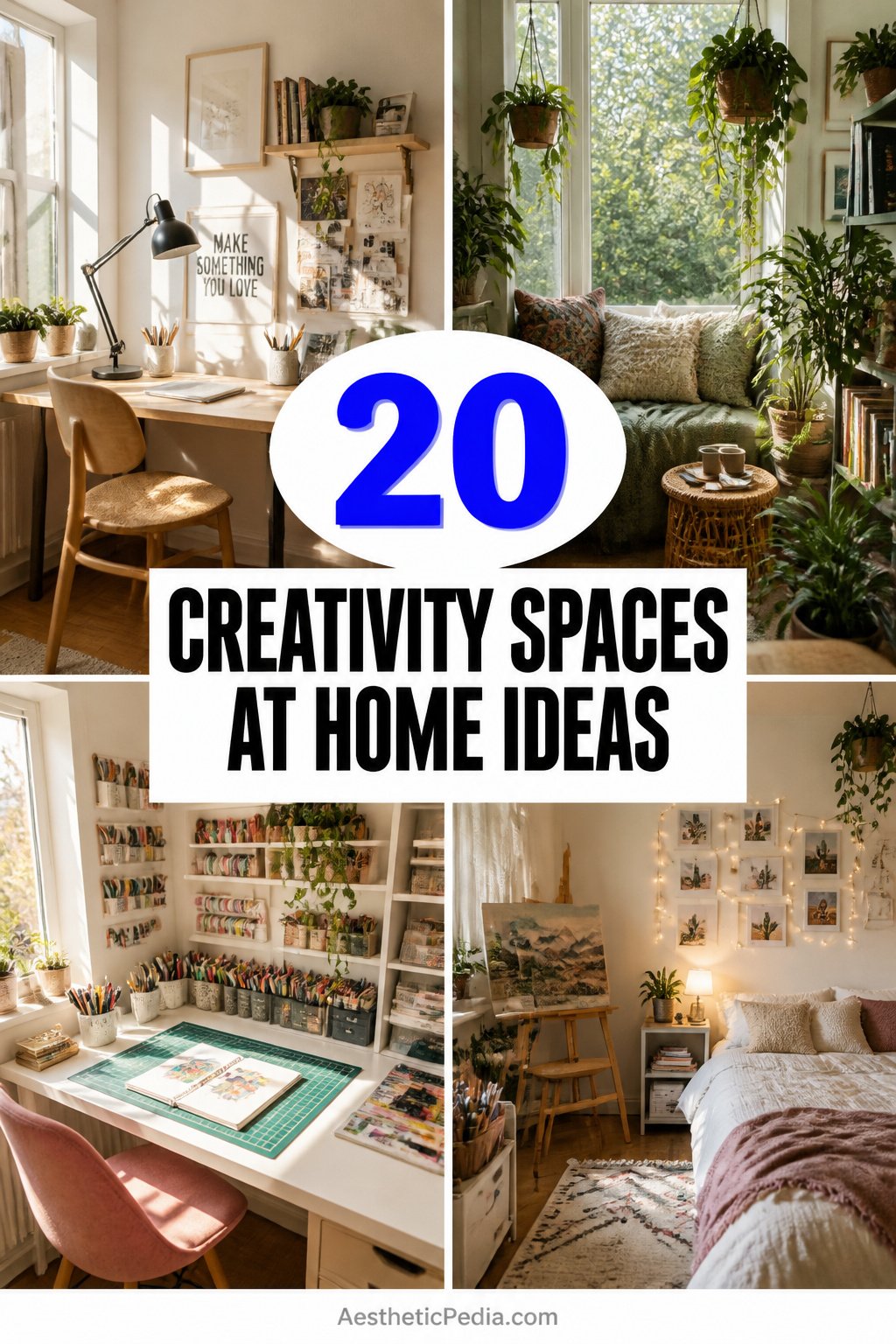
These 20 Creativity Spaces At Home Ideas Will Inspire You
Sunlit Corner Studio
This sunlit living room corner is proof that a cluttered wall and a good window can be your best collaborators. Add a small desk, hooks for inspiration, and a shelf for supplies so everything feels collected rather than chaotic. I love how the mess looks like evidence that creative things are actually happening.
Plant-Filled Desk Nook
Plants around a work area instantly calm the brain, so this chair-by-the-window setup is a quiet winner for journaling or sketching. Position your chair so you have a view, keep a tray for pens, and water the greenery on the same day each week. When I moved my laptop next to my fern, I noticed I lingered at my desk more often for no reason other than it felt lovely.
Cozy Crafting Table
A wooden table piled with books and little pots of supplies is the kind of scene that makes me want to sit and get lost in a project. Keep frequently used items in small jars and rotate seasonal tools to refresh the feel. You don’t need everything out at once – curate like it’s a shop display so you always feel inspired.
Window Pom Decor Bedroom
Colorful pom-poms along a windowsill make a bedroom studio feel playful and cozy for late-night sketch sessions. Use textiles and small hanging bits to create a comfortable backdrop where ideas can land without pressure. Try swapping colors seasonally – it’s an easy mood shift that actually helps me focus.
Mini Kitchen Studio
Your kitchen can be a surprisingly good creative hub when you set one corner aside with stools and shelves for materials. Store flat items in file boxes and utensils in jars to keep things tidy between bursts of activity. I once stitched by the counter while dinner bubbled and found the domestic soundtrack oddly soothing for creativity.
Craft Supply Window Table
A table in front of a large window filled with crafting supplies is my go-to concept for weekend projects. Let the light do half the work and organize supplies by color or type for easy access. If you can, keep a flat surface for drying and a vertical system for scissors and rulers – it saves small panics mid-project.
All-Supply Craft Room
If you have the space to dedicate a whole room, filling it with labeled bins and open shelving transforms chaos into a joyful resource. Order matters here – group like items and keep your recent projects front-and-center so you can pick them up quickly. You’ll appreciate how much more you actually finish when everything has a place.
Desk With Green Shelf
A wooden desk hugged by plant-filled shelves creates a breathing workspace that’s perfect for writing or moodboarding. Use different pot heights and a mix of trailing plants to add depth, and reserve a single shelf for current inspiration items. I used to keep my desk bare, and adding that shelf was a tiny change that made me sit and stay longer.
Photo-Pinning Session
Pinned photos and memories on a wall can form a personal storyboard for mood and projects, and placing them near your desk helps ideas evolve naturally. Swap images often so the board stays meaningful instead of stale. You’ll notice how your palette and project choices start to align when inspiration is visible every day.
Green-Filled Home Office
An office with pots in the window and open shelving is peaceful without feeling sterile, which is exactly what you want for long creative sessions. Keep frequently referenced books and a small tray for loose ideas on the desk to avoid clutter creep. When I added a hanging planter above my monitor, the space suddenly felt intentional instead of squeezed-in.
Stained Glass Accent Art
Color play through glass and reflective surfaces can change how a room feels and spark new color experiments in your work. Place small glass pieces near light sources and rotate them to see different reflections and shadows. This is a low-effort way to invite playful thinking into a corner that felt too serious before.
Outdoor Kids’ Studio
An outdoor painting station for kids makes a brilliant family-friendly creativity space that’s messy-by-design and freeing for everyone. Use washable surfaces, easels that fold, and bins on wheels for quick cleanup. I watched my nephew experiment with color for an hour and return glowing – that kind of uninhibited time is a rare gift.
Large Island Workshop
A big island with storage is perfect if you like to spread out materials while you work – it doubles as a serving and maker space. Use labeled drawers for different tools and a set of overhead lights for evening projects. If you alternate between food prep and crafting, keep a wipe-down routine to make transitions painless.
Light-Film Lamp Charm
A quirky lamp with photo strips or personal imagery turns ordinary task lighting into a mood setter that nudges creativity at night. Swap the images seasonally for little bursts of nostalgia. You’ll be surprised how much a small light source can change the vibe and inspire late-night creativity.
Bookish Window Desk
A desk stacked with books and small plants near a window feels literary and calm – perfect for research, writing, or photo editing. Keep a small notebook for sideways ideas and a cup for pencils so you never lose the moment. I saved dozens of ideas in my cup-notebook habit and it became a gentle productivity hack.
Open Shelves Supply Display
Open wooden shelves on hardwood floors give supplies a home and show off colors and textures that spark new combinations. Limit each shelf to a theme to avoid visual overload and add baskets for stray bits. The display becomes part of your decor and part of your thinking process.
Organized Craft Room System
Pegs, bins, and labeled containers make a craft room feel like a tiny studio that’s always ready for action. Dedicate a cleaning day and a “current project” shelf so nothing languishes half-finished for months. If you stay consistent, you’ll spend more time creating and less time hunting for that one exact glue stick.
Fun Treehouse Loft Space
Unique overhead elements like ladders or loft details create a whimsical workspace that breaks the typical desk vibe and fuels imagination. Use railings or hooks for hanging supplies, and keep a cozy rug for brainstorming circles. I once used a borrowed ladder shelf as my nightstand and it made mornings feel delightfully different.
Simple Desk Tech Corner
This wooden desk with laptop and headphones shows that a tech-forward corner doesn’t have to be cold – add photos and tactile objects to warm it up. Use a small basket for cords to stop the tangles and a cork strip for notes. When I first arranged my tech corner with a few tactile objects, I actually spent less time doomscrolling and more time making.
Playroom Creative Corner
A child-friendly playroom with shelves and plants encourages collaborative creativity and keeps small hands entertained while you work nearby. Rotate toys and craft materials to keep interest high, and include a low table for shared projects. Shared creative spaces teach kids that making is normal and joyful, which feels like a small revolutionary act.
How to Actually Make This Work For You
Start small and pick one idea you can implement in under a day so you get quick reinforcement and motivation to expand later, then set simple rules like a tidy-up routine and a “current project” shelf to stop supplies from overtaking the room. Be honest about your real habits – if you love music while you work, add a tiny speaker near your desk; if you get distracted, choose a screen-free corner to write or sketch. Lastly, give yourself permission to iterate – your creativity space should evolve as your projects and tastes change, not be perfect from the start.
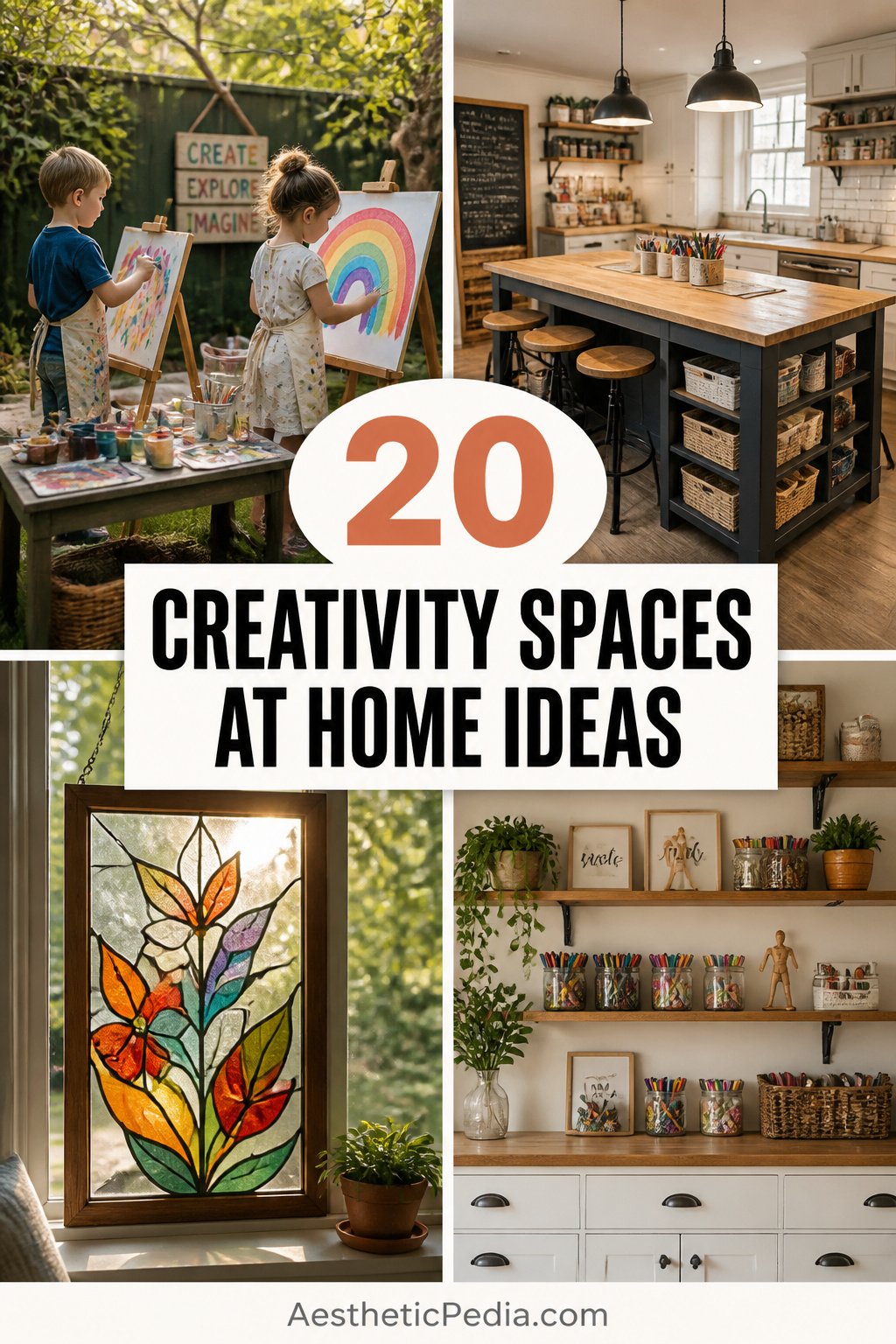
How much space do I really need?
Not much – a corner, a floating shelf, or a small table can be enough for many projects. Focus on function and accessibility rather than square footage to make the most of what you have.
What if I have roommates or family?
Talk boundaries and create a simple system for shared areas, like labeled bins or a scheduled “studio” time. Small agreements prevent creative spaces from becoming storage zones.
How do I stop supplies from taking over?
Use clear containers, label everything, and adopt a “one in, one out” rule for materials to keep accumulation in check. A weekly five-minute tidy helps enormously.
Can I mix work and creative spaces?
Yes – just define zones, even if they’re subtle, like a different lamp or a mat under your crafting area. Visual cues help your brain switch modes without stress.