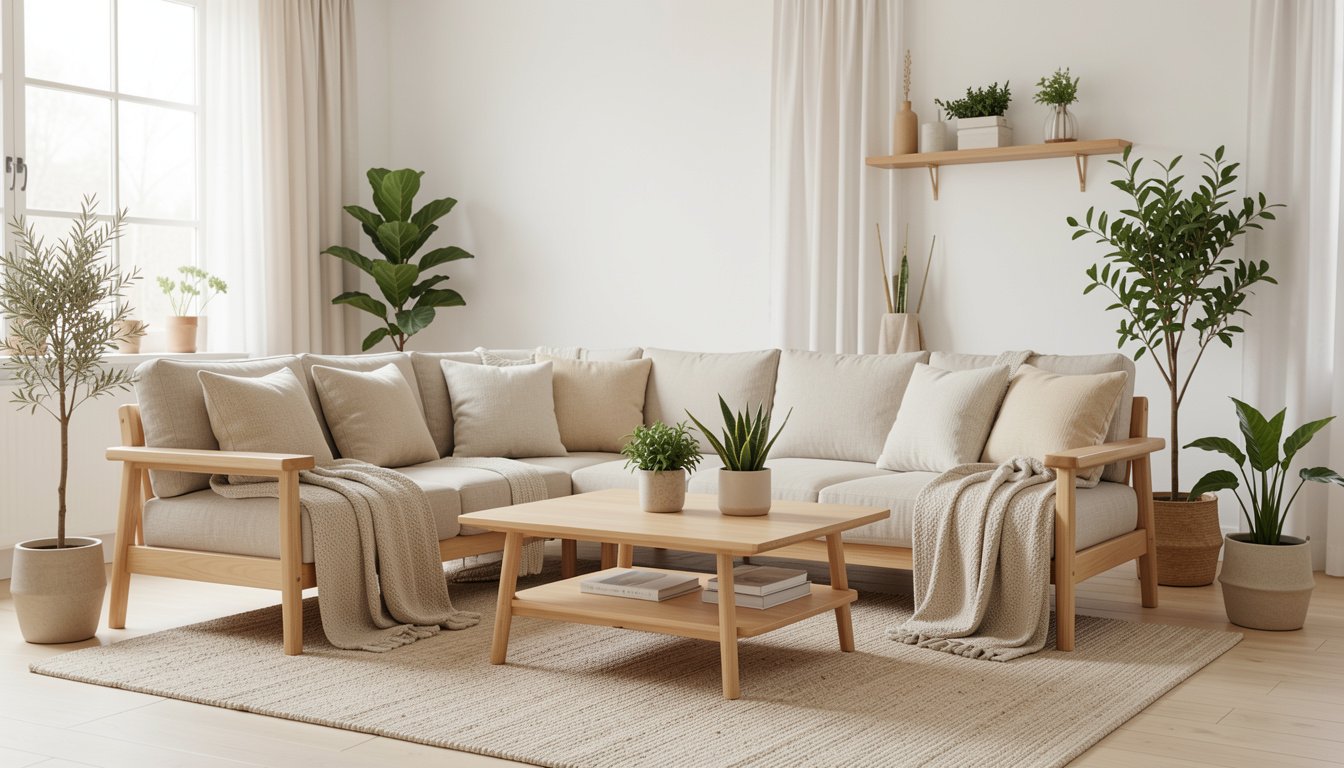
Okay bestie, I’ve been obsessed with the japandi home aesthetic lately and honestly it feels like the perfect balance of cozy and clean that my apartment desperately needed. I started pinning ideas at midnight and suddenly my whole vibe shifted toward warm wood tones, soft linen, and quiet shapes that actually make me breathe easier.
I wrote this because every time I try to explain japandi to friends they smile and nod but look confused, so I wanted one place where it’s simple, pretty, and usable – like a playlist for your home. I experimented with tiny swaps in my kitchen and bedroom that made a huge difference, and I will tell you what worked and what felt extra.
Read on and you’ll get ten approachable ideas, real-life tweaks I used, and quick tips so you can bring the japandi home aesthetic into your space today.

These 10 Japandi Home Aesthetic Ideas to Try
Open Wood Kitchen
Clean lines and natural wood make a kitchen feel like a calm retreat instead of a chaotic mess, and you can see that in this open layout with wooden floors and white walls. I swapped noisy appliances for quieter, matte-finish options and it instantly felt more restful to cook in, which surprised me. Try leaving some counter space intentionally empty so the eye rests, and balance white walls with warm wood to keep the look cozy rather than cold.
Serene Hallway Flow
A long hallway with a single potted plant and light wood floors shows how minimal touches can create rhythm and calm in a narrow space. I learned that one well-placed plant feels more curated than a cluster of smaller items that fight for attention. Place a woven runner or a slim console if you need storage, and keep colors muted so movement through the space feels effortless and intentional.
Bright White Living
White furniture and large glass doors blur the line between inside and out, which is central to that understated japandi vibe where nature meets neat design. When I opened my deck doors I noticed how the extra light made simple pieces look more elevated and less like they were trying too hard. Aim for furniture with soft, low profiles and layer natural textiles like linen and wool to add depth without clutter.
Plant-Filled Table Styling
A wooden table topped with plants and a few thoughtful objects creates a living centerpiece that feels intentional rather than staged. I remember bringing a single fern home and placing it on my coffee table; the room suddenly felt alive and more relaxed, like it finally belonged to someone. Combine different textures and heights but keep the color story narrow so everything reads as calm and cohesive.
Small Table Quiet Corner
A tiny table with a simple vase and a bench is proof that small nooks can have big personality without stealing focus from the rest of the room. I used a narrow bench by a window once as my morning reading spot, and five minutes there changed my day more than I expected. Keep accessories minimal and choose organic shapes to maintain that effortless, lived-in elegance typical of japandi design.
Warm Wood Bedroom
Clad walls and floors in wood tones make bedrooms feel cocooned in warmth, which is perfect for japandi because the style favors comfort without fuss. I upgraded a plain bedroom by introducing a low bed frame and natural textiles, and suddenly it read like a serene retreat rather than storage for clothes. Choose muted bedding and soft layering to keep the space inviting and grounded.
Bed by the Window
Positioning a bed next to a window with soft light and wooden floors creates a gentle focal point that feels both modern and timeless. Once I moved my bed to catch the morning sun, my room felt calmer and mornings became a little sweeter. Consider simple window treatments like linen panels to preserve the light while adding texture and privacy when you need it.
Minimal Floor Nook
An empty room with a large window and a few floor pillows proves that negative space is a tool, not wasted real estate, in japandi interiors. I used to fear empty corners, but now I see them as breathers where one or two thoughtful items can make a huge impact. Keep things low and tactile, and let light be the hero so the space reads as calm rather than under-decorated.
Clean Ready Living Room
A tidy, ready-to-use living room showcases how functional simplicity can be elegant, especially when pieces are chosen for comfort and proportion. I hosted friends in a pared-back living room once and received more compliments for the peaceful vibe than any trendy decor item I owned. Choose seating that invites lingering, and keep surfaces mostly clear so the room feels restful and welcoming.
Layered Wood and Textiles
Combining a large wooden table, rug, and a mix of furniture translates the japandi ideal of layered warmth without clutter, and it feels effortlessly lived in. I tested this by adding a textured rug under my dining table which anchored the space beautifully and gave everything a cozier scale. Keep the palette simple and let materials do the talking – wood, stone, clay, and woven fabrics create the richest conversations.
How to Actually Make This Work For You
Start small and pick one corner to convert into that calm, japandi moment – maybe a reading nook, a quiet bedside, or a pared-back entryway – and build from there instead of trying to overhaul everything at once. Aim to curate rather than collect, choosing pieces that serve a purpose and make you feel rested, and let the natural materials and neutral tones guide how many items you keep visible.

What is japandi exactly?
Japandi blends Japanese minimalism with Scandinavian warmth to create spaces that feel simple, functional, and cozy – think natural materials, muted palettes, and low-slung furniture. It emphasizes craftsmanship and quiet beauty rather than flashy trends.
How do I start on a budget?
Focus on decluttering, painting walls in a soft neutral, and adding a few natural textiles like linen or a woven rug; shops like thrift stores can yield great wooden pieces that you can refinish. Small swaps often have the biggest visual impact when you keep the palette consistent.
Which materials are most important?
Wood, linen, wool, stone, and matte ceramics are the backbone of the japandi aesthetic, and mixing a few of those creates the depth you need without introducing noise. Prioritize quality where you can and use texture to add warmth instead of more color.
Can small apartments still do japandi?
Absolutely – small spaces benefit especially from japandi because the style values function, storage, and calm, so a single well-curated corner can transform your whole home. Use multi-purpose furniture and keep sightlines clear to make the space feel larger and more intentional.