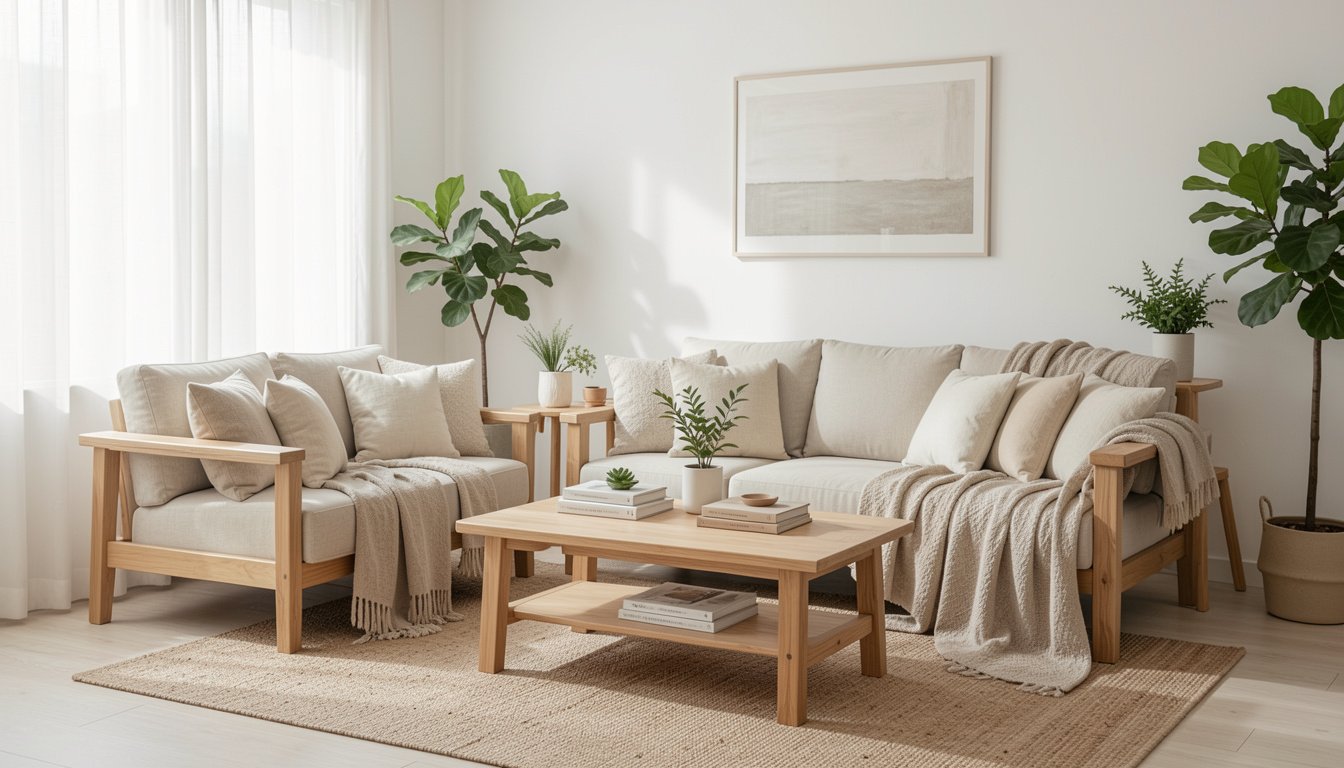
Okay friend, I am obsessed lately with japandi home ideas and I had to share the cutest, most calming looks I’ve been collecting. This blend of Japanese simplicity and Scandinavian warmth feels like the calm we both keep chasing.
I pulled these ideas together because I actually tried a few in my own tiny apartment and they changed how I relax at home. You’ll find approachable tips that don’t need a renovation or a huge budget.
Read on and you’ll get 15 practical setups and styling ideas you can adapt this weekend – I promise it’ll feel like home faster than you think.
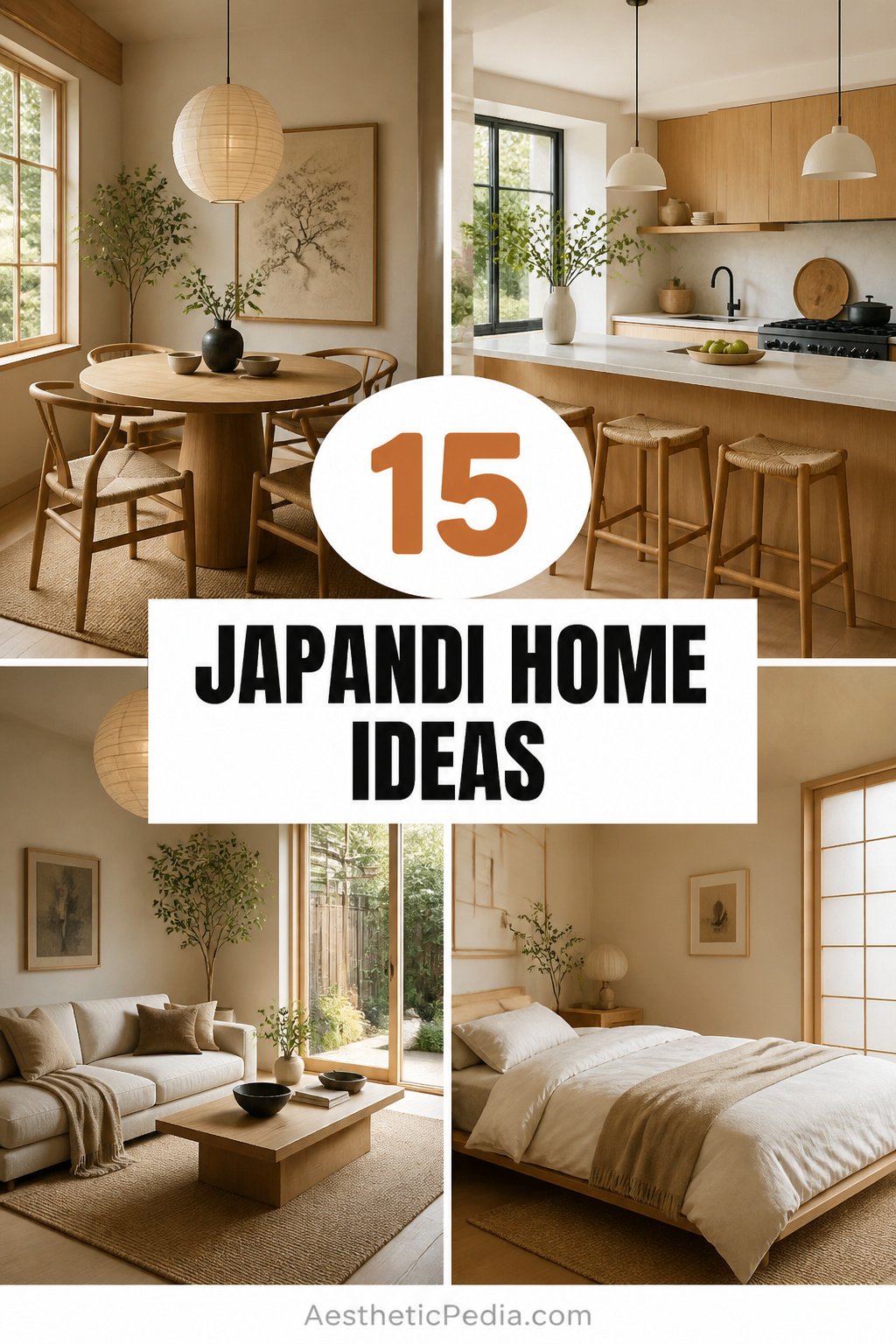
These 15 Japandi Home Ideas Will Make You Rethink Your Space
Mini Dining Simplicity
That pared-back dining vignette with two chairs and a single vase is pure japandi – calm, functional, and quietly beautiful. I once swapped a clashing place setting for a simple ceramic vase and the whole corner finally felt cohesive. If you want an instant update, start by limiting color and adding a tactile natural centerpiece.
Open Kitchen Warmth
This bright open kitchen proves how wood floors and white walls create an inviting, versatile backdrop that reads both Scandinavian and Japanese. You can keep counters mostly clear and let a few beautiful utensils or a wooden cutting board do the styling work. Try grouping three items rather than scattering many – it looks curated without trying too hard.
Clean Living Room Calm
The minimalist living room photo has that airy, lived-in look we both love – clean lines and soft textures that invite you to sit down. I tend to rotate pillows seasonally, and a simple neutral palette makes swaps feel intentional instead of chaotic. Keep surfaces clear and introduce one sculptural element to avoid a museum vibe.
Artful Chair Moments
Two chairs framed by wall art are a brilliant way to create a tiny conversation nook or reading spot – it’s minimal but meaningful. You could pick art with muted tones and let the furniture echo those hues for cohesion. Lighting is everything here, so choose a warm lamp or rely on soft daylight to keep it cozy.
Dual-Purpose Living Space
This living room that doubles as an office is such a practical japandi move – tidy, efficient, and calm under pressure. When I first started working from home, I borrowed a low-profile console and it allowed the room to breathe while still functioning double duty. Aim for furniture that feels like it belongs in both worlds to keep harmony.
Pendant Light Kitchen
Hanging lights over a kitchen counter instantly add architecture without cluttering the space, and they read very japandi when the fixtures are simple and organic. You might pair metal accents with warm wood for contrast that still feels calm. Keep bulbs warm-toned to preserve a cozy, lived-in feeling.
Window-Forward Workspace
A small desk in front of a big window plus a bonsai is textbook Japandi – the view, light, and a single green piece calm the mind. I remember a morning ritual where I drank tea and let the plant be my tiny reminder to slow down. Try prioritizing light and a tidy desktop so work feels less like work and more like flow.
Green Accent Living
Using a muted green wall with wood floors gives warmth and subtle color without being loud or trendy. You can anchor the space with a round art piece or mirror to mimic the softness of natural forms. Balance is key here – pair that color with beige textiles and a simple rug.
Warm Wooden Kitchen
Natural wooden cabinets and countertops bring that cozy Scandinavian sensibility into a Japanese-inspired simplicity. If you want my advice, start by swapping out handles or cleaning grout to let the wood shine again. Keep hardware minimal and choose a subtle faucet to avoid visual clutter.
Lush Cozy Seating
A room filled with green couches and wooden floors shows how color and texture can be comforting without being overwhelming. You might soften the look with linen throws and a low coffee table to maintain that grounded japandi feel. Think about scale – a few large, simple pieces beat many tiny decorative objects.
Minimal Neutral Lounge
This quiet living area is all about restraint and quality pieces that age well, not fast furniture. I splurged once on a neutral rug and it turned the whole room into a calmer place within a weekend. Let surfaces breathe and choose neutrals with warm undertones so the space never feels cold.
Natural Wood Office
The wooden desk by a window, laptop in view, is a gentle reminder that workspaces can be beautiful and functional simultaneously. I set small rules like one plant and one notepad and suddenly my messy desk habit faded. Keep shelving sparse and pick a few meaningful items to personalize without crowding.
Serene Wood Bedroom
A bedroom with white carpet and wooden walls creates a cocooning effect that still breathes – perfect for restful sleep and morning calm. You could choose a low platform bed and soft bedding to lean into the Japanese aesthetic of floor-level comfort. Add soft layered lighting and gentle textures to make it feel lived-in.
Family Media Corner
This media-filled living room proves that japandi can include a TV while still feeling intentional and tidy. Tuck electronics into minimal cabinetry and use closed storage so visual noise stays low. Choose muted frames and a single large plant to balance tech with softness.
Room Collage Inspiration
I love a collage mood board because it helps me distill all the japandi textures and tones into one clear vision before shopping. You should do the same – mix photos of wood grain, ceramics, and textiles until your aesthetic feels cohesive. Then pick two things to buy and let the rest evolve naturally.
How to Actually Make This Work For You
Start by editing – remove anything that doesn’t serve a daily purpose and you’ll notice calm instantly, then add a few tactile materials like a wooden bowl or linen throw to warm the space back up; next, pick a consistent neutral palette and stick to it when introducing new items so pieces feel like they belong together; finally, prioritize natural light and low, layered lighting so rooms feel lived-in and flexible for different moods.

What defines Japandi style?
Japandi blends Japanese minimalism and Scandinavian warmth with a focus on natural materials, muted palettes, and functional design – the result is calm, practical, and cozy.
Can I mix Japandi with other styles?
Yes, you can gently layer in pieces from mid-century or contemporary styles as long as you keep the palette restrained and prioritize natural textures to preserve the japandi balance.
How do I start without a big budget?
Begin by decluttering and swapping textiles like cushions and throws, then invest in one or two quality pieces that anchor the room instead of many inexpensive items – small swaps go a long way.
Which colors work best for Japandi?
Neutral tones like warm whites, soft greys, muted greens, and wood hues are ideal – choose colors with warm undertones so the space feels inviting rather than sterile.