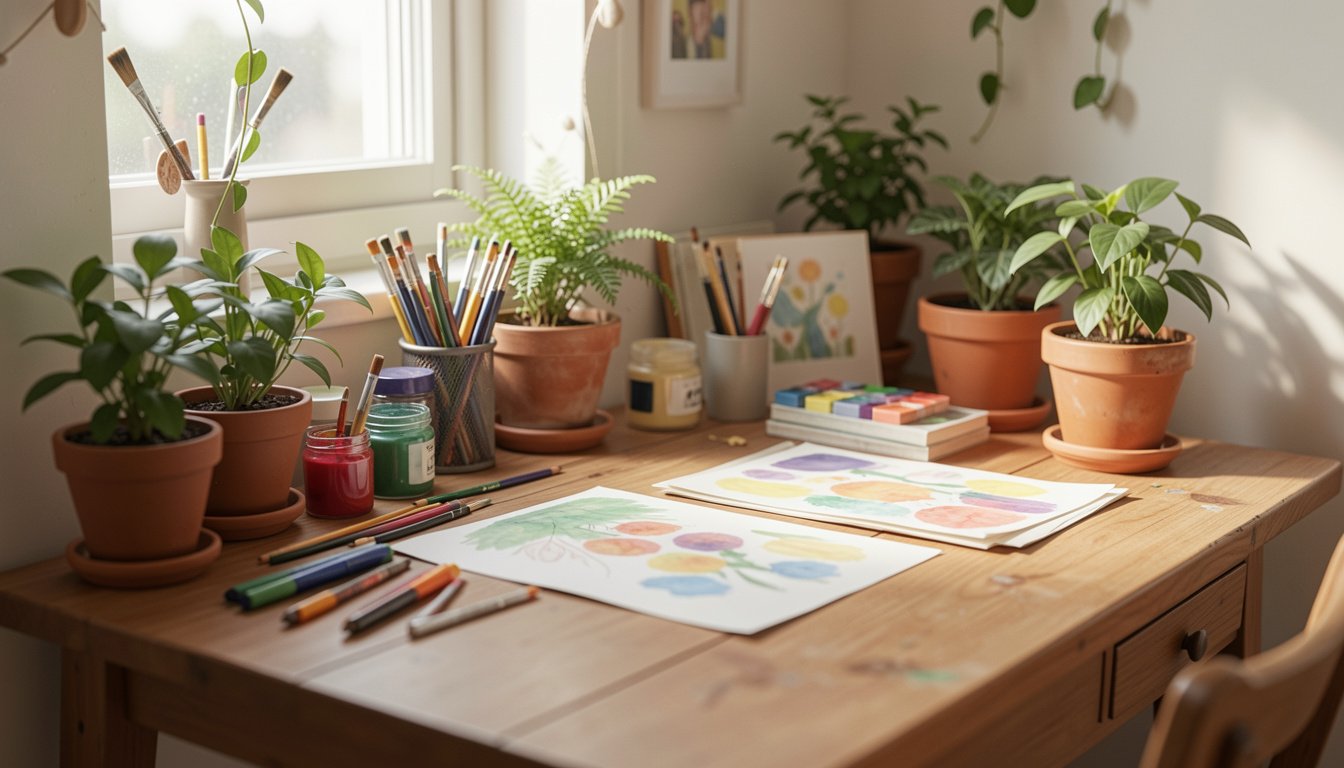
Okay, imagine turning the tiniest corner of your place into a joyful, productive spot – I want to talk about small creativity spaces at home and why they matter. Whether you rent, share space, or simply love cozy corners, tiny setups can spark big ideas and make every day feel a little more inspired.
I wrote this because I always get asked how I make room for creative work in a tiny apartment, and honestly I’ve tried a dozen configurations until something stuck. I’ll share what worked for me, what I learned from messy trial-and-error, and quick ideas you can steal tonight.
Read on and you’ll find 15 real, easy-to-replicate setups with concrete tips so you can carve out your own small creativity space at home.
These 15 Small Creativity Spaces At Home Will Make You Rethink Your Corners
Kitchen Nook Art Station
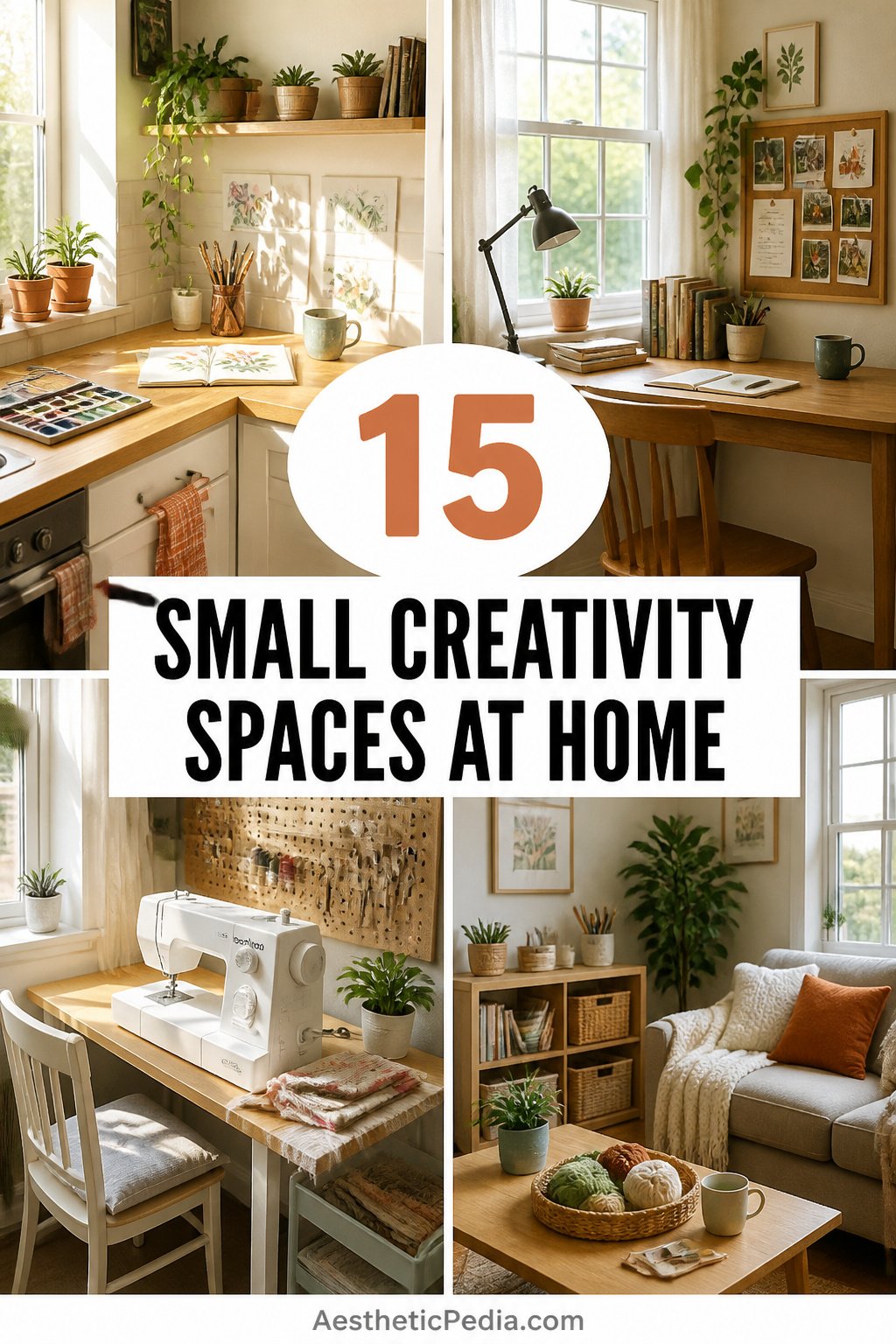
This kitchen-with-storage setup proves you can mix utility with creativity, using shelves and drawers to hide supplies yet keep them within reach. I once painted an entire series sitting by a similar improvised table, and having everything organized above the counter made flow feel effortless. If you love cooking and crafting, combine materials in labeled jars so you can switch from dinner to doodles without a major cleanup.
Lean-In Table Workspace
A narrow wooden table against a bright wall is deceptively powerful – it’s perfect for sketching, journaling, or folding paper crafts, and it doesn’t hog your living space. You’ll like adding a single art lamp and a tray for current projects so every tool feels curated and intentional. I sometimes clear my laptop at the last minute and the table instantly becomes my creative desk, which is probably my favorite part.
Window-Facing Book Office
A desk in front of a window with bookshelves nearby gives you natural light and inspiration literally at your back, which helps during long creative sessions. Rotate a few favorite titles and objects to refresh your view, and keep a small caddy of pens and post-its to avoid hunting for supplies mid-idea. You’ll find that the changing light nudges different moods – morning for planning, late afternoon for editing.
Minimal Laptop Corner
This simple laptop desk proves that you don’t need a huge setup to do focused creative work – a comfortable chair and a tidy surface will carry you through writing, photo editing, or moodboarding. I make sure cables are hidden and a small plant softens the angle so the corner never feels sterile. If you juggle hobbies, try dedicating only certain hours to this spot so it becomes your creative habit anchor.
Media Cabinet Creativity Shelf
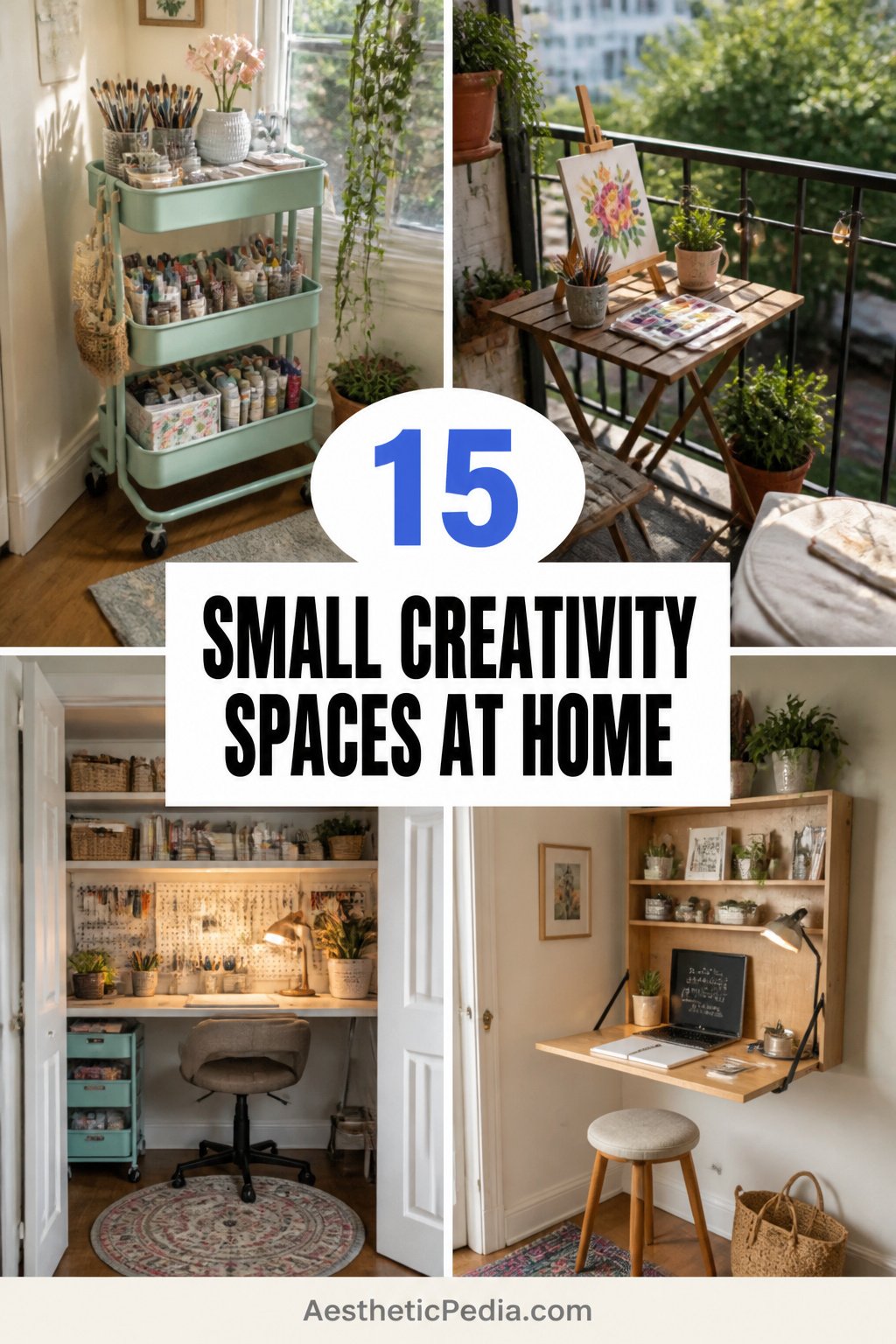
Transforming a cabinet into a mini creativity hub makes use of vertical space while leaving surfaces free in the rest of the room – keep moodboards above and tools inside for a neat appearance. You can stack small baskets for different projects and rotate displays to keep ideas fresh. When guests come over, simply close the doors and your creative chaos disappears, which is a game changer for small homes.
Bedside Idea Shelf
Placing a small workspace next to your bed makes late-night inspiration easy to capture – I keep a slim shelf with a notepad and a little lamp and it saves dozens of half-remembered ideas. Make sure the shelf has pockets or small bins to avoid losing tiny supplies on the floor. You’ll appreciate waking up to a spot that invites gentle creativity instead of an all-or-nothing studio vibe.
Calm Blue Desk Setup
A painted accent wall behind your desk changes the whole mood of a small corner and gives visual focus to whatever you create there, from watercolor to collages. Try a soft blue if you want calm energy, and add a pegboard with hooks so tools are visible but tidy. I like switching tiny decor seasonally – it keeps the space feeling new without a bigger overhaul.
Sewing Studio Shelf Magic
A vertical wall of supplies is everything for fiber projects, and a small fold-down table can serve as a sewing surface without claiming a whole room. Labeling fabrics and storing threads by color saved me hours when I first learned to sew, because decisions became faster and more fun. If you lack floor space, think vertical storage and quick-access trays to keep momentum during short bursts of time.
Living Room Creative Alcove
Carving an alcove with a comfy chair and a small side table can become your thinking spot for brainstorming or sketching, blending into the room so it never feels like a separate demand. Layer in textures with pillows and a throw to make the space inviting, and keep a tiny basket of supplies within arm’s reach. You’ll find casual creativity happens more often when the spot feels cozy and low-pressure.
Window Desk With Gallery
A desk facing out and framed by a wall gallery is both practical and inspirational – rotating prints above your workspace keeps your eye moving and ideas flowing. Use lightweight frames you can swap easily, and keep current projects on the desk under a clear tray to show progress. I remember finishing a long project faster simply because the view nudged me to sit down every morning.
Guestroom Desk Nook
When you don’t have a dedicated office, converting a corner of a guestroom into a tidy workstation keeps creativity alive without taking over your home – a slim desk and a stool work wonders. Keep guest essentials tucked away and bring out creative tools only during your chosen hours, that way hosting stays effortless. You’ll appreciate reclaiming the spot for focused blocks while still having a welcoming room for visitors.
Sunlit Window Desk Montage
Bright natural light is free and transformative – placing a desk near a window and dressing it with small plants and task lighting creates a cheerful micro-studio. Switch what’s on the desk each week to match your current mood and you’ll avoid creative inertia. I often find the simplest setups produce my most honest work, because there’s less fuss and more doing.
Double-Image Compact Office
Two small photos showing the same corner prove that tiny offices can be both functional and stylish when you keep a consistent palette and smart storage. Add modular boxes for tools and a cork strip for inspiration so everything has a home and cleanup takes minutes. If you struggle with starting, limit your space intentionally – small physical boundaries often give your mind permission to begin.
Light-String Plant Desk
Hanging lights and plants around a desk add warmth and a little magic, turning even a tiny corner into a favorite place to tinker or write letters. You can anchor a few hooks above the desk for lights and use a shelf for trailing plants that bring steady calm. I learned to schedule short creative sprints in this spot and those tiny sessions piled up into meaningful progress faster than I expected.
Bistro Stool Kitchen Desk
Two stools and a narrow counter can double as a café-style making station where recipes and craft projects coexist, and the proximity to kitchen lighting is surprisingly handy. Keep a rolling caddy nearby with scissors, tape, and markers so transitioning between meals and making feels seamless. If you live small, combining functions is essential – and it can be really delightful when done with intention.
How to Actually Make This Work For You
Start by claiming a tiny, consistent corner and set a rule that it is your creative spot for short, frequent sessions – this helps build habit without pressure, and you’ll notice small wins quickly. Next, choose storage that matches your pace – visible trays for active projects and closed bins for archive – so you never waste time searching and you can relax into making again.
How much space do I really need?
Not much at all – a narrow desk or a shelf about two feet wide is enough to begin, and you can scale up later when projects demand more room. Focus on consistent access rather than size, because regular use builds momentum.
What are the best storage ideas?
Use vertical storage, labeled baskets, and a small rolling cart for active supplies so everything stays visible and easy to grab, which reduces decision fatigue. Closed bins work well for materials you only use occasionally.
How can I avoid clutter when space is tiny?
Rotate only what you are actively using and archive the rest – a simple rule like “one tray for current projects” can keep surfaces calm and creative. Clean quickly after each session so the spot always feels inviting.
Is natural light necessary?
Natural light helps but isn’t required; a mix of warm task lighting and a soft overhead light can create a similar mood for focus and comfort. Prioritize consistent lighting that suits your creative hours.