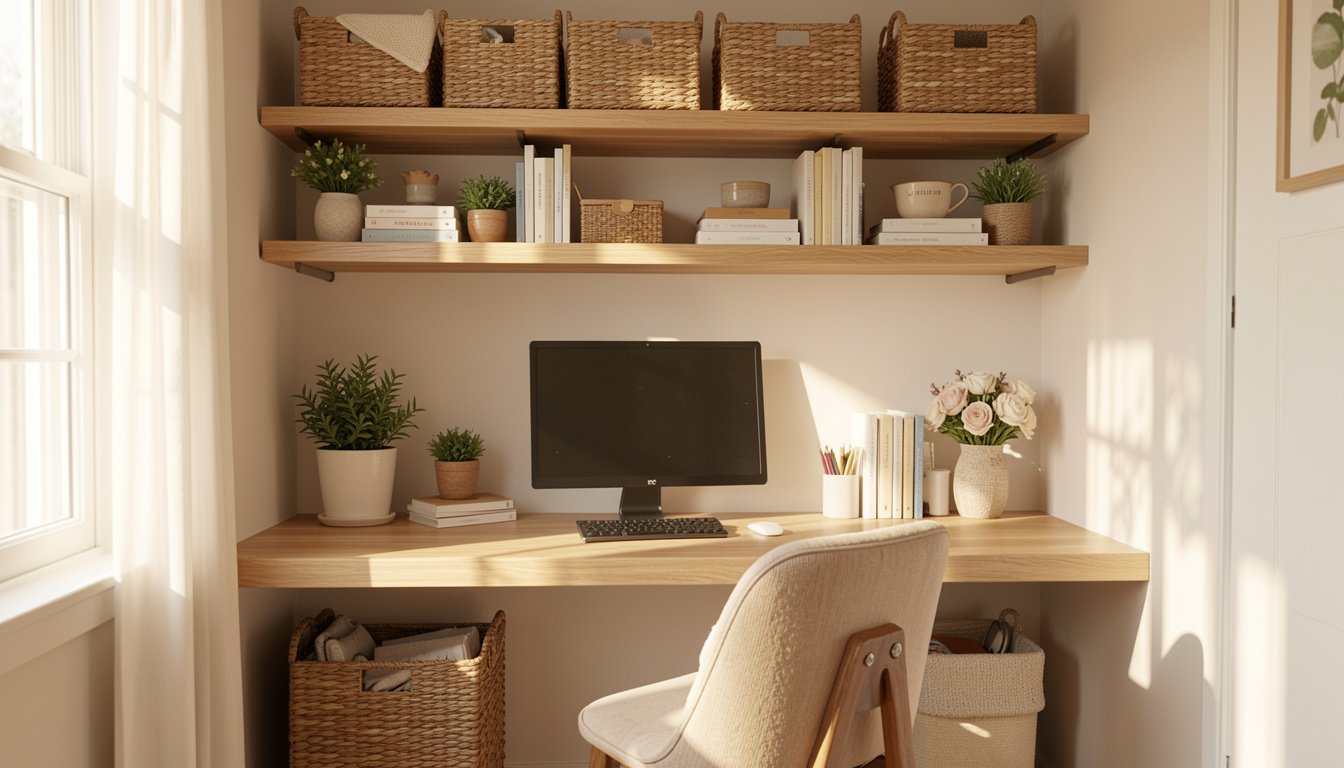
Okay friend, tiny rooms, big dreams – small home office storage can feel like a puzzle but it doesn’t have to be stressful or ugly. I’ve spent months testing baskets, shelves, and clever desk hacks in my own one-bedroom and I still get a thrill when something that seemed impossible suddenly fits perfectly.
This article exists because you deserve a workspace that feels calm and useful – not chaotic – and because I’ve learned a few real-life tricks that actually help when space is tight. I’ll tell you what worked for me, what failed spectacularly, and how you can use the same ideas without a giant budget.
Read on for ten thoughtful, practical small home office storage ideas with photos and easy ways to make them yours.
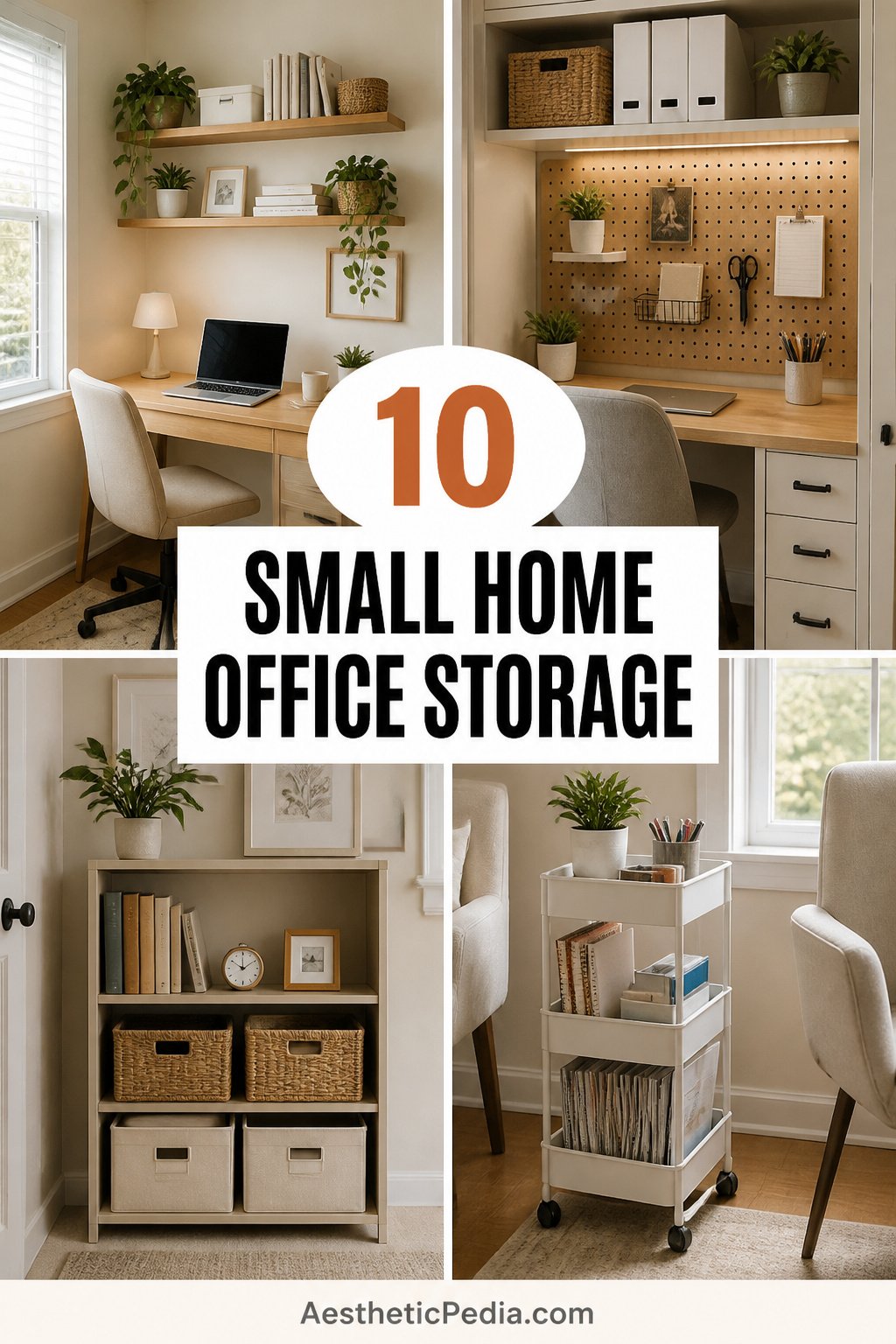
These 10 Small Home Office Storage Ideas You Can Use Today
Floating Shelves Above Desk
Floating shelves are the easiest way to add storage without eating floor space, and they look intentional rather than makeshift when you stagger depths and keep a consistent color palette, so books, decor, and boxes all feel curated instead of cluttered. In my tiny apartment I installed two slim shelves above my desk and suddenly had room for reference books and a little plant which made the whole area breathe more easily. Try mixing closed bins with a few open displays so you hide what needs hiding and show what sparks joy.
Built-In Desk Nook
A built-in desk nook creates a seamless, tailored look that optimizes every inch of wall space, and even a shallow shelf under the desk can hold a keyboard or paper trays without looking bulky. When I helped my sister convert a hallway nook into a mini office we used reclaimed wood and a few coat hooks for cables, and that small investment turned a forgotten gap into a functional workspace. Think vertical first – the floor can stay clear if you plan up.
Under-Desk Rolling Storage
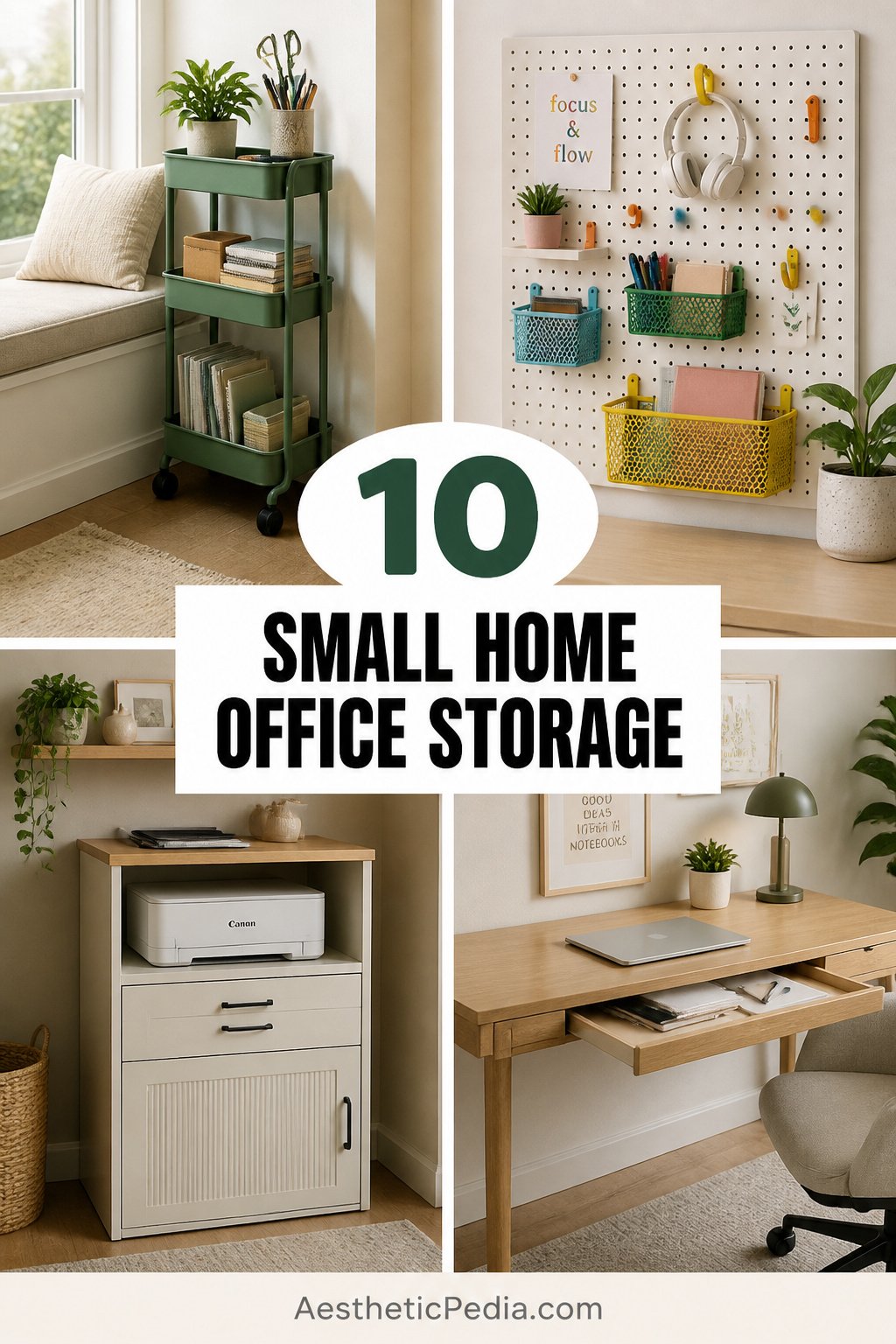
Rolling storage carts are a lifesaver because they tuck completely under a desk during the day and roll out when you’re sorting projects, and you can choose drawers or open shelves depending on whether you like everything visible. I once kept a rolling cart packed with office supplies, and it doubled as a quick printer stand when guests needed to print, which made the layout feel flexible and friend-friendly. If you pick a cart with casters that lock you get stability without sacrificing mobility.
Slim Vertical Shelving
When floor space is tiny, tall slim shelving uses vertical real estate to store files, baskets, and decor, and customizing shelf heights means you can store awkwardly tall binders next to short boxes without wasted gaps. My first rental had a closet-sized office and a tall narrow shelf unit held my printer, paperwork, and a stack of inspiring magazines – it kept everything reachable and visible. You can anchor these units to the wall for safety, which is an important step if you live in a home with pets or kids.
Wall-Mounted File Holders
Wall-mounted file holders free up desk top space and give you immediate visibility to current projects, and grouping three or four in a vertical column creates a functional art piece that keeps paperwork tidy. I hung metal bins above my printer so I never had to hunt for receipts again, and the system saved me at least twenty minutes a week I used to waste digging through drawers. Label them clearly so you can glance and go during busy work sprints.
Corner Shelves for Nooks
Corner shelves turn awkward angles into purposeful storage that can cradle a lamp, a cup of markers, and a small stack of project folders, and because corners are often ignored you’re adding utility with minimal visual weight. I once squeezed a triangular shelf into a cramped corner next to my chair and suddenly had a place for my favorite notebooks and a candle, which made deadlines feel a little less fierce. Use lighter materials so the corner doesn’t look heavy or drop shadowed.
Pegboard Organization Wall
Pegboards are incredibly adaptable for small home office storage because you can rearrange hooks, baskets, and shelves as needs change, and painting the board a soft neutral color keeps it from dominating the room visually. I built a pegboard over my desk and hung everything from scissors to chargers on it, which made mornings smoother since I wasn’t digging through drawers anymore. The pegboard also acts as a visual schedule area if you add a small calendar and pinned notes.
Hidden Storage Desks
Desks with built-in drawers, sliding tops, or lift compartments allow you to hide the mess at the end of the day while preserving a clean surface for work, and when everything has a designated spot your focus improves naturally. My favorite is a slim desk with a shallow drawer just deep enough for pens and a notebook – it makes the desktop look like a boutique hotel desk rather than a dumping ground. Consider a desk that matches your storage needs rather than one you love only for how it looks.
Multi-Functional Furniture Pieces
Choosing furniture that doubles as storage, like an ottoman with internal space or a bench with cubbies, gives you places to stash overflow items while maintaining a cohesive look, and the hidden storage can be lifesaving when you need a quick tidy before video calls. When I moved into a studio I learned to love a cube shelf that functioned as both seating and a place for boxes – it felt clever and intentional. Always measure before buying so the piece truly fits your scale and pathways.
Printer Corner Solutions
Dedicate a small corner or a cubby specifically to your printer and supplies so paper, ink, and manuals aren’t roaming the apartment, and a shelf above the unit can hold extra paper and envelopes neatly. I tucked my printer into a shallow cabinet and added a charging station to the top, which stopped the cords from spreading across my desk and made the whole area more usable for clients who visited. Keeping printers off the desk surface immediately creates more usable workspace for your laptop and notes.
How to Actually Make This Work For You
Start by measuring everything and deciding what tasks you absolutely need the space to support so you can prioritize storage types that match those tasks, then pick modular pieces that can move or be repurposed as your needs change; this avoids the sunk cost of one perfect but inflexible item. Lighting and a consistent color palette also help storage feel intentional instead of cramped, and set weekly rituals like a five-minute evening tidy so clutter never has time to become permanent.
How do I maximize storage in a tiny desk area?
Use vertical shelving, wall-mounted organizers, and under-desk drawers to keep the desktop clear while keeping essentials within reach; measuring first and using modular containers helps prevent buying items that won’t fit. A clear routine for putting things away daily also maximizes the perceived space.
What should I store off-desk versus on-desk?
Keep immediate tools you use daily on the desk and store reference books, spare supplies, and backups in nearby shelves or bins so the work surface remains uncluttered; this separation helps you focus without hunting for essentials. Rotate items seasonally to avoid keeping rarely used things in prime spots.
Are DIY storage solutions worth it for renters?
Yes, renter-friendly DIYs like leaning shelves, removable hooks, or portable carts offer big storage gains without permanent changes, and they can be taken to your next place; I moved twice and found my modular pieces were the easiest to adapt. Choose damage-free hardware when in doubt.
How do I keep cables and tech tidy in a small space?
Use cable clips, a small cable box, and label chargers so cords stay organized and don’t spread across surfaces, and consider a dedicated charging station that lives off the main desk surface. Regularly declutter old cords so you aren’t storing items you no longer need.