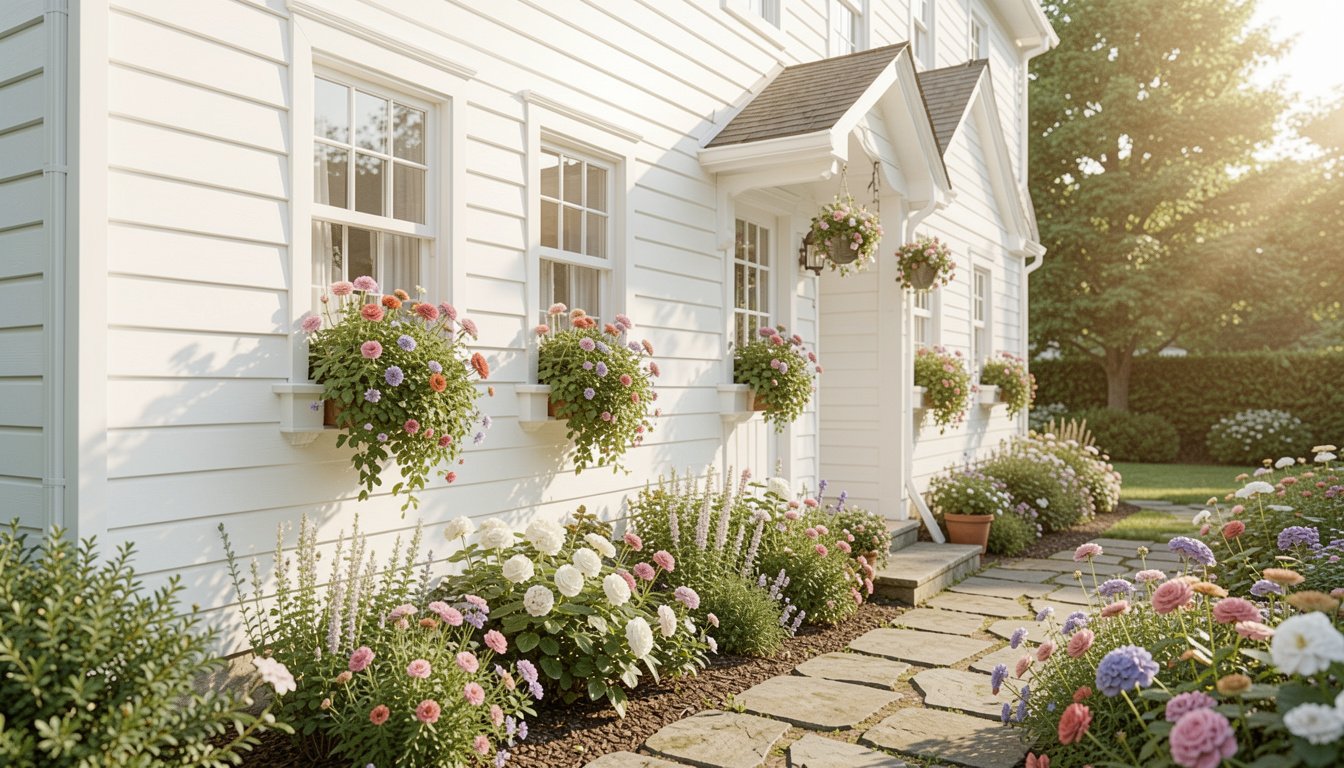
I can’t scroll past a pretty house without saving it, especially when the home exterior aesthetic feels like a warm hug. There is something about the right color, texture and a neat garden that makes me imagine weekend mornings there.
I put this guide together because I keep getting messages asking how I get my curb to look intentional without hiring a pro. I’ve tried paint experiments, hurried planting seasons and tiny decor upgrades, and some of those choices seriously surprised me.
Read on for 12 fun, photo-backed home exterior aesthetic ideas with realistic tips you can actually try this season.

These 12 Home Exterior Aesthetic Ideas to Love
Modern Glass-Forward Facade
This large modern house with lots of windows shows how glass can instantly lift a home’s aesthetic by reflecting light and greenery, giving a sense of openness even on a narrow lot. If you have the budget, expanding window sizes or adding transoms creates a clean, airy vibe that reads modern and relaxed at the same time. I often tell friends that swapping one small window for a taller pane changed how our whole front room felt on sunny days.
Green Cottage Charm
This small green house with white trim and flowers on the front door proves that color makes a statement without drama, and the second-floor stairs give it whimsical vertical interest. Paint can be your quickest win – pick a shade that complements your roof and surrounding trees, then highlight trim in crisp white to create contrast. When I painted my own trim, the neighbors asked what I had done differently and that little compliment was pure validation.
Classic White Brick Beauty
The white brick home with large windows looks timeless, and masonry in a light hue brightens the whole street view, especially when paired with mature trees. You can soften brick with seasonal planters, climbing vines or a textured welcome mat that echoes the home’s tone, resulting in a curated but effortless face. For rental properties or budget builds, painting older brick is a way to achieve this look without major renovation.
Black Trim Contrast
A house with black trim and windows surrounded by greenery makes every plant pop while adding polished edges to windows and doors, giving a slightly moody yet very modern aesthetic. Consider swapping hardware and shutters to matte black to mirror the trim and tie together the composition for a designer touch that is surprisingly accessible. I remember installing black house numbers and feeling like the whole front stoop had been styled by someone with a keen eye.
Tree-Studded Instagram Vibe
An instagrammed photo of a house with trees in the front yard shows how canopy and dappled light create mood and seasonal interest without extra cost, and the shade helps balance strong paint colors. Layer in groundcover, a simple bench and soft pathway lighting and you’ll have a picture-friendly facade that feels relaxed and lived-in. You can experiment with solar lanterns first to see the evening glow before committing to hardwired lighting.
Lush Green Surroundings
This white house framed by trees and bushes around the front door is a reminder that planting for scale matters – taller shrubs create a frame while low perennials offer texture and seasonal blooms. Start with structural evergreens for year-round shape, then layer in inexpensive seasonal pots for color changes that keep the exterior feeling fresh. I once planted mismatched pots on a whim and that casual mix ended up being my favorite seasonal look.
Flower-Heavy Curb Appeal
A large white house with abundant flowers proves that floral abundance reads like effort and charm, especially when beds are mulched and edges are clean for a finished look. You don’t need a green thumb to plant bulbs or bulk annuals in a repeating color palette, and repeat colors across beds, containers and wreaths for cohesive impact. When I hosted my first backyard brunch, neighbors complimented the planting scheme and I felt proud for doing something that made morning walks nicer for everyone.
Black Shutters, Stone Steps
This white house with black shutters and stone steps blends classic symmetry with tactile material contrast, and stone steps add a sense of permanence that draws visitors in. If your porch feels flat, adding lanterns and potted ferns on either side of steps creates depth and a welcoming rhythm that photographs well. Small upgrades like polished doorknobs and a fresh welcome mat made a surprising difference for me when I wanted our entry to feel intentional but not fussy.
Brick and Bloom Harmony
A brick house overflowing with flowers shows how hardscape and softscape can be best friends – natural brick tones pair beautifully with pinks, whites and purples for a cottage-meets-classic look. You can tie planters to window boxes by echoing color through cushions or a painted door to make the whole composition feel curated. I once matched my front door color to a perennial and that small sync made photo ops irresistible.
Green Door Entryway
An entryway with green doors and potted plants gives an instant focal point that greets visitors with personality, and the right door color can entirely change how your exterior reads. If you pick a saturated hue, keep surrounding trim neutral to avoid competing focal points and balance with natural materials like wood or stone. For a test run, try painting a single planter in the chosen hue before committing to the whole door.
Pathway of Blooms
A white house with lots of flowers and a walkway shows how leading the eye with a path creates movement and drama, and low-maintenance perennials along the walk keep upkeep easy. Consider repeating a single color family along the path to create visual continuity from the street to the door, and use edging to keep lawn and plant beds tidy for a refined finish. I still think about the first time I edged our walk; it felt like I had given the house a crisp sweater that fit perfectly.
Ivy-Covered Storybook Look
A large house covered in ivy with white windows and a black door reads like a storybook scene and offers lush texture that changes through the seasons, though maintenance is important to keep vines from creeping into gutters. Prune strategically and use trellises to guide growth, so the effect remains intentional rather than overrun; this can be an affordable way to add architectural interest. My first attempt at training a vine taught me patience, and after a couple of seasons the payoff was a soft, lived-in charm I still adore.
How to Actually Make This Work For You
Start by choosing one area to transform so the project feels manageable – a front door, a pair of planters, or the pathway are great places to begin, and when you finish one zone you’ll naturally want to tackle the next. Measure your space, pick a simple color palette that repeats in at least three places, and plan for low-effort maintenance so the look stays fresh without daily work.

How do I pick a paint color for my exterior?
Answer – Start with the roof, brick or permanent materials and choose a color that complements those tones; test with large swatches in natural light over a few days before committing. Consider the neighborhood palette so your choice feels intentional rather than out of place.
Can I get a high-end look on a budget?
Answer – Yes, focus on high-impact, low-cost details like entry hardware, fresh house numbers, planters and a cohesive color accent to elevate the overall aesthetic without major renovation. Paint and plants often offer the best return for both cost and curb appeal.
What plants work best for curb appeal?
Answer – Choose a mix of structural evergreens for year-round shape, perennial blooms for seasonal color and a few annuals in containers to refresh the palette each year, and always match plant scale to the size of your home. Local nurseries can recommend varieties that thrive in your climate to reduce maintenance.
How do I maintain vines or ivy safely?
Answer – Prune annually, keep growth away from rooflines and gutters, and use trellises to control spread so the plant adds charm instead of damage. If you’re unsure, consult a landscaper for a one-time assessment to plan safe training and pruning.