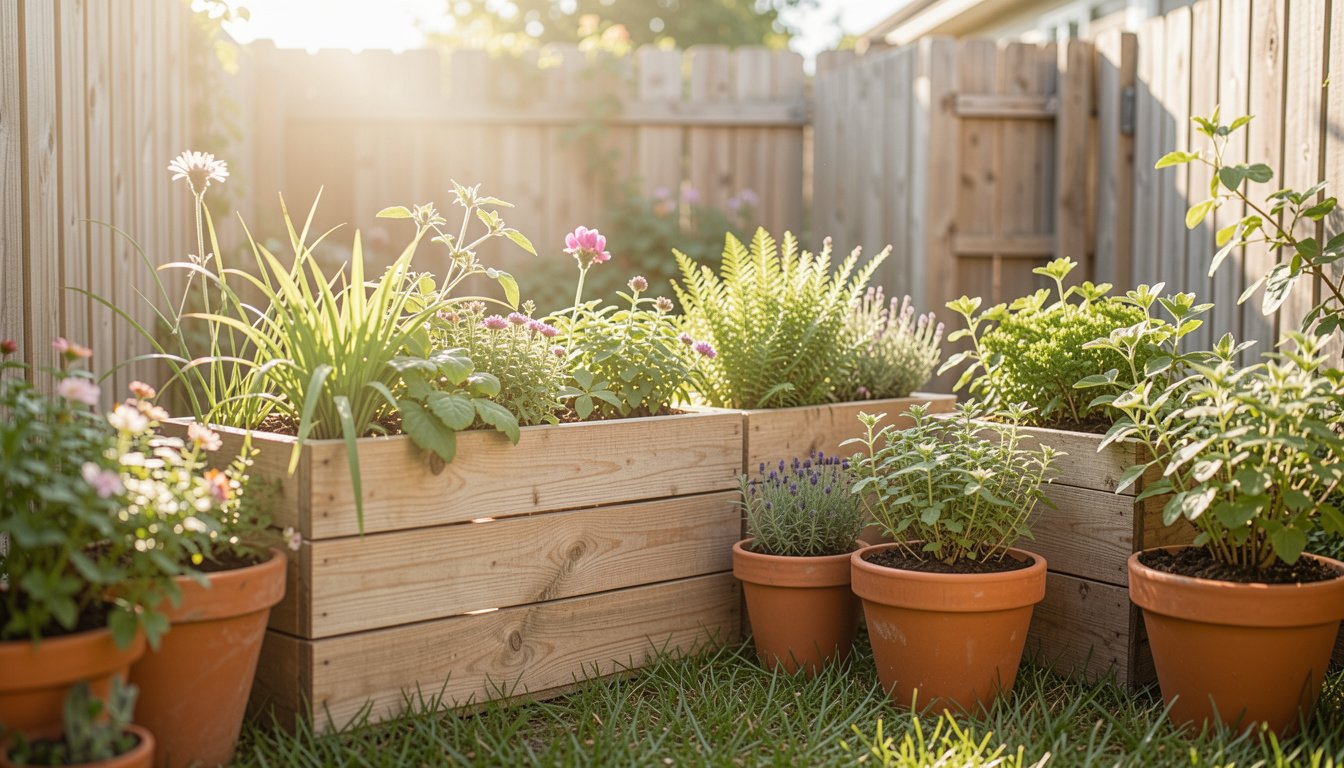
Okay, I have to tell you, I’ve been obsessed lately with home garden design diy projects that make a tiny outdoor corner feel like a proper hangout spot. Every weekend I tinker with pots and planters and somehow end up with a mess that somehow looks charming when it all comes together.
This post exists because I want to share the easiest, cutest ideas that actually worked for me – the ones that gave me a little pride and a lot of green happiness. I promise these are approachable, budget-friendly, and mostly no heavy carpentry required unless you want it.
Scroll through and pick three that call your name and I’ll walk you through how to make them yours without the stress.
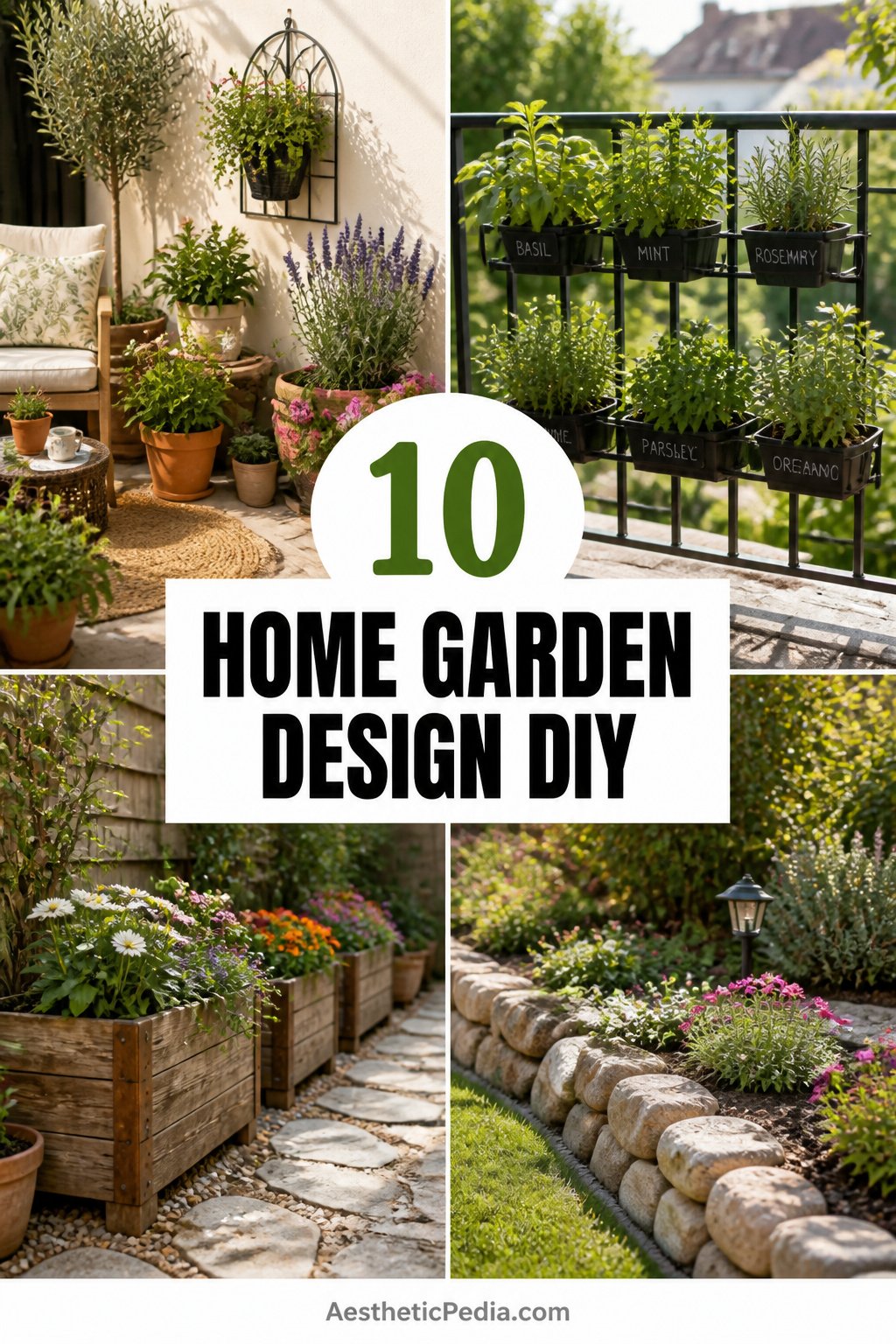
These 10 Home Garden Design DIY Ideas to Try
Terracotta Pot Styling
There is something so comforting about a cluster of clay pots on a weathered table – it instantly reads cozy and intentional, and that’s exactly why I love this look. When I first tried arranging several different sizes together I realized symmetry is overrated; varying heights and textures make the display sing. Try grouping odd numbers, tuck a trailing plant into one, and add a bright saucer beneath to catch watering spills so the tabletop stays pretty between gardening sessions.
Pallet Plant Wall
A wooden pallet filled with potted plants is the easiest vertical garden trick that also looks polished, and it doubles as screening if you want a little privacy from neighbors. I built mine in an afternoon with basic sandpaper, a coat of exterior paint, and small S-hooks; hanging fairy lights along the pallet at dusk made my patio feel so cozy that friends started dropping by more. If you don’t want to nail into the wall, lean the pallet against a fence and secure the top with two anchors for safety – it’s a simple upgrade with a huge payoff.
Rock Garden Accent
Small rock gardens are perfect for filling awkward corners and they’re practically carefree once planted with hardy perennials and succulents. My first attempt involved lugging a bag of river stones and rearranging them three times until the pattern looked natural, but once I stopped trying to make it perfect I loved it more. Make sure to add a layer of landscape fabric under the rocks if weeds drive you crazy; it saves so much time and keeps the design crisp all season long.
House-Side Planter Magic
Planters mounted along the side of a house add instant charm and use vertical real estate without crowding the ground, which is ideal for narrow yards. I painted a few of my white planters with a subtle ombre effect and watched how the pop of color brought out the siding’s tone, so color-matching is an underrated trick. You can plant herbs for an easy kitchen-to-garden routine or go floral for a cottagey vibe that neighbors will compliment on walks.
Tire Planter Stack
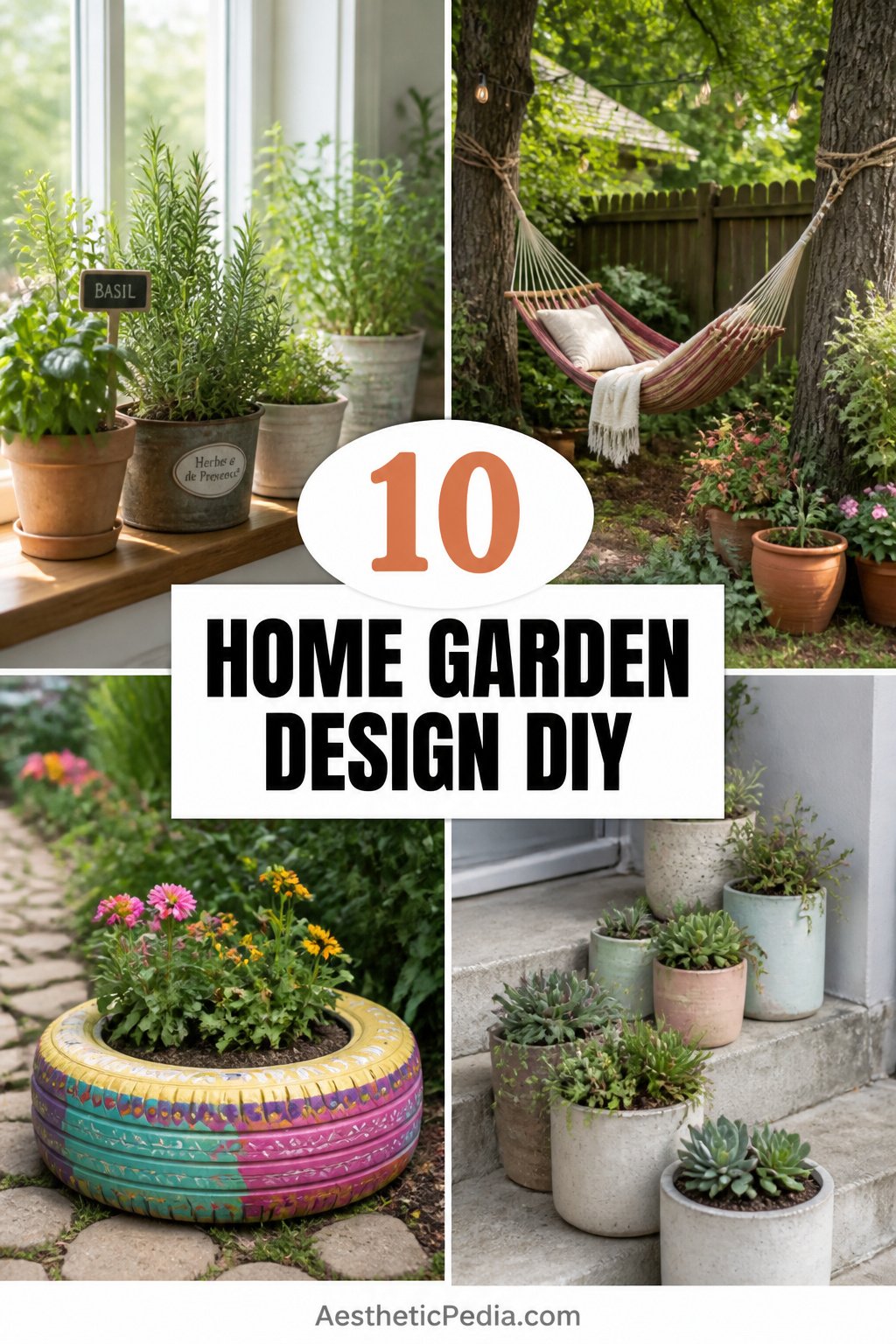
Repurposed tires stacked into a tiered planter are delightfully retro and surprisingly sturdy when painted, and the DIY part is mostly prep work and creativity. I once leaned too far arranging a top plant and slid a bag of soil all over my shoes, so wear gloves and maybe an old tee if you care about marks – I still laugh about it. Paint the tires in a uniform shade for cohesion, or go funky with patterns if you want the garden to make a bold statement.
Wooden Shelf Garden
Stacked wooden shelves holding little planters transform a plain wall into a layered display that’s both useful and decorative, especially when you mix herbs, succulents, and trailing vines. I borrowed cheap pine boards and added a whitewash to give the setup a Scandinavian lightness, and then I arranged plants by height so each piece gets its moment. If you’re short on space, use thinner shelves and smaller pots, and check that each shelf is anchored to studs to avoid a late-night drama with plants and gravity.
Concrete Step Pots
Potted plants arranged on concrete steps is a classic, low-effort layout that turns a simple entryway into a mood booster, and it’s great for renters who can’t build permanent beds. I clustered ceramic and woven pots on our stoop, alternating colors and textures, and people literally stopped to take pictures – it felt oddly glamorous for five minutes. For practicality, place saucers under fragile pots to protect the steps and swap plants seasonally so your front porch always looks intentional.
Treehouse Garden Nook
If you have a mature tree, a tiny treehouse or platform nook becomes a magical place for potted blooms and a reading hammock; it reads whimsical and grown-up all at once. I helped my cousin hammer together a small platform and then scattered planters along the railing, creating a secret garden vibe that made every summer afternoon feel like a mini-vacation. Safety first – make sure load-bearing supports are solid and use outdoor-rated materials so your project lasts through weather changes.
Luminous Wooden Planters
Wooden planters with small integrated lights are perfect for evening ambiance; they look exquisite when the sun dips and you want the space to feel cozy without harsh bulbs. I strung tiny solar lights inside planter boxes and loved how they gave my backyard a soft glow that was just enough for a glass of wine outdoors. Choose hardy, low-maintenance plants for these boxes so you spend more time sipping and less time fussing.
Treehouse With Steps
A treehouse with steps leading up through a small garden is the kind of whimsical focal point that invites kids and adults to pause and enjoy the yard, and it’s surprisingly doable on a modest budget. When I saw this idea I thought it was unattainable, but after sketching a simple plan and recruiting a handy friend, the steps and planting beds came together as a weekend project. Add native plants around the base for low maintenance and watch birds and pollinators make it their hangout too.
How to Actually Make This Work For You
Think about your lifestyle first and scale projects to match the time you’ll realistically spend on upkeep, because a stunning garden idea can become a burden if it needs daily fussing; choose low-water plants if you travel often and prioritize raised containers if bending is an issue. Combine a couple of ideas rather than trying to do everything at once, and test one small project before committing to a full-blown makeover so you can tweak colors, textures, and placement without remorse.
Do these projects need special tools?
Most of the ideas can be done with basic tools like a drill, hammer, and hand trowel, and many require only paint and sandpaper if you’re upcycling. If you plan structural builds like steps or platforms, borrowing a level and stud finder will make the process much safer and less stressful.
How much will this cost?
Costs vary a lot depending on materials and size, but you can absolutely keep things under budget by shopping secondhand for pots, repurposing pallets, or using native plants which are cheaper long-term. I saved money on my first pallet wall by sourcing a free pallet and using leftover paint, so a little thriftiness goes a long way.
Which plants are easiest for beginners?
Succulents, lavender, rosemary, and many ornamental grasses are forgiving and drought tolerant, making them excellent starter choices for small DIY garden setups. Start with a few resilient species and add more finicky plants later as you get comfortable with watering and light needs.
Can renters try these ideas?
Yes, most concepts like planters, pallet walls that lean, and potted arrangements are renter-friendly and removable when you move out, and they still transform a space impressively. Use non-permanent hanging methods and avoid drilling into leased walls unless you have permission to keep your deposit intact.