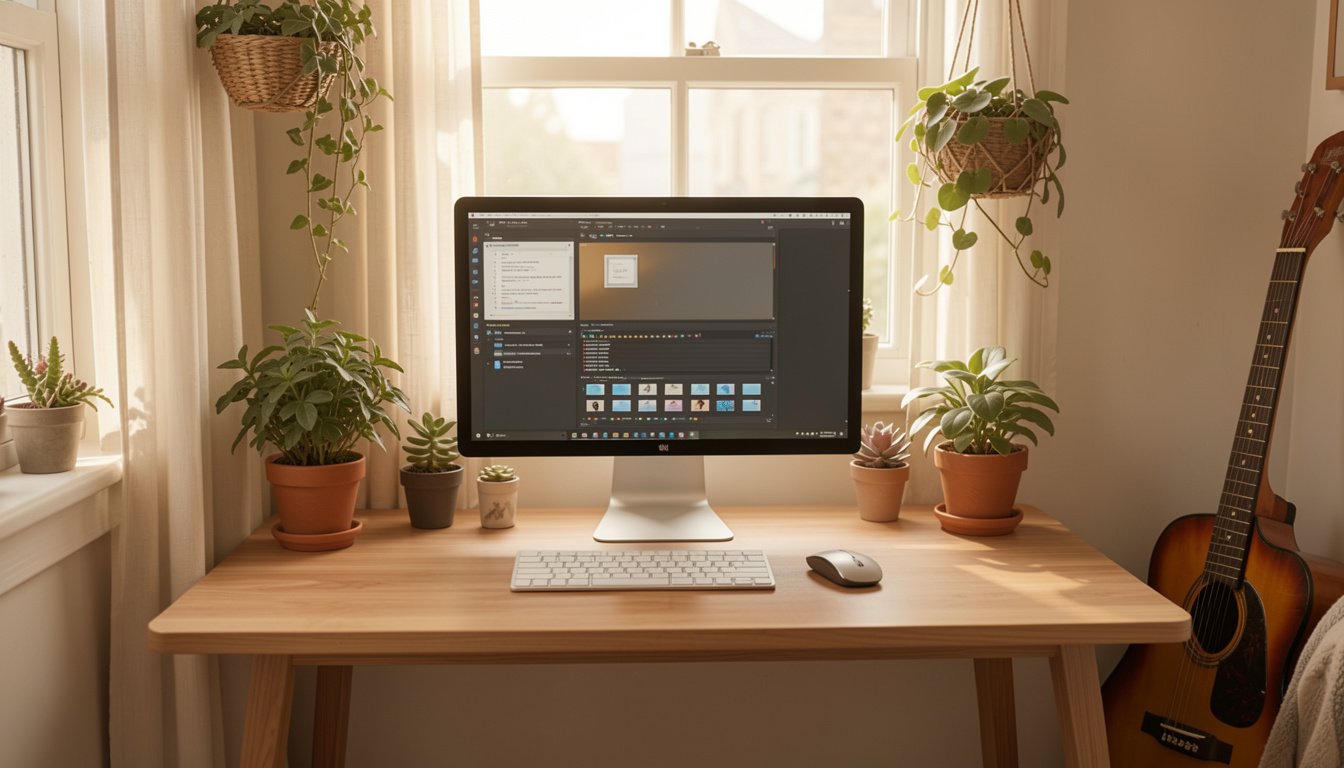
I cannot stop fiddling with my small home studio setup – tiny changes somehow make everything feel higher end. If you live in an apartment or a shared space and want calm, usable creative corners, this is the post I wish someone handed me when I moved in.
I made this because I kept reshuffling my desk and instruments until things finally clicked – and friends kept asking for photos and cheap solutions. I’ve tested awkward corners, floating shelves and makeshift sound baffles so you don’t have to waste time guessing what works.
Below are 25 real-life small home studio setup ideas with honest tips I used – you can pick the vibe that fits your apartment and wallet. Let’s turn your cluttered corner into something you actually want to spend hours in.
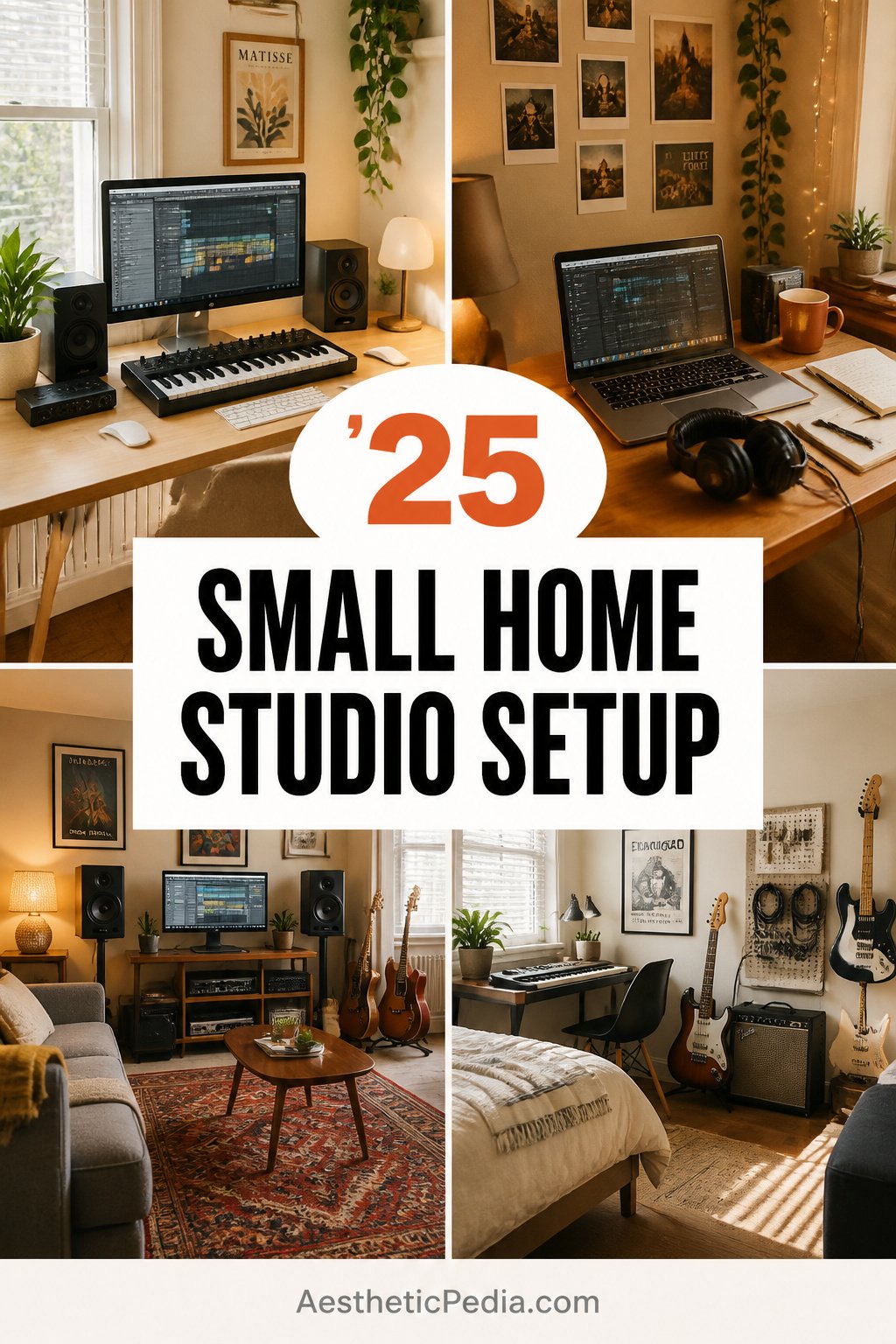
These 25 Small Home Studio Setup Ideas Will Inspire You
Compact Dual-Keyboard Desk
This setup is all about squeezing a lot of function into a tiny footprint – two keyboards and a monitor, everything aligned. I love how the layered tech looks tidy when cords are tucked away, and it taught me to prioritize what I actually use daily. If you need both production and typing space, this layout proves you can have both without chaos.
Warm Laptop Shelf Nook
A wooden desk with a shelf of photos and headphones makes the whole thing feel like a little creative altar. I hung prints behind my desk and suddenly the space felt like mine – more inspiring and less clinical. Keep your shelf for items you touch often so it looks curated rather than cluttered.
Speaker-Forward Rug Studio
Big speakers and a proper rug give this corner a surprisingly professional vibe. The rug helps with acoustics and warms up a cold floor, while the monitors sit at ear height for better mixing. If you’re doing audio work from home, this is a simple trick that actually improves what you hear.
Minimal Monitor Wall Setup
Clean lines and a pared-back desk keep the focus on the screen and the task at hand. I often switch to this minimal mode when deadlines hit – fewer distractions, easier deep work. Add one personal item like a small plant so the space doesn’t feel sterile.
Classic Wooden Desk Station
A solid wood desk is timeless and hides imperfections more graciously than white lacquer. It made me realize that investing in one staple piece can transform an entire room’s feel. Pair it with a streamlined monitor and simple lamp for instant cozy productivity.
Instrument Corner Mix
This design blends keys, guitar and recording gear in a single compact corner for musicians who need everything within arm’s reach. I used to cram instruments into closets, then built a corner like this and finally started finishing songs at home. Keep cables labeled so setup and teardown remain painless.
Art-Forward Office Look
A piece of artwork above your desk instantly elevates a small studio and feels like a window into your taste. I splurged on a small canvas once and it became the anchor for every other choice in the room. Let art lead your palette and lighting decisions for a cohesive space.
Bright Bay Window Setup
A workspace near a large window gives you daylight for mood and better video calls – and it feels like a treat when you’re stuck inside. I try to position my desk so I don’t get screen glare but still soak up daylight, which helps with afternoon energy dips. Use translucent blinds to soften harsh light while keeping brightness.
Guitar-Friendly Workstation
If you track guitar often, keep stands and hooks nearby for easy grabbing between takes. I learned that having instruments visible increases how often I play – out of sight became out of mind in my old place. Floor protection and secure wall hooks are small investments that prevent big heartbreaks.
Bunk Bed Studio Hack
A bunk bed with a desk on the bottom is a brilliant space-saving hack for tiny rooms or roommates. I once turned my bed’s lower level into a micro-studio and it felt oddly private and focused. Make sure ventilation and lighting are sorted so the space stays livable and inspiring.
Simple Desk and Chair
Sometimes the best setup is the simplest one – a comfortable chair and a tidy surface go further than an overcrowded desk. When I declutter, I finish more creative work without second-guessing. Prioritize ergonomics so you can work for longer without discomfort.
Dual Guitar Corner
Two guitars flanking a small monitor create a visually striking and practical studio setup for songwriters. I built a corner like this when I started recording with friends and it made tracking flow faster because everything was reachable. Add a small amp or headphones stand for completeness.
Window-Facing Laptop Desk
Facing a window while you work keeps you mentally refreshed and gives you great natural backlight for video. I switched to a window-facing layout during the pandemic and felt less cabin fever. Keep cords neat with adhesive clips so the view stays the focal point.
Minimal Bedroom Workspace
Fitting a desk into a bedroom can be cozy if you choose slim furniture and calming colors. I once used a slender console desk that disappeared visually but held my laptop perfectly – it made evenings feel less cluttered. Use a simple task lamp and a tray for daily essentials.
Living Room Studio Flow
When your studio shares the living room, make it look like part of the decor to avoid the “half-done” vibe. I integrated my monitors and keyboard behind a couch and it felt intentional rather than temporary. Pick a consistent color or material to visually tie the zones together.
Music Equipment Living Space
Mixing living furniture with music gear requires balance so neither side feels overwhelmed. I recommend defining each zone with a rug and lighting – that cleared up confusion in my small apartment. Keep frequently used gear accessible and less-used gear stored out of sight.
Cozy Chair and Lamp
A comfy brown chair and a focused lamp create a reading or mixing corner that doubles as a creative retreat. I wrote several lyrics sitting in a similar chair with a portable keyboard – atmosphere matters more than gadgets sometimes. Layer a throw and small table for a practical, lived-in look.
Pegboard Gear Wall
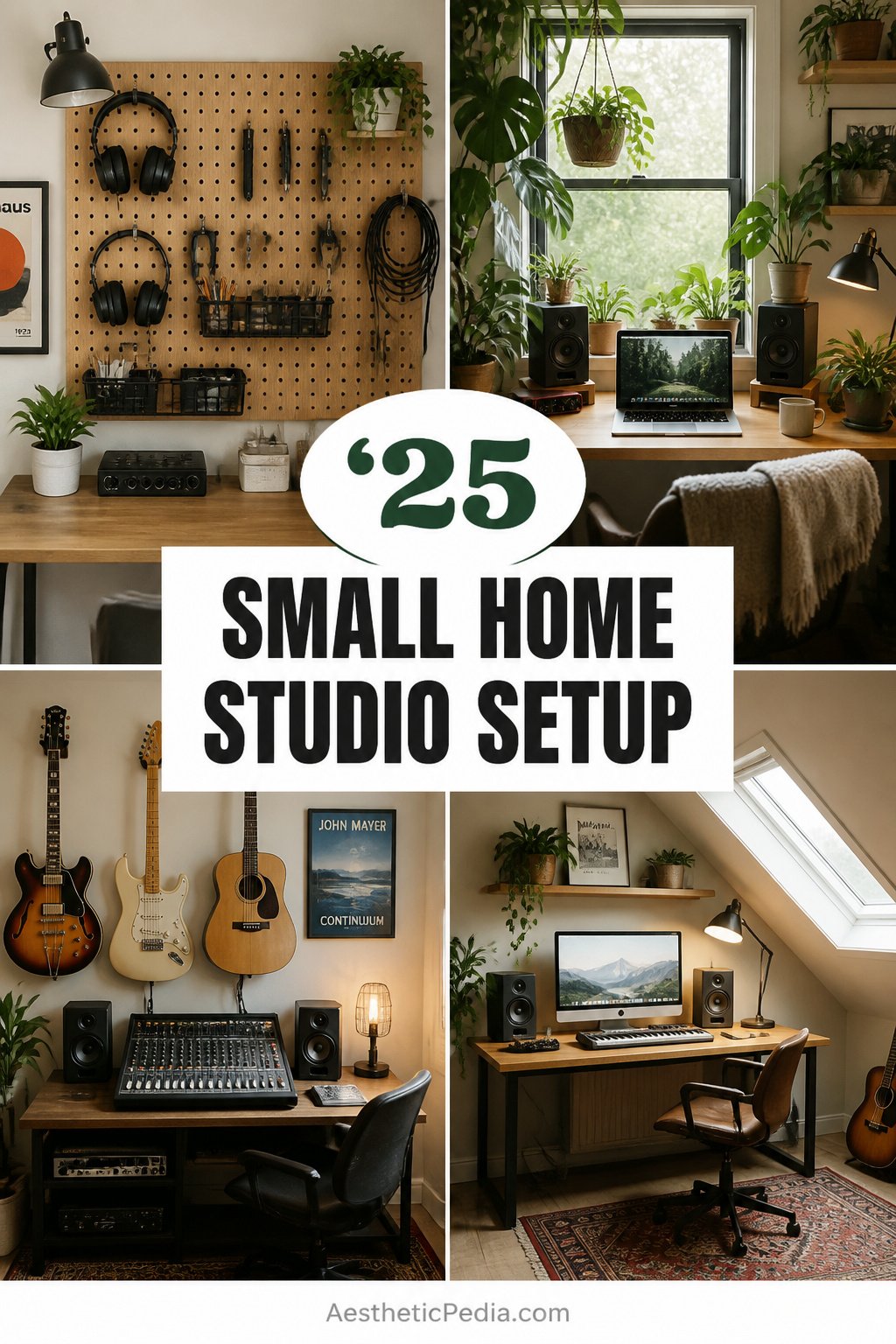
Pegboards are genius for small home studio setup organization – hook up cables, headphones and small tools so they are visible and ready. I built one above my desk and it cut setup time down dramatically. Paint it a bold color to make a visual statement and avoid a boring backdrop on calls.
Bookshelf Corner Studio
A corner desk next to a bookshelf organizes inspiration and utility in one place, and the shelves double as acoustic scatterers for sound. In my early days I stored reference books and cables on the same shelf and it worked better than expected. Keep the lowest shelf clear for foot space and comfort.
Streamlined Keyboard Desk
This is a clean, ergonomically focused setup with a keyboard, monitor and good chair. I switched to a similar arrangement when I started doing longer mixing sessions – posture improved and so did my patience. Small gear investments like wrist rests can make a world of difference.
Plant-Filled Cozy Studio
Plants soften tech-heavy corners and bring a sense of calm to creative workflows. I added hanging plants near my desk and immediately wanted to spend more time there – they remind me to breathe during frustrating mixes. Choose low-light species if your studio lacks windows.
Dedicated Recording Corner
This compact recording nook keeps guitars, keys and mics within reach so you can capture ideas quickly. I remember the first time I built a corner like this – songs started appearing faster because setup time was zero. Use movable panels if you need temporary acoustic treatment for better room sound.
Shared Living Studio
When a studio has to work with roommates or family, camouflage gear into the decor and set clear hours for noise. I negotiated a schedule with my roommate and that tiny bit of structure saved our friendship and my recording habit. Invest in headphones and soft schedule rituals so creativity doesn’t annoy others.
Wall-Mounted Guitar Display
Mounting guitars on the wall is both practical and decorative – it frees floor space and keeps instruments ready. I feel proud every time I walk into a room with guitarded walls, and guests always comment on it. Make sure mounts are secure and padded to protect finishes.
Sloped Ceiling Cozy Setup
Attic or sloped ceilings make for the cosiest creative dens if you use low furniture and layered lighting. I once converted a slanted nook into my first real studio and loved how cocooned and distraction-free it felt. Keep ventilation and cable runs well planned to avoid awkward workarounds.
How to Actually Make This Work For You
Start by listing your absolute must-haves and visualize how you’ll use the space day to day – if you only mix occasionally, don’t overbuild; if you record regularly, prioritize monitors and acoustics. Next, choose one major anchor piece like a desk or shelving and build around it so choices feel intentional, not random, and finally set up simple cable management and lighting routines so your small home studio setup stays usable instead of becoming a project that never gets finished.
What essentials should I have for a tiny studio?
Start with a good chair, a sturdy desk, headphones and basic cable organization – those items will keep you comfortable and efficient. Add monitors or instruments only after you know your workflow so you don’t clutter the space with unused gear.
How do I improve sound in a small room?
Use rugs, bookshelves and soft furnishings to reduce reflections, and consider small acoustic panels behind speakers to manage early reflections. Position your monitors at an equilateral triangle with your head for better stereo imaging.
Can I make a studio that looks stylish?
Absolutely – pick a cohesive color palette, a statement anchor piece and keep surfaces tidy so gear reads as decor. Personal touches like art and plants make the space feel curated rather than purely technical.
How do I keep cords and clutter under control?
Use adhesive clips, cable sleeves and a simple label system so setup and teardown are fast and painless. A single cable tray or basket under the desk can hide power strips and make the area look instantly neater.