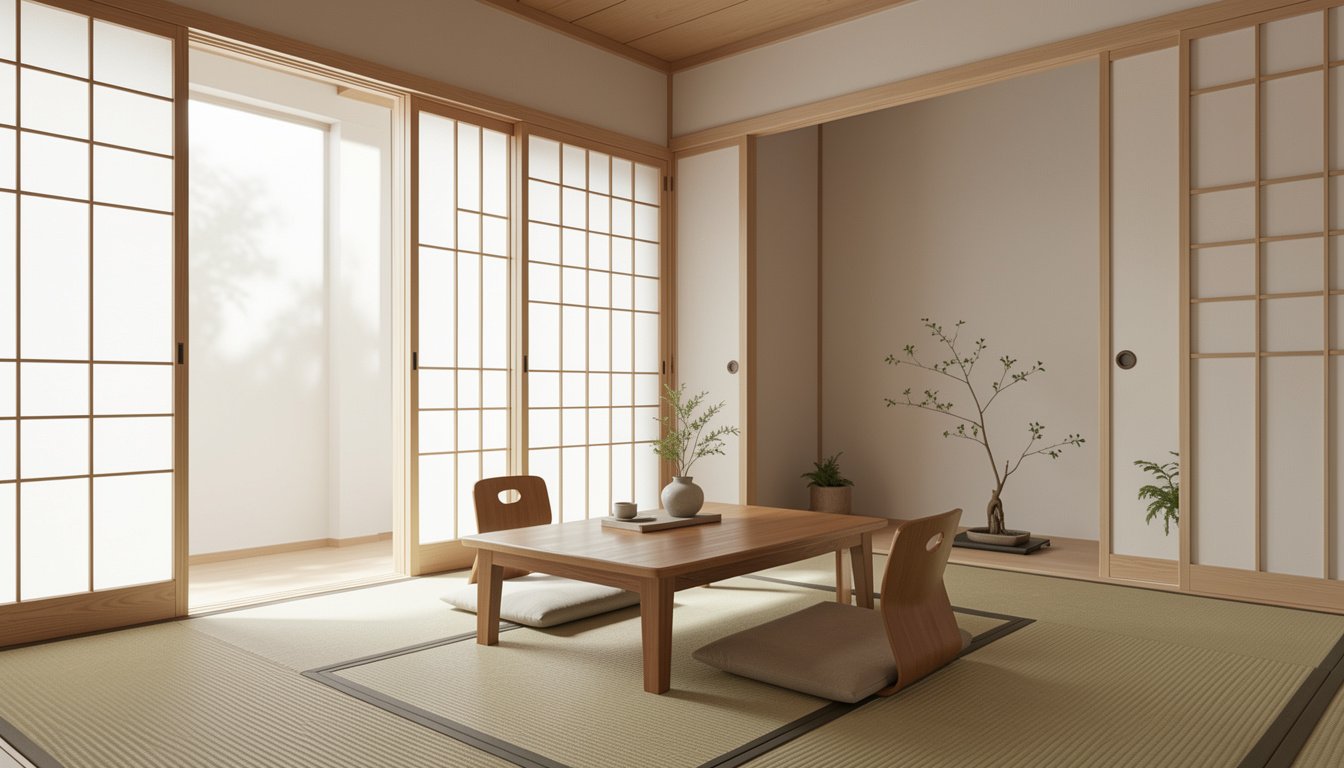
Okay so I’ve been obsessed with the japanese home aesthetic lately and I keep finding tiny ways to make my apartment feel calmer and more intentional. It’s that mix of light wood, greenery, and simplicity that makes a room hush in the best possible way.
I wrote this because I needed a single spot to collect ideas that actually feel doable – not a Pinterest fantasy that drains your bank account. I’ve tried a lot of these in bits and pieces and I’ll tell you what clicked for me and what felt unnecessary.
Stick around and you’ll get twelve easy, real ideas to make your space quietly beautiful and usable – plus small swaps that make a big difference.

These 12 Japanese Home Aesthetic Ideas You Can Try Today
Soft Neutral Foundation
Start with a base of warm neutrals and natural wood tones so everything else can quietly layer on top without fighting for attention. I painted one wall a warm beige and suddenly my thrifted wooden table and soft linen cushions felt like they belonged – that low-effort swap made the space feel curated. If you keep most items in the same tonal family you create a calming backdrop that makes accents like a plant or ceramic bowl really pop.
Bring the Outside In
Large windows and lots of greenery are a huge part of the aesthetic – think potted trees, trailing vines, and grouped plants that feel intentional. I once moved a small ficus into the corner by my window and people started commenting on how peaceful the room felt, even though I hadn’t touched the furniture. Natural light and living plants make interiors feel like an extension of the garden instead of a sealed box, and that balance is calming every single day.
Simple Bath Retreat
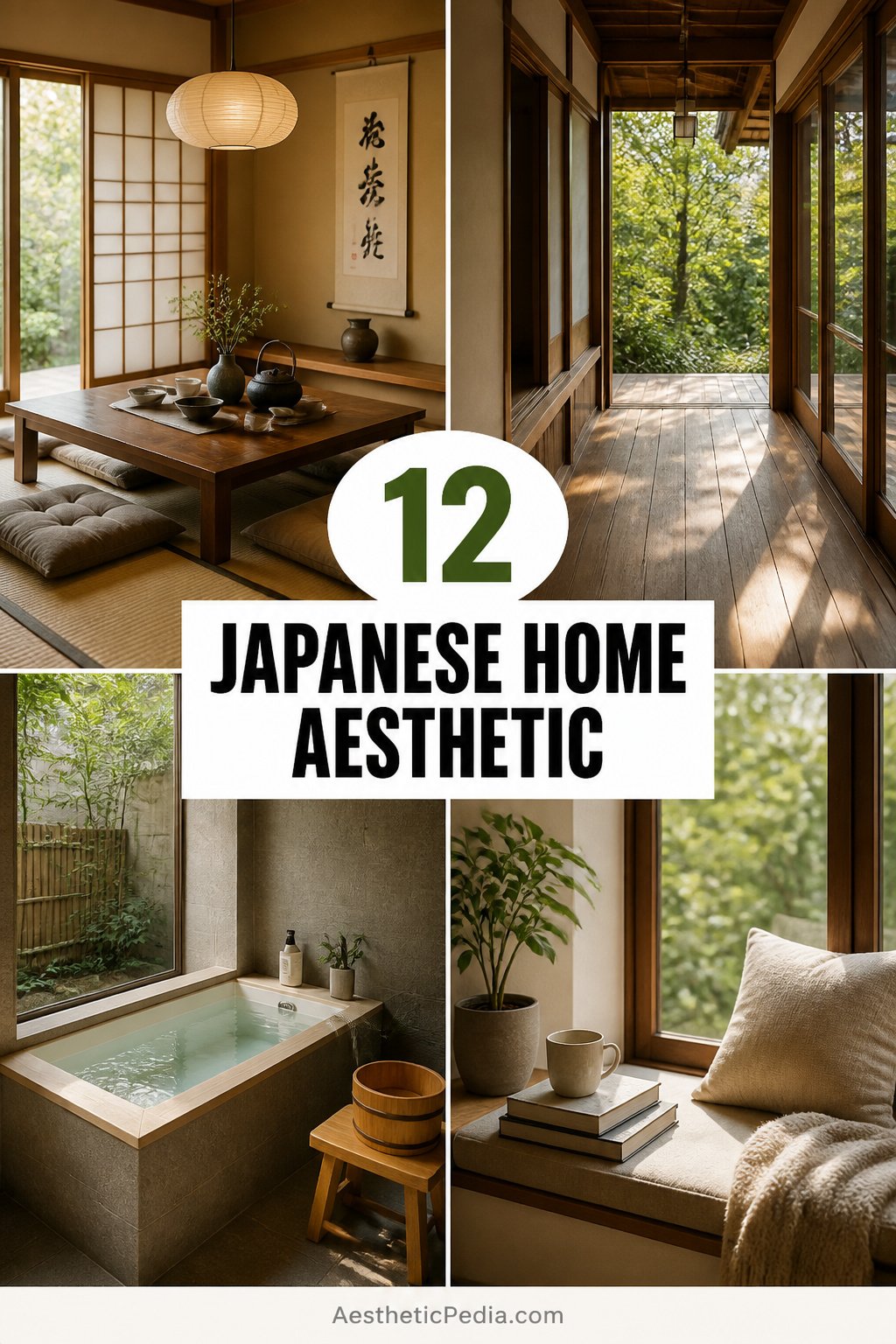
Create a tiny ritual space around your bath with warm wood tones, a small stool, and a single plant by the window for privacy and softness. Lighting with candles or a low-hung pendant changes the room’s mood so you can treat a quick soak like a short reset. Keep lotions and soaps in matching ceramic containers to avoid visual clutter so the space feels like a mini-onsen at home.
Outdoor Living Harmony
If you have a balcony or small patio, treat it as an extra room with simple seating, a woven rug, and a single tree or tall plant to anchor the view. Layering textures like wicker, linen, and a few outdoor cushions makes it feel lived-in rather than staged. I turned my tiny balcony into a reading nook with a slim bench and a lone potted maple, and it became my favorite quiet spot faster than I expected.
Fireplace Focal Warmth
A modest fireplace or a faux hearth with candles and stacked wood suggests warmth without needing a dramatic renovation – position low seating and a simple woven rug nearby. The glow pulls the room together, making minimal furniture choices feel intentional and cozy. Add a muted art print above for balance and keep surfaces clear so the eye rests on that warm focal point.
Open Window Living
Wide, open windows with unobstructed views let light be the main decor element – avoid heavy curtains and choose sheer linens or no window dressing at all where privacy allows. I swapped blackout curtains for light cotton panels in my bedroom and the space felt twice as big once morning light could flood in. Letting the outside shape the room’s color palette keeps your home feeling connected and serene.
Kitchen With Purpose
Display only the pots you use and hang them neatly so your kitchen looks functional and intentional, not crowded or chaotic. Open shelving with a small stack of matching plates and a wood cutting board creates a lived-in look that is still tidy. When everything has a place, cooking becomes less stressful and more of a calm ritual you actually want to do at home.
Water and Plant Corners
Small indoor water features or grouped plants near a light source create a quiet focal point that feels like a miniature garden. I set a shallow ceramic bowl with floating blooms on a low table once and guests kept remarking on how peaceful the entry felt – such a simple touch made the whole apartment calmer. Pair greenery with stones or simple pottery for that Japanese-inspired balance between objects and nature.
Big Window Living Room
Place seating to face large windows so the outdoors becomes part of your interior composition and the layout reads as relaxed, not formal. Neutral upholstery, a single patterned pillow, and a small coffee table keep the view as the room’s star. You don’t need lots of furniture to feel complete – a few well-placed pieces are more authentic to the aesthetic than filling every corner.
Minimal Bed Nook
Keep your bed area simple with a low-profile frame, white linens, and one or two plants by the window to make mornings gentle and soft. A single art piece or woven wall hanging above the headboard is enough to add personality without overwhelming the calm. When I decluttered the surfaces around my bed it felt like an instant upgrade – sleep quality somehow improved when visual noise went down.
Stone and Wood Kitchen
Combine stone flooring or countertops with warm wood cabinets for an earthy, grounded kitchen look that ages beautifully and hides wear. Keep tools and utensils in wooden or ceramic holders so metal glare doesn’t dominate the scene. The tactile contrast of cool stone and warm wood makes the room feel both practical and comforting, which is exactly what cooking spaces should be.
Quiet Hallway Flow
Use hallways as breathing spaces by keeping them clear, adding a runner and a single framed print or mirror, and letting light travel through from room to room. A calm corridor signals the rest of the home is intentional and restful, which guests notice even if they can’t name why. I painted my narrow hall a softer tone and it now feels like a pause between rooms instead of a cluttered pass-through.
How to Actually Make This Work For You
Start small – pick one corner to transform so the change feels manageable and you can see what you actually use, then edit everything that doesn’t support that calm function; test a new plant or swap a curtain and live with it for a month before buying more. Think in systems rather than objects so storage, light, and materials work together to support daily life, and remember that imperfections like a slightly worn wood table add personality rather than detract from the aesthetic.
How can I make a small apartment feel Japanese-inspired?
Focus on materials and light – use warm woods, natural fibers, and keep color muted so the space feels cohesive; reduce clutter by storing items out of sight. A few plants and a simple tatami or woven rug can change the whole mood quickly.
Do I need to buy new furniture to get this look?
No – thrifted and secondhand furniture often fits the aesthetic perfectly when refinished or paired with neutral textiles, and saving money lets you invest in quality textiles or plants. Re-staining wood or adding simple hardware can make an old piece feel intentional and new again.
What lighting works best for japanese home aesthetic?
Natural daylight is ideal, supplemented by soft, warm bulbs in paper or woven shades to keep evening light gentle and flattering. Layer a few low, mellow light sources rather than relying on one bright overhead fixture for a cozier atmosphere.
Which plants are best for beginners?
Start with forgiving plants like pothos, snake plant, or a small ficus to bring life into corners where light varies; choose ceramic pots in neutral tones to keep the look cohesive. Group plants at different heights for a natural, curated feel without overcomplicating care routines.