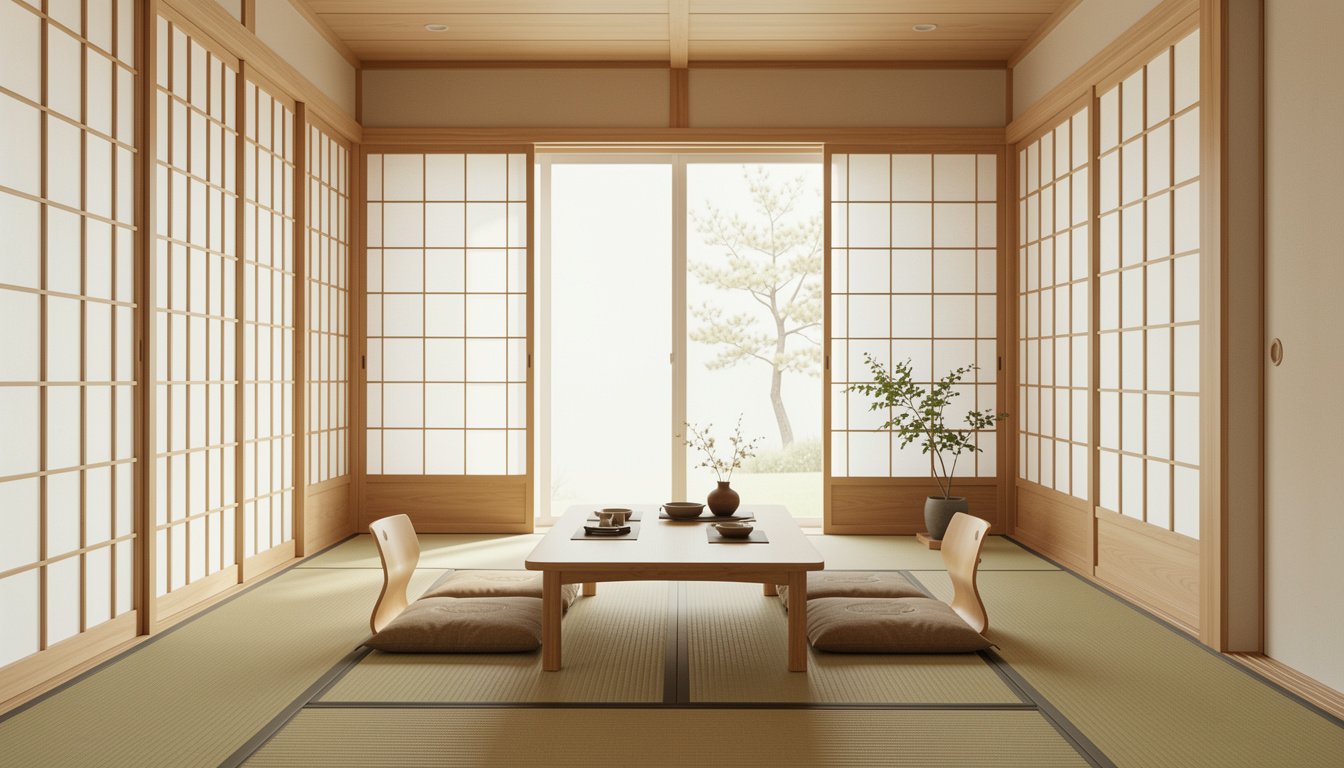
Okay, friend, if you love calm corners and cozy minimalism, these japanese home ideas are exactly my kind of inspiration – they feel like a warm exhale after a busy week. I fell for this aesthetic because it makes even tiny spaces breathe and feel intentional.
I made this list because I needed a single place to save every low-key, functional idea I tried or wanted to try – and I know you’ll love most of them. I actually tested several of these looks in my first apartment and kept what felt right.
Read on and you’ll walk away with 25 realistic ways to bring gentle Japanese style into your home, with tips you can try this weekend.
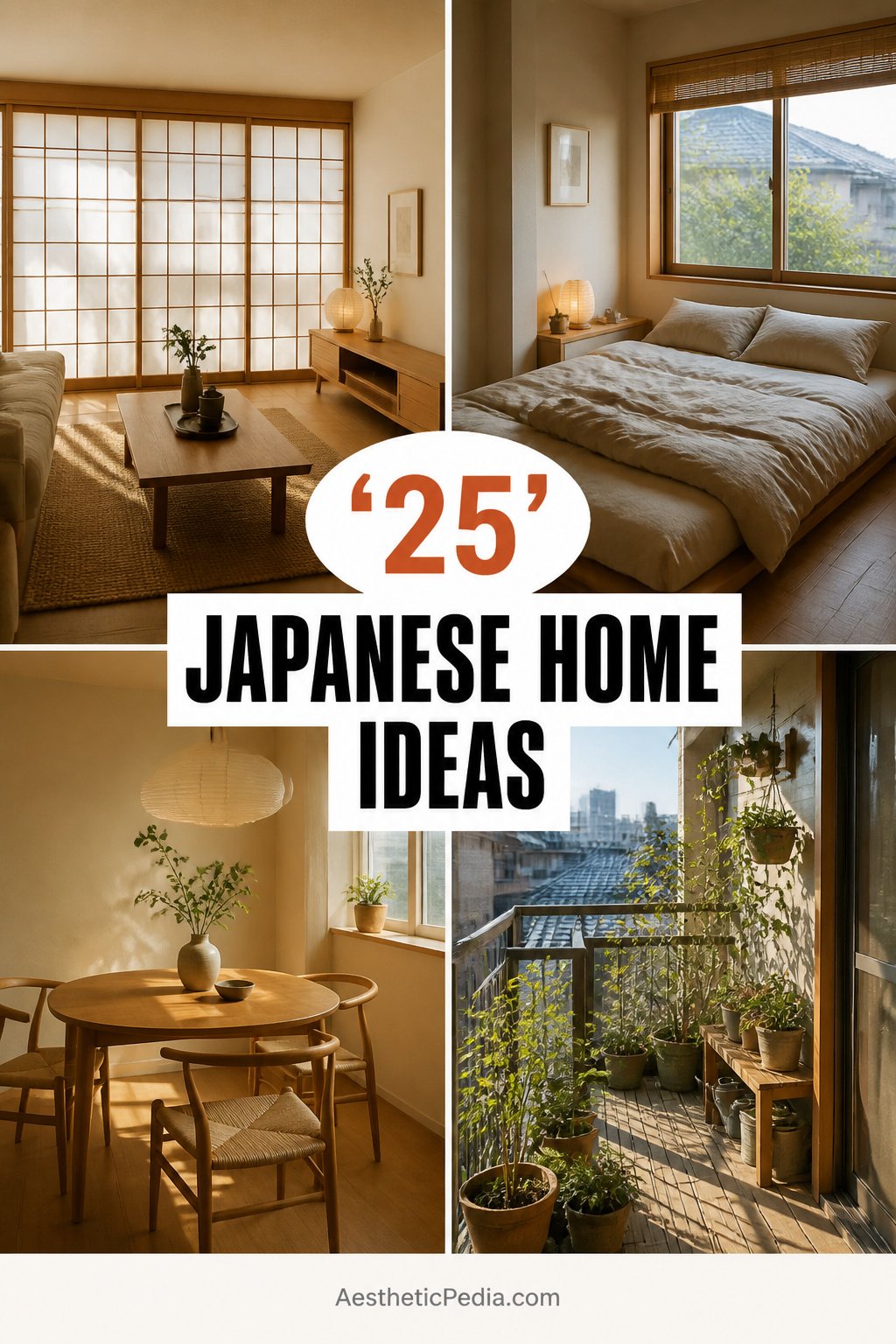
These 25 Japanese Home Ideas to Inspire Your Space
Soft White Living Room
This bright living room idea leans into white furniture and minimal clutter, which instantly calms the room and makes it feel bigger. I love how a predominantly white palette can still feel warm when you mix in wood textures and soft textiles. Try a single statement piece and keep surfaces clear to get that airy, lived-in feel.
Window-Seat Bedroom Vibes
A low bed next to a sunny window is such a quietly luxurious Japanese home idea – it encourages slow mornings and reading rituals. I always open the blinds a bit to let in soft light instead of blasting the room with harsh sun. You can recreate this with thin linen sheets, a wooden frame, and simple blinds on the sill.
Empty Room Potential
Neutral floors and white walls are the perfect blank canvas for Japanese minimalism, so think about negative space as part of the design. I once stood in a nearly empty room and realized how freeing it felt – you can do so much with one low table and a floor cushion. Keep the layout open so light and movement can flow freely.
Simple Shelved Comfort
Wooden shelves with tidy storage are elegant and functional, and they stop clutter from creeping into sightlines. I like to combine baskets and a few treasured ceramics so the shelves tell a calm story instead of shouting for attention. Embrace asymmetry when styling to keep things feeling authentic rather than staged.
Genkan Shoe Step
A simple wooden step for shoes nods to the traditional Japanese genkan entry and instantly organizes footwear with style. I installed a slim bench near my door and it felt like a tiny ritual every time I came home and took off my shoes. A single basket for slippers keeps the area tidy and welcoming.
Green Accent Wall
Consider a muted green wall paired with round art to create a calm focal point that still reads warm and serene. I painted one wall deep moss green in my dining area and it immediately made meal times feel cozier in a subtle way. Balance the color with clear lines and natural wood furniture for harmony.
Bamboo Window Bed
Bamboo mats on window frames are simple, textured details that bring nature inside without fuss. You can roll them up for privacy or let soft light filter through for a gentle glow in the room. I used thin bamboo shades for the windows in my guest room and they made everything feel instantly more personal.
Airy Multi-Window Living
Large windows and low furniture maximize daylight and make interiors feel like extensions of the outdoors, which is a key Japanese home idea. I prefer seating that doesn’t compete with views, so I keep sofas low and soft and let the windows be the star. Layer light curtains for privacy without losing brightness.
Clean Modern Kitchen
A kitchen that feels uncluttered and ready to use is both practical and calming, especially if surfaces are kept clean and tools are stored thoughtfully. I learned to pare down my counter items to two or three essentials and it made cooking so much more peaceful. Open shelving for dishes can feel intentional if items are color-coordinated and sparse.
TV With Natural Base
A flat screen on a simple wooden table keeps entertainment grounded and avoids heavy media cabinets that clutter the space. I swapped my bulky cabinet for a low wooden table and the room instantly felt lighter and more cohesive. Use cords minimally and tuck them behind furniture so the look stays calm.
Bonsai Shelf Styling
Small potted plants like a bonsai add delicate life and an elegant silhouette to shelving and bedside tables. I actually bought my first bonsai on a whim and it became my favorite meditative plant care ritual. Place it near natural light and let it be an intentional, slow-living detail rather than trying to over-style it.
Sliding Doors To Garden
Sliding glass doors that open to a garden blur the line between inside and out, creating a quiet flow that feels very Japanese. When I designed my living area, I prioritized access to the outdoors and never looked back – plants and light changed everything. Consider a low threshold and simple curtains to keep views unobstructed.
Cozy Bedroom Ambience
Flanking lamps and a large low bed read like a modern take on traditional futon sleeping – comfortable but grounded. I swapped bright overhead lights for warm bedside lamps and sleep improved immediately, which surprised me. Use soft linens and muted tones to keep the focus on rest.
Bed By Wooden Stairs
A bed placed under a window beside stairs feels intimate and sculptural, especially with wooden floors to echo the stairs. I lived in a studio where my bed sat at the base of a loft ladder and it made the layout feel intentional instead of cramped. Keep clutter off stairs and use a slim bedside table for essentials.
Rattan Dresser Warmth
Rattan baskets and wooden drawers bring texture and earthy warmth while hiding mess, which is essential in minimalist homes. I store off-season linens in woven baskets and they look like decor instead of hiding in cardboard boxes. Choose neutral fibers and avoid too many patterns to maintain the calm aesthetic.
Stair-Step Planters
Plants on wooden steps create a gentle vertical garden that reads clean and curated rather than chaotic. You can use matching pots or slightly varied textures to add interest while keeping the overall palette calm. I love this idea for entryways where greenery greets you without demanding a lot of watering attention.
Large Minimal Bed
A spacious low bed on wooden floors is classic Japanese tranquility – it invites relaxation without elaborate headboards. I swapped my tall bed frame for a platform and instantly felt the room relax into itself. Keep bedding simple and add one textured throw for interest.
Compact Dining Charm
A small wooden table with benches and a single vase is the epitome of functional beauty and social coziness. I once hosted a tiny dinner with mismatched friends at a table like this and it felt impossibly intimate. Use pendant lights and natural linens to complete the scene without overcomplicating it.
Window-Filled Living Room
When a living room has generous windows on multiple walls, you can rely on daylight to be the main decorative element. I keep furniture low and fabrics light so the view and light take center stage rather than furniture. Position seating to face outward and enjoy the changing light all day.
Plant-Focused Room Styling
Strategically placed plants on wooden floors soften lines and add an organic focal point without cluttering the space. I started small with a single fig and then slowly added a few more low-maintenance plants as confidence grew. Try grouping odd numbers of plants to keep arrangements natural and balanced.
Tea Table For Calm
A small table with two cups by a window invites quiet conversations and simple rituals like tea or journaling. I cherish slow mornings with a cup of green tea at a tiny table like this – it centers the day. Keep table decor minimal so the ritual itself remains the highlight.
Night Garden Views
Large windows looking onto a garden at night turn your home into a gentle retreat that melts stress away. Lighting from the garden should be soft to keep the mood contemplative and cozy indoors. I use dimmable lamps near my windows so indoor light matches the calm outside when evening comes.
Water, Rocks, and Light
An indoor rock and water vignette is a bold but beautiful Japanese idea that brings zen energy straight into your living space. If you try a small fountain or stone arrangement, keep it simple and balanced so sound and sight remain soothing. I added pebbles and a shallow bowl with a little water and felt oddly peaceful immediately.
Fireplace With Furniture
A fireplace paired with low seating and large windows makes for a layered living room that reads both warm and modern. I hosted winter evenings around a similar setup and it felt like the house was hugging us back. Use natural textiles and a single rug to anchor the seating without overcrowding the floor.
Communal Wooden Table
A sturdy wooden table with benches and hanging lights creates a welcoming communal zone for meals and projects that still looks effortlessly refined. I love this layout because it makes even small gatherings feel important and intentional. Keep the tabletop clear and add a single floral or ceramic piece for charm.
How to Actually Make This Work For You
Start small and pick one area to simplify first, like a nightstand or entryway, because tiny wins build momentum and help you figure out what feels authentic in your home. Try swapping one item for a wooden or woven alternative and live with the change for a month before deciding to add more, and remember that imperfections add character rather than ruin the aesthetic.
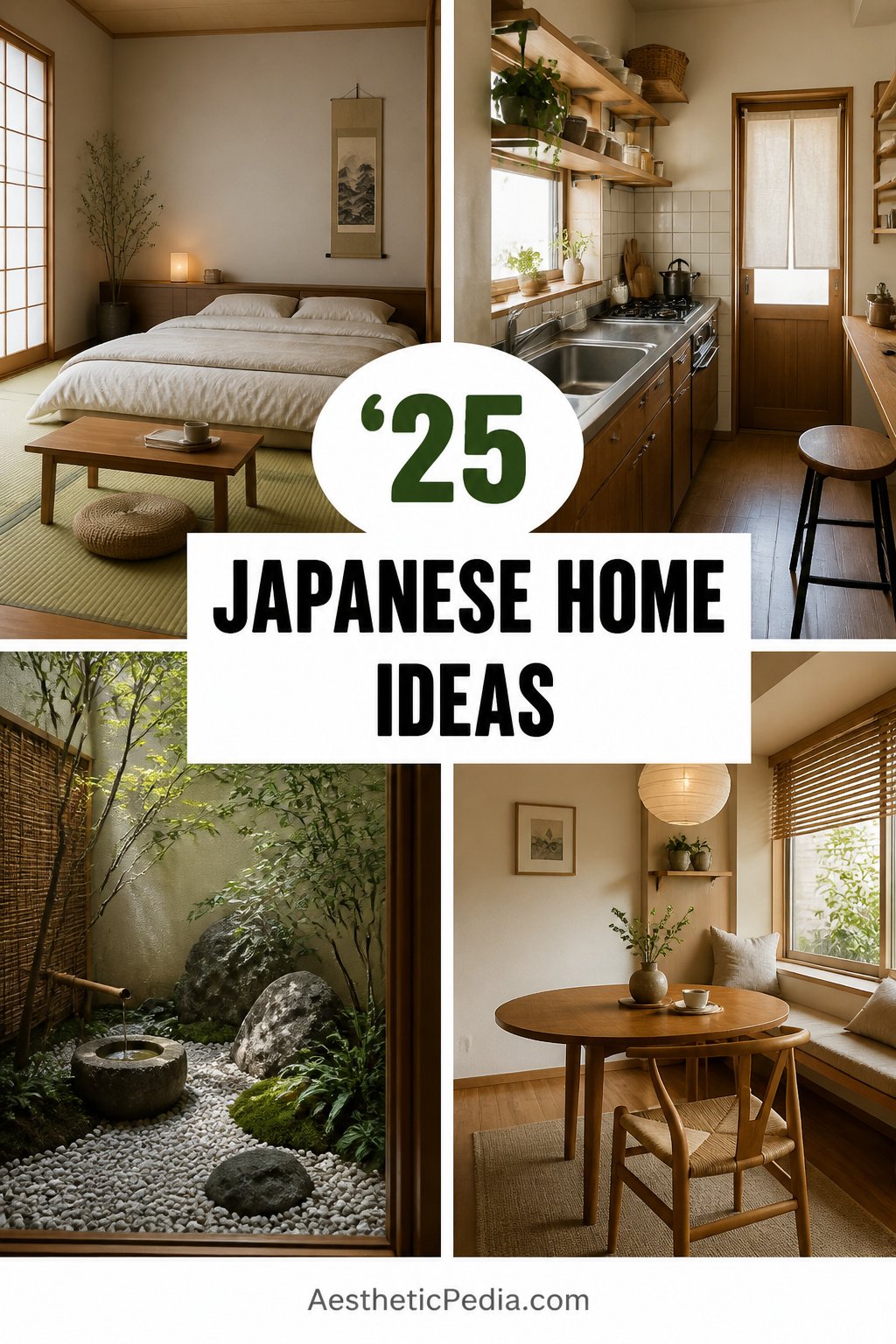
How do I start a Japanese-style room?
Begin by decluttering and choosing a muted palette with natural materials like wood, linen, and rattan to set a calm foundation. Keep furniture low and surfaces tidy to preserve the aesthetic and allow light to be the main decorative element.
Can Japanese style work in small spaces?
Absolutely – Japanese home ideas shine in small spaces because they emphasize functionality and negative space, which makes rooms feel larger. Focus on multipurpose furniture and vertical storage to stay efficient without crowding the area.
What plants suit a Japanese interior?
Choose low-maintenance, sculptural plants like bonsai, ficus, or simple potted moss to add life without overwhelming the calm vibe. Place them thoughtfully so they feel intentional rather than clustered, and rotate them to find ideal light spots.
How do I keep this look affordable?
Shop secondhand for wooden pieces, use neutral textiles, and commit to a few statement items instead of filling the room with trends, which keeps costs down and the design timeless. DIY simple touches like reed blinds or a small pebble tray to achieve the look on a budget.