I get so excited about the tiny things that make a house feel finished, and small home boundary wall design is one of those tricks that totally transforms curb appeal. Whether your lot is postage-stamp tiny or you simply want a neat edge, a thoughtful wall can make the whole place read as intentional and cozy.
I put this list together after living in a snug urban lot where I had to define my front space without drowning it in materials, and I tried more than a few ideas so you don’t have to reinvent the wheel. I learned what looks good at a small scale, what respects a budget, and what actually stays low-maintenance over time.
Below you’ll find ten practical, photo-backed ideas with tips I used myself or adapted for friends, plus quick notes so you can pick one and get started today.
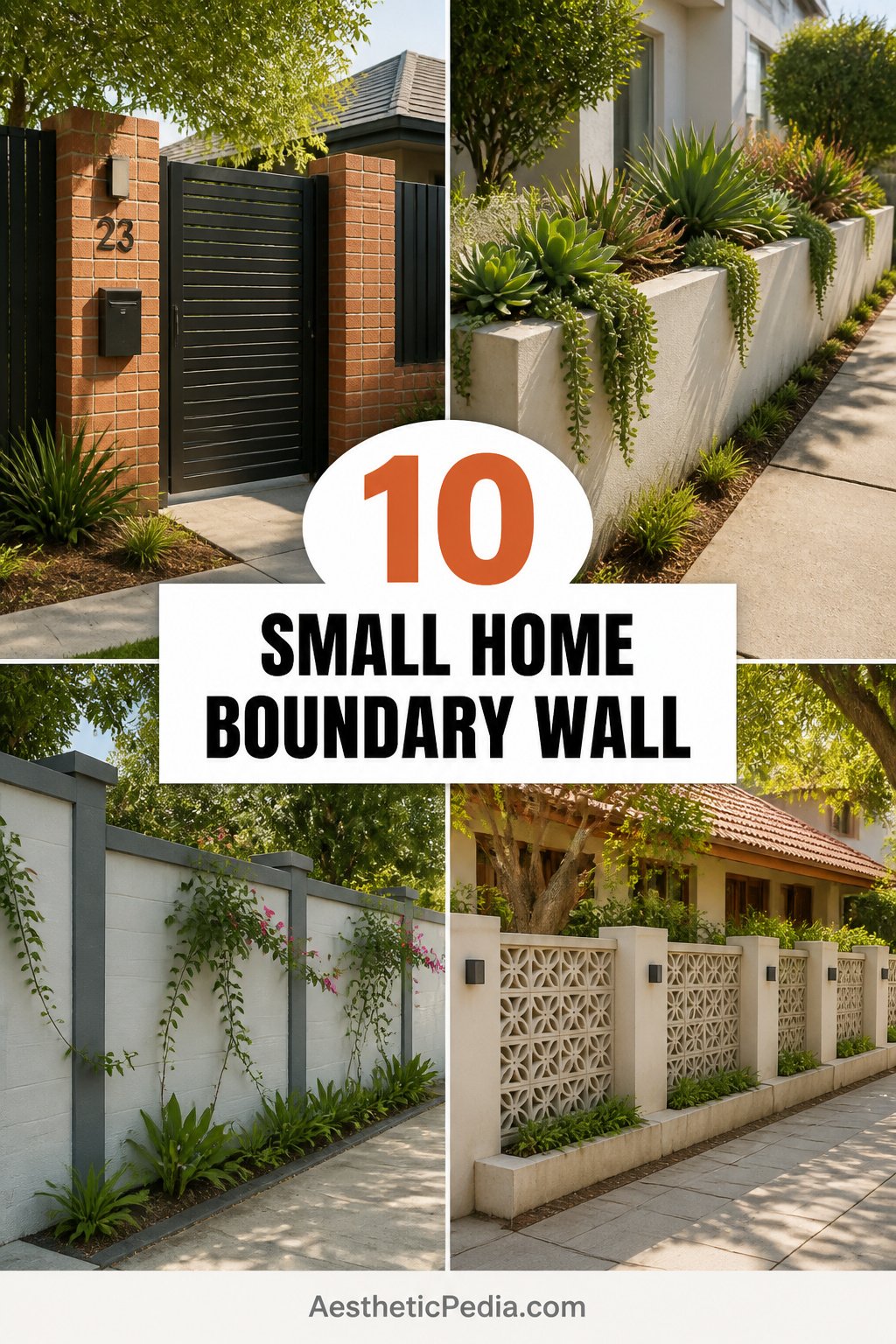
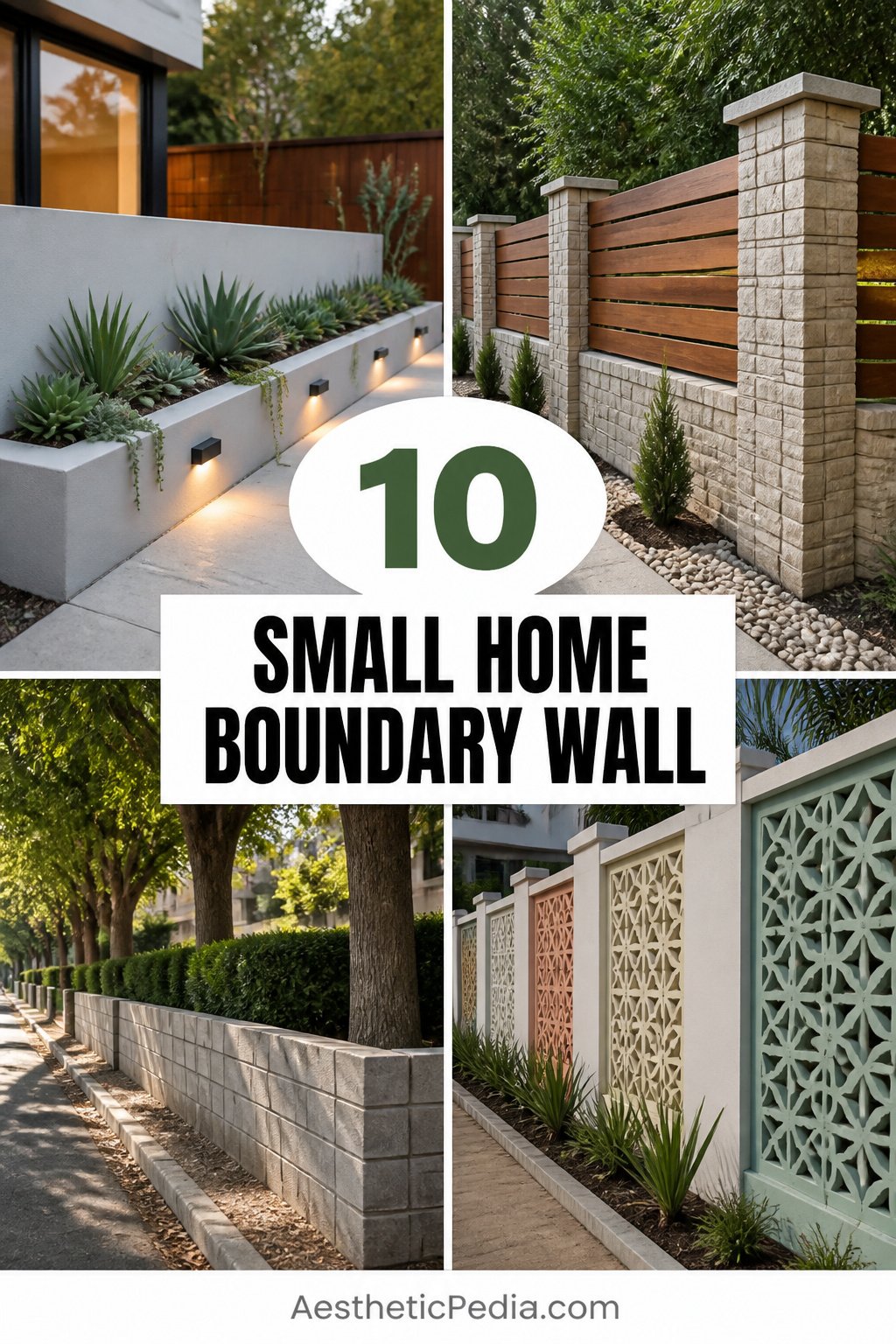
10 Small Home Boundary Wall Design Ideas to Try
Minimal Brick and Metal Gate
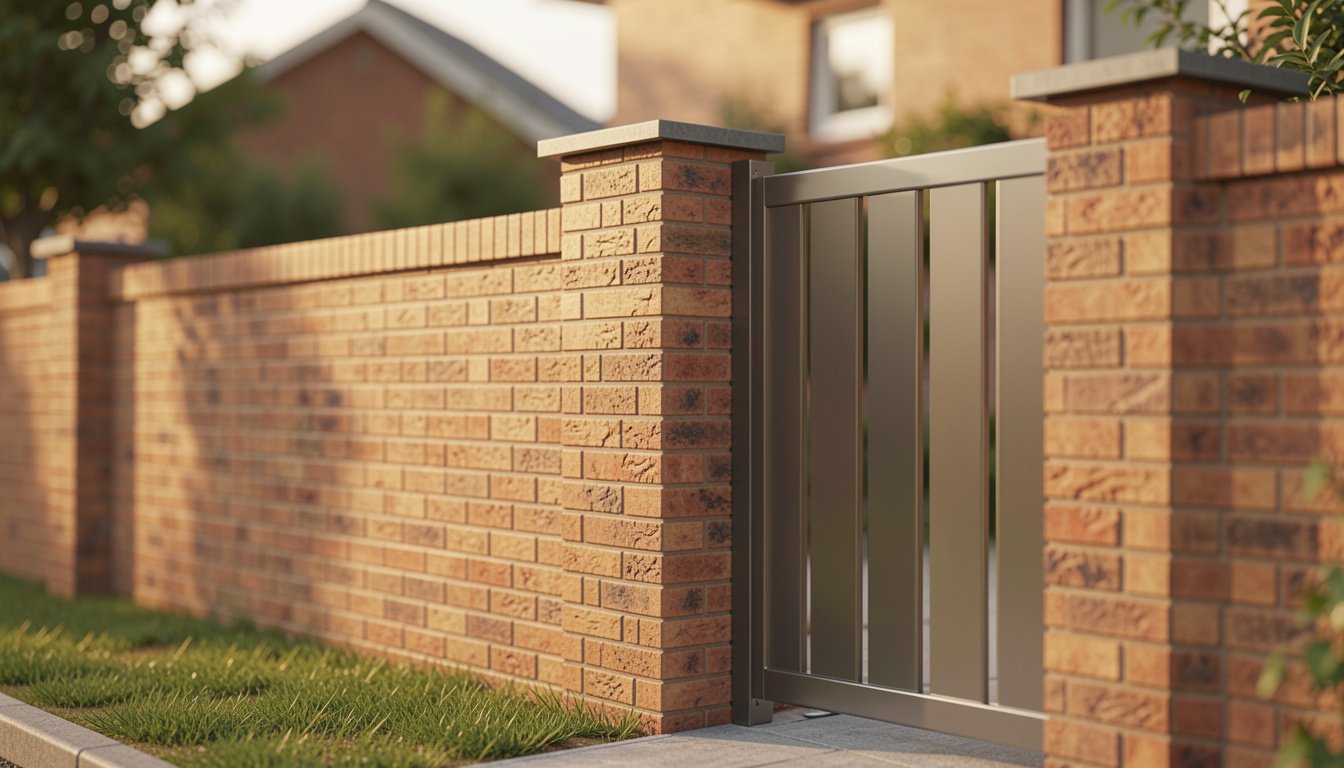
This combo feels modern but approachable because the warm brick balances the cool metal, giving you structure without coldness; it’s one of my favorite pairings for compact front yards because the wall reads as substantial while the gate keeps sightlines open. If you have a narrow sidewalk or a small driveway, go for a low, textural brick wall about knee-high with a slim metal gate inset so the whole approach feels welcoming and not fortress-like. I used a similar look on a rental house I styled once, and neighbors kept asking who did the work because it looks custom-made even when built affordably.
Stone and Wood Accent
Stone pillars with horizontal wood slats feel handcrafted and warm, which helps a small property appear curated rather than cramped; the mix of materials adds depth and hides wear better than one finish would. For a tiny lot I like repeating the stone at intervals rather than a continuous wall, so you get rhythm and texture without closing the space off – it reads larger visually. If you plan to stain the wood, test samples in sunlight first because the color can shift drastically during the day.
Low Brick Row with Green Backdrop
A short brick boundary paired with a planted strip behind it creates separation and softness at once, and this trick is perfect when you want privacy that still feels airy because the wall doesn’t tower over your plants. You can use the space behind the wall for low shrubs or ornamental grasses that soften the brick edge while giving the illusion of depth – that little layer makes the whole frontage feel intentional. I remember planting a line of lavender behind a similar wall and the scent whenever I came home almost felt like a hug.
Neighbourly Row House Edge
When homes sit close together, a continuous low wall that aligns with neighboring properties creates a cohesive street rhythm and keeps each yard feeling defined without isolation, so your small boundary becomes part of a unified look. Choose materials that echo the house facade or that pick up a common palette on the street, and keep the height modest to honor sightlines between homes. You can also add subtle lighting along the top edge to bring the wall to life at night and highlight the architecture without making the space feel smaller.
Brick Wall with Metal Gate
This classic approach pairs a sturdy brick wall with a sleek metal gate, allowing you to combine privacy with a dramatic entry point that says something about the house personality without shouting. For a compact lot, keep the gate narrow and choose a brick pattern with visual interest so the wall itself becomes a focal point rather than an afterthought. When I drew up plans for my city front, I realized a narrow but tall gate reads grand without actually taking up space, which was a nice compromise for the neighbor-facing side.
Black Fence with Floral Side
A sleek black fence paired with flower beds or climbing plants introduces contrast and softness, and the dark fence color visually recedes which helps a small yard look larger while the blooms provide the welcoming color. You don’t need a dense hedge here – pick three seasonally staggered plants so there is always something in bloom or interest through the seasons, and train a flowering vine sparingly to keep things tidy. I used black metal in a tiny courtyard and it made the plants sing, plus the contrast read more expensive than the actual budget.
Planter-Lined Boundary
Stack a row of matching planters on or behind a low wall to add vertical interest without building up mass, which is especially good when your footprint is tiny but you still want a layered look; it’s almost like dressing a plain wall in seasonal jewelry. This approach is super flexible because you can change plants each season, rotate in edibles, or add small sculptural elements for variety, and it works well if you rent because planters are removable. I gifted a friend a set of matching terracotta planters for exactly this reason – she wanted instant charm without committing to construction.
Practical Concrete Block Wall
Concrete block walls are honest and economical, and when finished with a smooth render and a warm paint they can look modern and grounded rather than utilitarian; for small homes this is often the smartest budget move because it delivers durability and privacy. You can incorporate small recessed planter pockets or narrow ledges to break the surface up and give you spots for herbs or succulents, so the wall becomes useful as well as boundary-defining. If you’re DIY-curious, simple block walls are accessible for homeowners with basic skills and a weekend mindset.
Tree-Backed Block Wall
Placing a short concrete block wall in front of a repeated line of trees creates a natural screen that reads mature instantly, and the rhythm of trunks behind the wall makes the space feel deeper than it is. This is a lovely move for narrow lots because the vertical trees draw the eye up and away, while the wall keeps your boundary tidy and practical. When I visited a street with this setup on a gray day, the repeated tree pattern was what made the street feel calm and thoughtfully designed despite the houses being close together.
Construction-Style Raw Finish
Embracing a raw concrete or unfinished aesthetic can actually be very chic when paired with clean landscaping, and for small homes this approach highlights form over ornament so your boundary feels modern and minimal rather than fussy. To keep things warm, introduce texture in the planting or add a wooden or painted metal gate; the contrast creates a balanced statement that works well in contemporary neighborhoods. A few carefully placed uplights will accent the texture and keep the pared-back look readable at night without adding clutter.
How to Actually Make This Work For You
Start by standing at your property line and imagining how you want the approach to feel – open and friendly, private and quiet, or sculptural and dramatic – because that intention will guide materials, height, and plant choices in a small home boundary wall design. Think about maintenance realistically, pick one focal material and one accent to avoid visual chaos, and test colors and plants at full scale if you can before committing so you get the finished look right the first time.
How tall should a small boundary wall be?
Keep it low to medium, generally no higher than waist height for a small lot unless you need full privacy, because lower walls make the street feel larger and more welcoming while still providing a clear edge. If you want privacy, combine a low wall with planting to gain height without feeling oppressive.
What materials work best for small yards?
Brick, rendered concrete, stone accents, and metal or wooden slats all work well because they offer texture and durability without overwhelming scale, and they can be mixed to keep the design interesting. Choose materials that complement your home’s facade to create cohesion and avoid a cluttered appearance.
Can I DIY a boundary wall on a budget?
Yes – simple low brick or concrete block walls and raised planters are very DIY-friendly if you have basic skills and time, and they save a lot on labor while allowing you to customize finishes and paint. Always check local regulations and utilities before digging or building near property lines.
How do I add privacy without making the yard feel small?
Layer low walls with vertical planting, use spaced slats instead of solid panels, and play with translucency so you get separation without solid visual mass; this keeps sightlines and light. Another option is to use strategically placed screens or trellises that can be softened with vines for a living barrier.