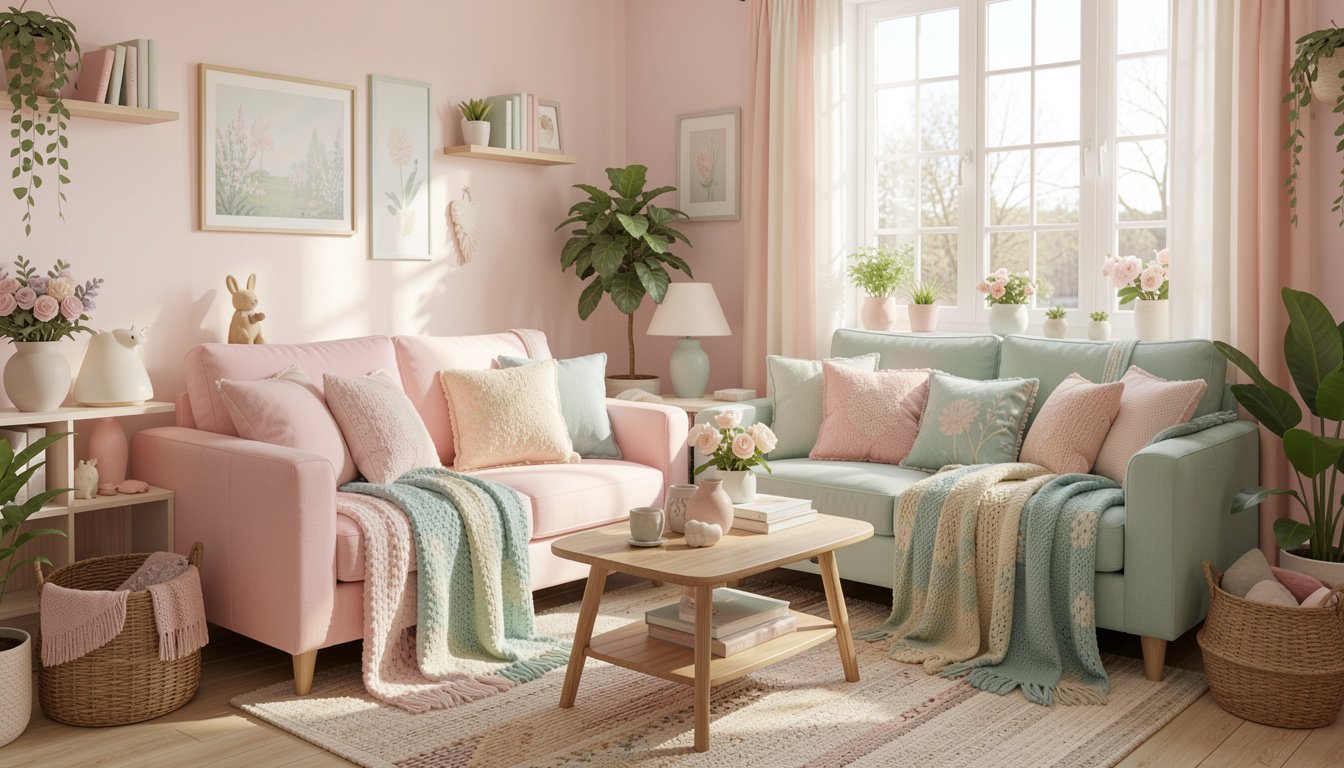
Okay friend, if your apartment feels tiny but you still want it to feel intentional, these small home color schemes are here to help. I got obsessed with color when I moved into my first one-bedroom and learned how much paint and textiles change everything.
I wrote this because picking palettes felt impossible at first and I wasted so much time testing swatches in bad light. Now I have go-to combos I actually love living with, and I want to save you that trial and error.
Keep scrolling – you’ll get 20 easy palettes with real-life vibes, ideas for where to use them, and little tips I actually use.
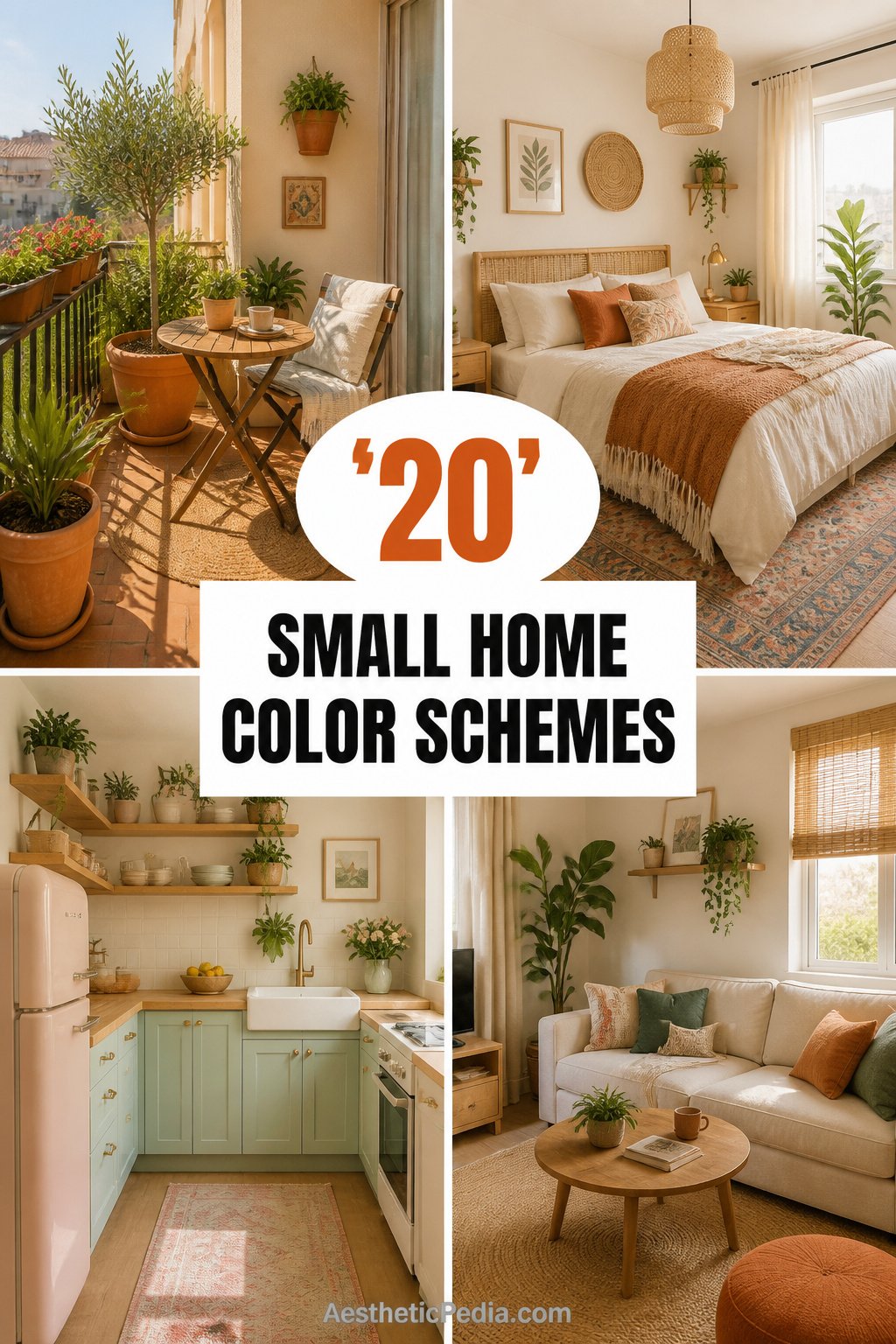
These 20 Small Home Color Schemes Will Transform Your Space
Peach and Apple Pop
A playful peach wall with green apple accents makes a tiny dining nook feel curated and cheerful. Use this combo on a single accent wall and bring in fruit-toned ceramics so the colors echo across the room. I once painted a small breakfast corner peach and it instantly felt like a weekend brunch spot every morning.
Crisp Blue Hallway
Deep yet clean blue along a narrow hall widens the space by creating a strong visual line. White trim keeps the look sharp and prevents the blue from feeling heavy. If you’re nervous, start with the back wall and test how it reads at different times of day.
Soft Bedroom Neutrals
A large bed framed by gentle beige or taupe makes a small bedroom feel like a calm hotel room. Layer textures such as linen and a woven throw to keep the palette interesting without adding visual clutter. I swapped loud prints for neutral linens and finally slept through the night more often.
Green Home Office Calm
Muted green walls with plenty of plants are the secret weapon for productivity in tight office corners. The green reflects the plants and makes the space feel cohesive instead of overcrowded. Add a light wooden desk so you don’t lose warmth in the palette.
Lush Living Room Greens
Full-on green walls paired with neutral furniture can make a small living room feel like a curated cabin. Try olive or sage to keep things cozy without becoming too dark. I painted my living area sage during winter and friends kept telling me it felt like a tiny sanctuary.
Mixed Media Cozy Setup
Combine wood tones, cream walls, and a single bold accent color like navy to give a compact living space depth. The TV area becomes a natural focal point when you balance light and dark tones. You’ll notice that layering textures helps small rooms read larger than they are.
Minimalist Ready Living
Clean lines, pale walls, and a restrained palette make clutter visually disappear in small apartments. Keep furnishings low-profile so sightlines feel open and airy. I learned that less is more when I sold a bulky sofa and made space for breathing room.
Checkerboard Kitchen Charm
Black and white flooring with soft colored cabinets gives a playful vintage feel to tiny kitchens. Choose pastel cabinets for a retro vibe while keeping counters simple. This combo works great if you want personality without overwhelming the space.
Serene Blue Living
Blue walls instantly calm a busy open-plan room and pair beautifully with warm wood accents. Keep art minimal and choose frames that echo the trim so everything reads intentional. If you have natural light, that blue will shift beautifully throughout the day.
Sunny Wood Bedroom
Warm wood floors with light bedding and a soft accent wall create a gentle, inviting bedroom vibe. Use cotton sheets and a textured rug to keep the palette lively yet peaceful. When I added a jute rug, the whole room felt stitched together.
Neutral Green Layers
Neutral sofas against a gentle green wall read sophisticated and youthful at once. Balance is key, so bring in brass or rattan elements to warm the greens. You don’t need a lot of furniture to make a layered look feel rich.
Herbaceous Kitchen Tones
Green cabinets and wooden cabinets together can make a compact kitchen feel like a cozy cottage. Keep backsplash and countertops simple so the color can shine without competing. I once painted only the lower cabinets green and wowed myself with how fresh the kitchen felt.
Calm Entryway Palette
A soft neutral wall in your hallway with a darker bench creates rhythm and makes the space feel intentional. Add an interesting rug and call it a day. You’ll be amazed how a styled entry gives the rest of the home a curated vibe.
Arched Living Nook
An archway treated with a contrasting color becomes an architectural highlight in a small home. Choose a tone that complements adjoining rooms for flow. I painted an arch once and it felt like adding a secret window to another room.
Bedding Mix Magic
Playing with pillows and bedding in connected tones transforms a tiny bedroom without permanent changes. Mix solids and subtle patterns so the look remains cohesive. This is my favorite quick-refresh trick before guests arrive.
Houseplant Haven Living
Lots of plants against neutral walls make a small living area feel vibrant while still calm. Let green be the unifier and pick pots that tie into your palette. You’ll find that plants add depth and distract from tight corners.
Green Bedding Retreat
Green sheets with warm neutrals give a bedroom a fresh, restful look without being too trendy. Layer throws in complementary tones so the bed reads like a focal piece. If you like waking up and feeling instantly relaxed, this setup is for you.
Pink and Green Accents
Soft pinks paired with leafy greens create a playful yet sophisticated palette for small tablescapes and shelves. Use ceramics and textiles to repeat the colors and make the palette intentional. I did this on a bookshelf and it felt curated overnight.
Layered Natural Neutrals
Neutral walls, tan furniture, and green accents combine for a universally calming scheme that suits any small space. Add texture rather than more color to keep visual interest. This is my go-to when I want a blank-slate base that still feels warm.
Green and Orange Accent Bed
Green walls with juicy orange pillows make a small bedroom feel bold but balanced if you keep other elements quiet. Use plants and simple artwork so the colors don’t fight for attention. You can be bold in a small home, just anchor it with neutrals.
How to Actually Make This Work For You
Start small – pick one area like a hallway, a single wall, or your bedding and commit to one palette before expanding so you don’t overwhelm the space. Test swatches at different times of day and think about how light changes the colors, and finally, repeat at least two hues in different textures around the room so the scheme feels intentional instead of accidental.
How do I choose the right shades for tiny rooms?
Go lighter for walls to open the space and reserve saturated tones for accents like pillows, a rug, or a single wall. Consider the room’s light and hold up paint cards at different times to confirm your gut before committing.
Can I mix multiple palettes in one home?
Yes – just connect them with a repeating neutral or material like wood or brass so each room feels different but still part of the same home. Small homes benefit from variety, but cohesion keeps it from feeling chaotic.
What if I rent and can’t paint?
Use removable wallpaper, peel-and-stick tiles, textiles, and rugs to introduce color without permanent changes. Art, plants, and furniture can also anchor a palette and are easy to take with you.
How do I prevent small spaces from feeling cluttered with color?
Limit the number of dominant hues to two or three and lean on texture and tone variations rather than many different colors. Keep larger pieces neutral and let smaller accessories carry the accents so the eye can rest.